
Beautiful Plants For Your Interior
Beautiful Plants For Your Interior
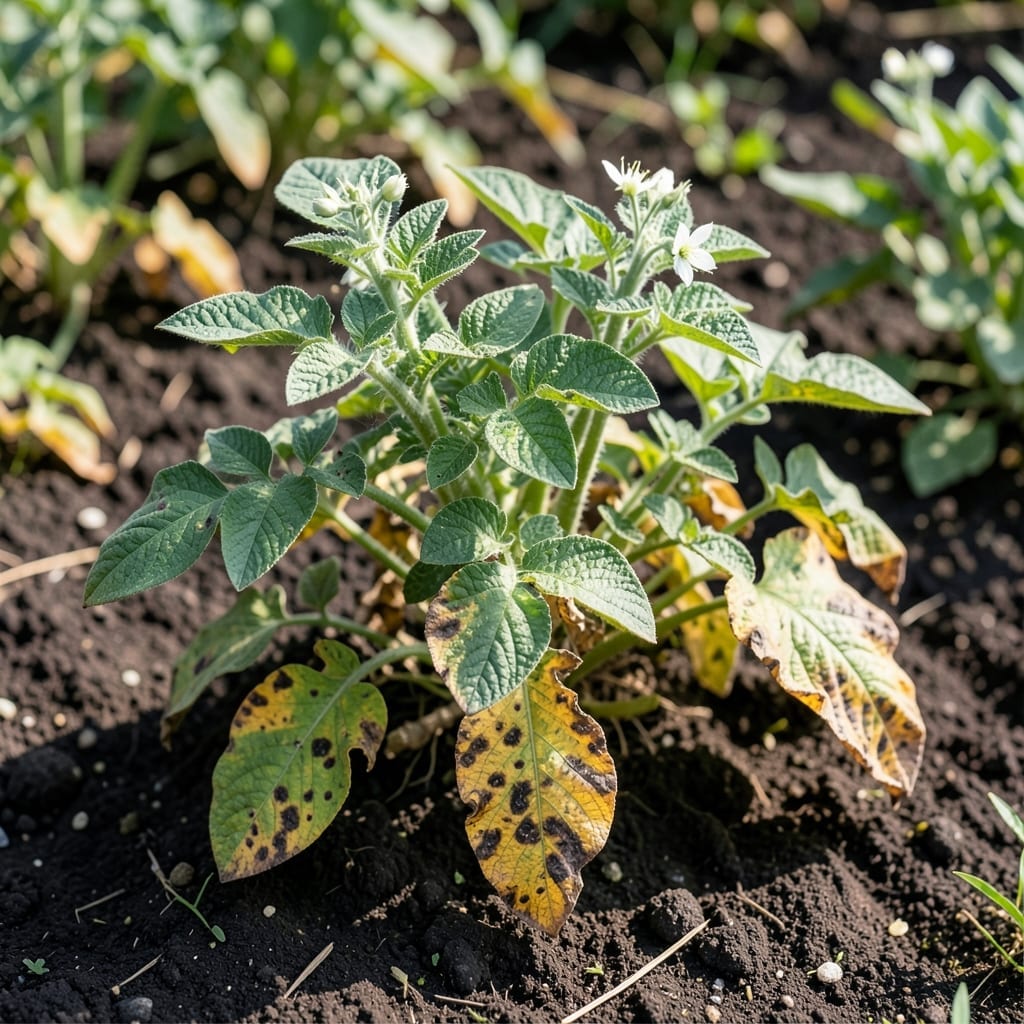
Brown spots on your potato leaves? That’s how it starts. I lost half my crop one year before I learned to recognize early blight’s telltale signs—small, dark lesions that spread fast in warm, wet weather.
This fungus thrives in crowded plants with poor airflow. Overwatering and humid conditions speed up its attack, turning healthy foliage into a crispy mess within days. Left unchecked, it’ll jump to tubers underground.
Catching it early makes all the difference. Remove infected leaves immediately, improve air circulation, and switch to drip irrigation to keep foliage dry. Copper fungicides work if applied at the first sign.
Prevention is simpler than cure: rotate crops yearly, space plants properly, and water at the base. Healthy plants resist better than stressed ones.
Early blight in potatoes doesn’t appear out of nowhere—it’s fueled by specific environmental and biological factors. Understanding these causes helps you prevent and manage the disease effectively.
The fungus Alternaria solani thrives in wet conditions. Extended periods of rain, overhead irrigation, or high humidity (above 85%) create the perfect breeding ground. Moisture softens potato leaves, making them more susceptible to infection. Action: Use drip irrigation to keep foliage dry and improve air circulation in your garden.
Early blight flourishes in temperatures between 75–85°F (24–29°C). These warm conditions accelerate fungal spore production and spread. Action: Plant potatoes early in the season to avoid peak heat, or use shade cloth to moderate temperatures in warmer climates.
The fungus overwinters in infected potato residue, weeds (like nightshade), or crop debris left in the field. Spores can survive for months, ready to reinfect new plants. Action: Rotate crops yearly and remove all plant debris after harvest to break the disease cycle.
Dense plantings or overcrowded rows trap moisture and limit airflow, encouraging fungal growth. Action: Space plants 12–15 inches apart and prune lower leaves to improve ventilation.
Some potato varieties, like ‘Russet’ or ‘Kennebec,’ are more vulnerable to early blight. Action: Opt for resistant varieties such as ‘Defender’ or ‘Mountain Rose’ if blight is a recurring issue in your area.
Early blight doesn’t have to spell disaster for your potato crop. With quick action and the right fixes, you can stop the fungus in its tracks and even prevent future flare-ups. Below are targeted solutions for the most common causes, paired with practical prevention tips.
If the infection started from contaminated soil, remove and destroy affected plants immediately to prevent spread. Avoid composting them. Rotate crops next season—plant potatoes in a different spot, ideally where non-solanaceous crops (like beans or corn) grew the year before. This breaks the fungus’s life cycle.
Prevention tip: 💡 Solarize soil before planting by covering it with clear plastic for 4–6 weeks. The heat kills lingering spores.
Early blight thrives in damp conditions. Water at the base of plants using drip irrigation to keep leaves dry. Space plants at least 12–18 inches apart to boost airflow. If overhead watering is unavoidable, do it early in the day so foliage dries quickly.
Prevention tip: ✨ Prune lower leaves to reduce humidity around the plant and improve ventilation.
Weak or stressed plants are more susceptible. Apply a balanced fertilizer (e.g., 10-10-10) to ensure adequate nitrogen, phosphorus, and potassium. Avoid over-fertilizing with nitrogen, which promotes lush, blight-prone foliage.
Prevention tip: 🎯 Use a soil test to identify deficiencies and amend accordingly before planting.
Always use certified disease-free seed potatoes from reputable suppliers. If saving your own, inspect tubers carefully and discard any with spots or blemishes. Disinfect cutting tools with a 10% bleach solution between uses to avoid cross-contamination.
Prevention tip: 🌡️ Store seed potatoes in a cool, dry place (40–50°F) to prevent early sprouting and disease development.
By tackling the root causes and adopting these habits, you can keep your potato patch healthy and productive all season long.
Look for small, brown spots with concentric rings on lower leaves first. These grow and merge, turning yellow around the edges. Check stems for similar dark lesions.
Yes, but harvest immediately. Tubers develop surface blemishes but remain edible if the flesh is firm. Discard any with soft spots or decay.
Remove and destroy infected leaves and plants. Apply a copper fungicide at first sight. Improve airflow by pruning and spacing plants 12-18 inches apart.
The fungus overwinters in plant debris. Rotate crops and remove all potato residue. Solarize soil with clear plastic for 4-6 weeks before planting.