
Beautiful Plants For Your Interior
Beautiful Plants For Your Interior
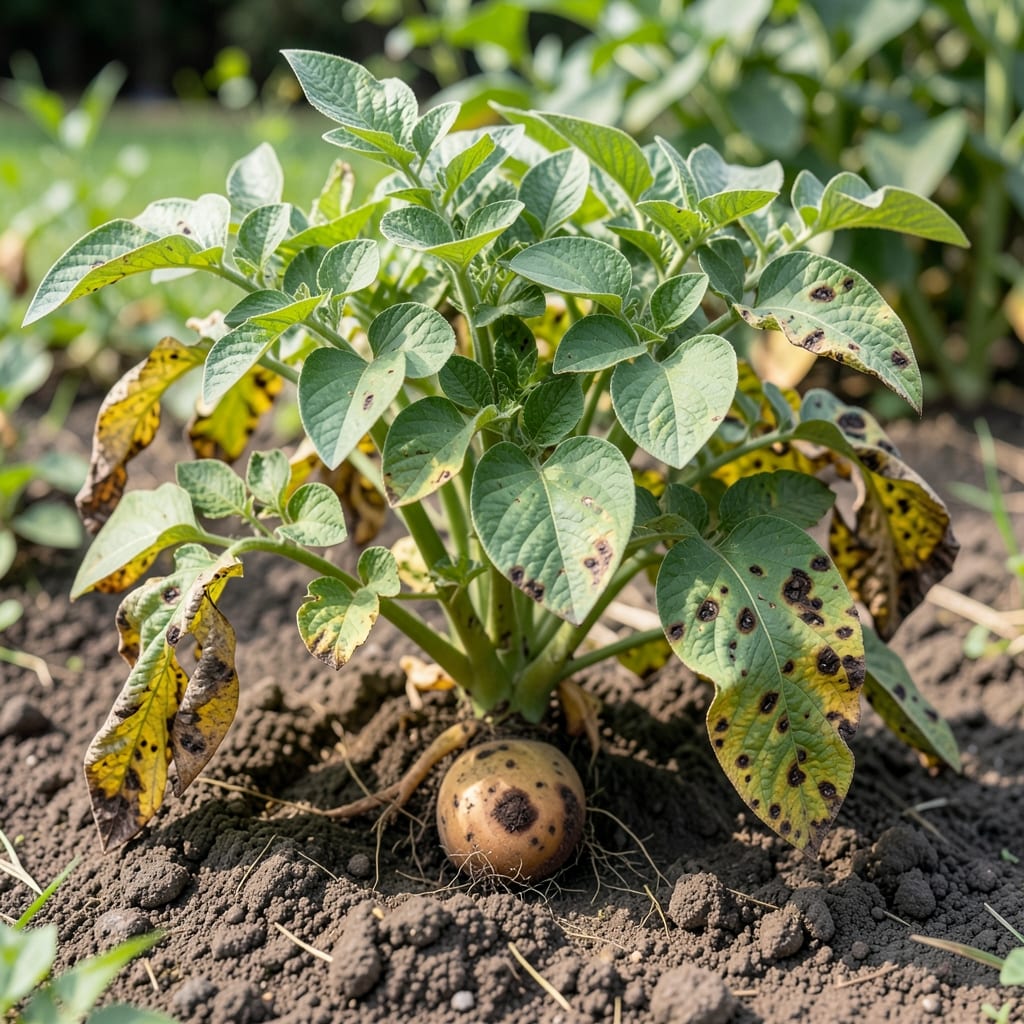
Spotted brown patches on your potato leaves? I’ve seen this destroy entire crops in 48 hours. Early identification is everything when dealing with blight.
This disease spreads fast in wet conditions, turning healthy plants into blackened husks. The first signs appear as dark spots on leaves, often with a yellow halo. Don’t wait for the stems to collapse.
You’ll learn to recognize the visual cues that confirm infection. More importantly, you’ll discover the simple steps to contain it before it ruins your harvest.
Works for backyard growers and larger plots alike. Time is your enemy here.
Potato blight is a devastating disease, but understanding its root causes can help you prevent it. Below are the primary reasons this fungal infection takes hold, along with the science behind each trigger.
Phytophthora infestans, the oomycete responsible for late blight, thrives in cool, wet conditions. This pathogen spreads via airborne spores, infecting potato leaves, stems, and tubers. Early blight, caused by Alternaria solani, is another fungal foe that favors warm, humid weather. Both pathogens overwinter in infected plant debris or tubers, ready to strike when conditions are right.
Blight flourishes in environments with high moisture. Rainy, foggy, or overly irrigated fields create the perfect breeding ground for spores. Prolonged leaf wetness (over 10–12 hours) allows spores to germinate and penetrate plant tissues. Areas with poor air circulation or dense foliage are especially vulnerable, as humidity lingers longer.
Using contaminated seed potatoes is a direct route to infection. Even seemingly healthy tubers can harbor dormant pathogens. Similarly, soil that previously hosted blight-infected crops may retain spores. Planting in the same spot year after year (monocropping) increases the risk, as the pathogen builds up in the soil.
P. infestans thrives in temperatures between 60–70°F (15–21°C), while A. solani prefers warmer conditions (75–85°F or 24–29°C). Sudden temperature swings, especially from warm days to cool, dewy nights, accelerate spore production and spread. Monitoring weather forecasts can help you anticipate and mitigate risks.
Overcrowded plants, lack of crop rotation, and inadequate sanitation (e.g., not removing infected plants or debris) invite blight. Overhead irrigation wets foliage excessively, while insufficient spacing limits airflow. Adopting best practices—like rotating crops, using disease-free seeds, and practicing good field hygiene—can significantly reduce outbreaks.
Once you’ve identified potato blight from visual signs, act fast to save your crop. Below are targeted solutions for each cause, along with prevention tips to keep your garden healthy. 🌱✨
If Phytophthora infestans (late blight) is the culprit:
Prevention tip: 💡 Rotate crops yearly and avoid planting potatoes in the same spot. Use blight-resistant varieties like ‘Defender’ or ‘Mountain Rose.’
Blight thrives in damp, humid environments. Combat this by:
Prevention tip: 🎯 Install drip irrigation to keep leaves dry and monitor weather forecasts for wet spells.
For Alternaria solani (early blight), which causes brown spots with concentric rings:
Prevention tip: ✨ Clean garden tools with rubbing alcohol between uses to avoid spreading spores.
Consistent vigilance and quick action are key. Check your plants daily, especially after rain, and treat at the first sign of trouble!
Early symptoms appear as small, dark brown or black spots on lower leaves, often with a yellow halo. These spread rapidly in wet conditions. Check undersides of leaves for white, fuzzy growth in late blight cases.
Under ideal wet, cool conditions, blight can devastate an entire field in 48-72 hours. Spores travel via wind and water, so immediate isolation of infected plants is critical to slow the spread.
No. Blight can penetrate tubers, causing rot and potential toxicity. Even if they look fine, infected potatoes may develop internal decay during storage. Always discard plants from infected areas.
Burn or bag and trash them—never compost. Pathogens survive composting and can reinfect future crops. Clean tools with 10% bleach solution after handling infected material.