
Beautiful Plants For Your Interior
Beautiful Plants For Your Interior
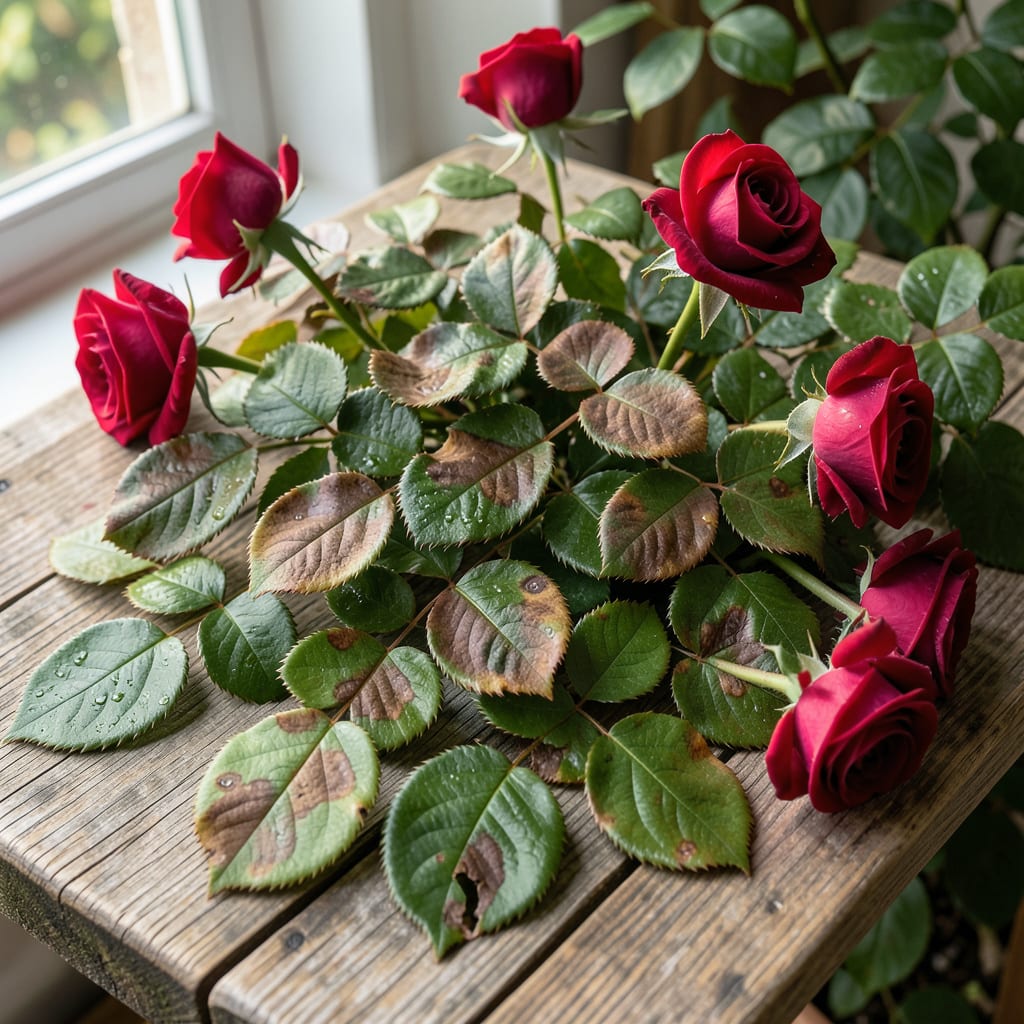
Brown spots on rose leaves aren’t just unsightly—they’re your plants waving a white flag. I’ve seen entire bushes defoliate overnight from what started as a few harmless-looking patches.
Most cases trace back to fungal infections like black spot or anthracnose, which thrive in wet, poorly ventilated conditions. Left unchecked, these spread fast and weaken the plant’s ability to photosynthesize and bloom.
Natural recovery is absolutely possible with the right approach. You’ll need to remove infected leaves, improve air circulation, and apply targeted treatments that don’t harm beneficial insects.
The payoff? Healthy roses with vibrant foliage that can resist future outbreaks. Your garden will thank you with stronger blooms next season.
Brown patches on your rose leaves are often a sign of underlying issues, usually tied to environmental stress or pathogens. Here’s a breakdown of the most common causes, explained simply but scientifically:
The primary culprit is often fungal diseases like black spot (Diplocarpon rosae) or anthracnose (Apiognomonia spp.). These fungi thrive in warm, humid conditions (60–85°F with high moisture). Spores land on leaves, germinate, and penetrate the tissue, disrupting cells and creating brown or black patches with feathery edges. Overhead watering or poor air circulation accelerates this.
Roses hate “wet feet.” Excess moisture—from overwatering, heavy clay soil, or poor drainage—stresses roots, reducing their ability to absorb oxygen. This leads to root rot (often Phytophthora or Pythium fungi), which manifests as brown, wilting leaves. Even without root rot, soggy foliage invites fungal spores to settle and grow.
Extreme temperatures, drought, or sudden frost can cause necrotic (dead) tissue, appearing as brown patches. Heat stress (above 90°F) may lead to scorching, while cold snaps damage cell membranes. Additionally, low humidity paired with intense sunlight can dry out leaf edges, turning them crispy and brown.
Sap-sucking pests like aphids, thrips, or spider mites pierce leaf cells, causing localized browning or stippling. Their feeding disrupts nutrient flow, and some (like thrips) also transmit viruses that exacerbate discoloration. Look for webbing (mites) or sticky residue (aphids) as clues.
A lack of potassium or magnesium can cause interveinal chlorosis (yellowing between veins) that progresses to brown necrosis. Potassium deficiency often shows as scorched leaf margins, while magnesium deficiency starts with yellow patches that turn brown. Over-fertilization (especially with high-nitrogen blends) can also burn roots, indirectly causing leaf browning.
Tackling brown patches on your roses starts with pinpointing the cause and applying the right fix. Below are targeted solutions for the most common culprits, paired with prevention tips to keep your roses thriving. 🌹
Fix: Remove infected leaves immediately to stop the spread. Apply a copper-based fungicide or a homemade mix of 1 tsp baking soda + 1 quart water + a drop of dish soap. Spray every 7–10 days until the issue clears.
Prevent: Improve air circulation by pruning dense foliage. Water at the base in the morning so leaves dry quickly. Avoid overhead watering.
Fix: Let the soil dry out slightly between waterings. If the plant is in a pot, ensure it has drainage holes. For garden roses, amend heavy clay soil with compost to improve drainage.
Prevent: Use a moisture meter to check soil dampness before watering. Aim for 1–2 inches of water per week, including rainfall.
Fix: Inspect leaves for pests like aphids or thrips. Blast them off with a strong stream of water, or apply neem oil or insecticidal soap. For severe infestations, use a targeted pesticide.
Prevent: Encourage natural predators like ladybugs by planting companion flowers (e.g., marigolds). Keep the garden free of debris where pests hide.
Fix: Shield roses from extreme heat or cold with shade cloth or mulch. If leaves are scorched, trim them and move potted roses to a cooler spot.
Prevent: Mulch around the base to retain moisture and regulate soil temperature. Water consistently during dry spells.
Pro tip: Always sterilize pruning tools with rubbing alcohol between cuts to avoid spreading disease. ✨
Yes, overwatering leads to root stress and poor oxygen absorption. Soggy soil encourages fungal growth, which can manifest as brown patches on leaves. Let soil dry slightly between waterings to prevent this.
Check for tiny insects, webbing, or sticky residue on leaves. Sap-sucking pests like aphids or mites create localized browning. Use a magnifying glass for a closer look.
Remove and destroy infected leaves immediately to stop fungal spread. Sterilize pruners with rubbing alcohol between cuts to avoid contaminating healthy parts.
A mix of 1 tsp baking soda + 1 quart water + a drop of dish soap works well for mild cases. Spray every 7–10 days until the issue clears. For severe infections, use a copper-based fungicide.
