
Beautiful Plants For Your Interior
Beautiful Plants For Your Interior
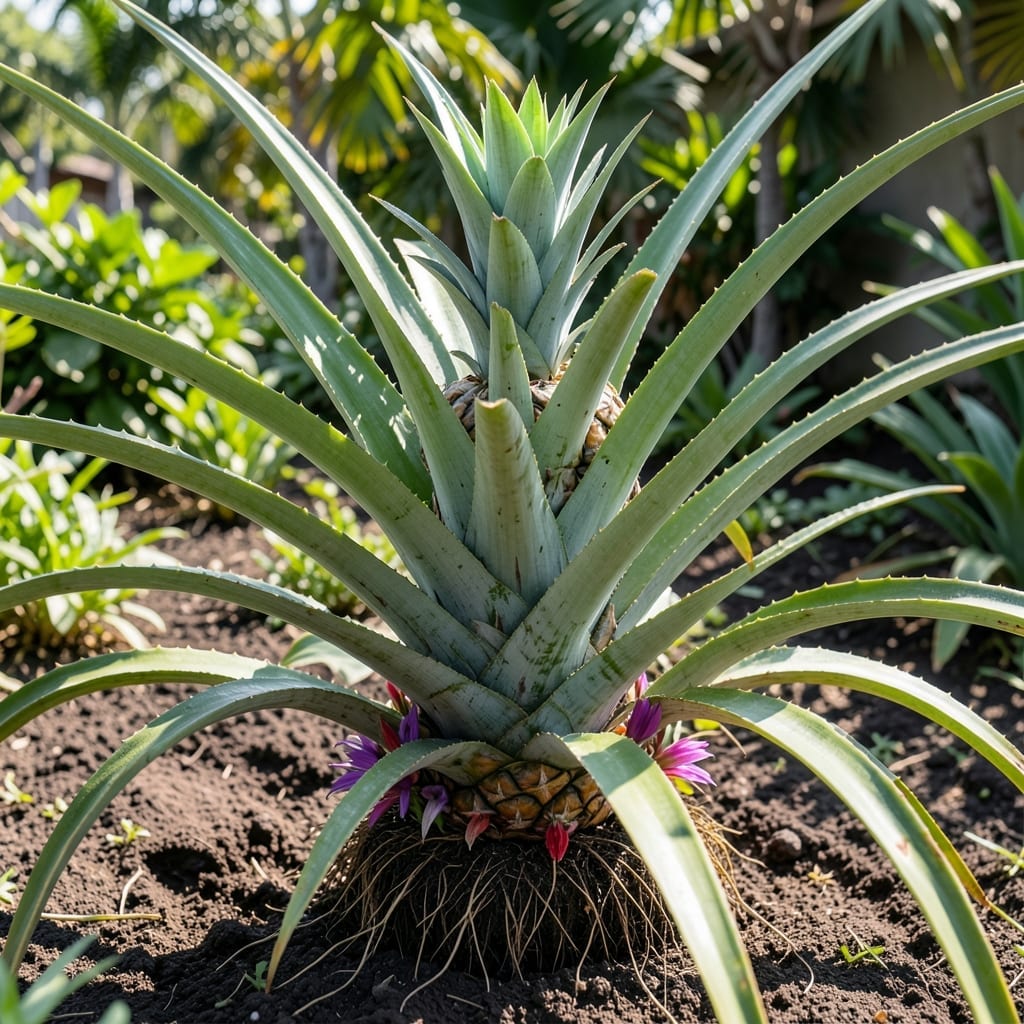
Most people assume pineapples grow from deep roots, but their system is shallow and wide. I discovered this the hard way when my first plant toppled over in a mild breeze.
The fibrous network spreads just 6-8 inches deep but can extend 2-3 feet wide, creating a stable base. Understanding this helps you provide the right soil and support for healthy growth.
📚 In This Guide
Here’s how to observe and nurture this plant’s unique fibrous network for optimal growth.
The pineapple plant develops a shallow, fibrous root system that spreads horizontally rather than growing deep. You’ll notice most roots staying within the top 6-12 inches of soil, forming a dense mat that stabilizes the plant.
This design helps the pineapple absorb moisture efficiently in its native tropical environments. I’ve found that understanding this structure explains why pineapples thrive in loose, well-draining soils rather than compacted ground.
Look closely at the base of a healthy pineapple plant and you’ll see roots radiating outward in all directions. The primary roots anchor the plant while secondary roots branch off to absorb water and nutrients.
In container growing, this means using wide, shallow pots rather than deep ones. The roots will fill the container horizontally, so a 12-14 inch diameter works better than a narrow, tall pot.
Because the root system is shallow, pineapples need frequent but light watering. The fibrous roots absorb moisture quickly but can’t reach deep water sources. You’ll want to water when the top inch of soil feels dry.
I check the soil daily during hot weather, as the shallow roots dry out faster than deep-rooted plants. Overwatering is just as dangerous—soggy soil suffocates the fibrous network.
As the plant matures, new roots emerge from the base to replace older ones. This continuous renewal keeps the root system active and efficient. You’ll see white, healthy roots growing from the stem base during the growing season.
In cooler months, root growth slows significantly. The fibrous system becomes less active, which is why pineapples grow best in consistent 65-85°F temperatures.
To maintain a strong root network, ensure your pineapple has well-draining soil. I use a mix of 50% cactus/succulent soil and 50% perlite for containers. This prevents waterlogging that would rot the shallow roots.
Fertilize lightly every 4-6 weeks during the growing season with a balanced liquid fertilizer. The fibrous roots respond well to regular, diluted feedings rather than heavy applications.
Understanding these nuances will help you support your pineapple’s unique growth pattern.
The Depth Factor: Remember that pineapple roots stay within the top 6-12 inches of soil as mentioned in Step 1. This means you should focus your watering efforts at this shallow level rather than trying to saturate deep soil layers. The dense mat of roots here is doing most of the work.
Container Choice: As Step 2 explains, those wide, shallow pots with a 12-14 inch diameter are ideal because they accommodate the horizontal spread. I learned the hard way that deep pots just waste space and can lead to overwatering at the bottom where roots never reach.
Temperature Sweet Spot: The 65-85°F range mentioned in Step 4 isn’t just a suggestion—it’s critical. Below 65°F, root activity slows dramatically. Above 85°F, you risk stressing the plant. I keep mine in a spot that stays consistently within this range for best results.
Watering Wisdom: Step 3’s advice about watering when the top inch feels dry is spot on. The shallow roots can’t access moisture deeper down, so frequent light waterings work better than occasional deep soakings. Just be sure your pot has good drainage to prevent waterlogging.
Pineapple roots typically grow 12–18 inches deep, forming a dense, fibrous network near the surface. This shallow system helps anchor the plant and absorb water efficiently.
Yes! Pineapple roots spread horizontally up to 3–4 feet, creating a broad, shallow mat. This helps stabilize the plant and access nutrients in the topsoil.
Root rot, often from overwatering, can kill the plant. Ensure well-draining soil and avoid waterlogging. Yellowing leaves or foul odors signal trouble—act fast!
Use mulch to retain moisture and suppress weeds. Organic fertilizers (like compost) boost root growth. Avoid heavy clay soils for better drainage.
Pineapple roots establish within 2–3 months after planting. Full maturity takes 1–2 years, depending on growing conditions and care.