
Beautiful Plants For Your Interior
Beautiful Plants For Your Interior
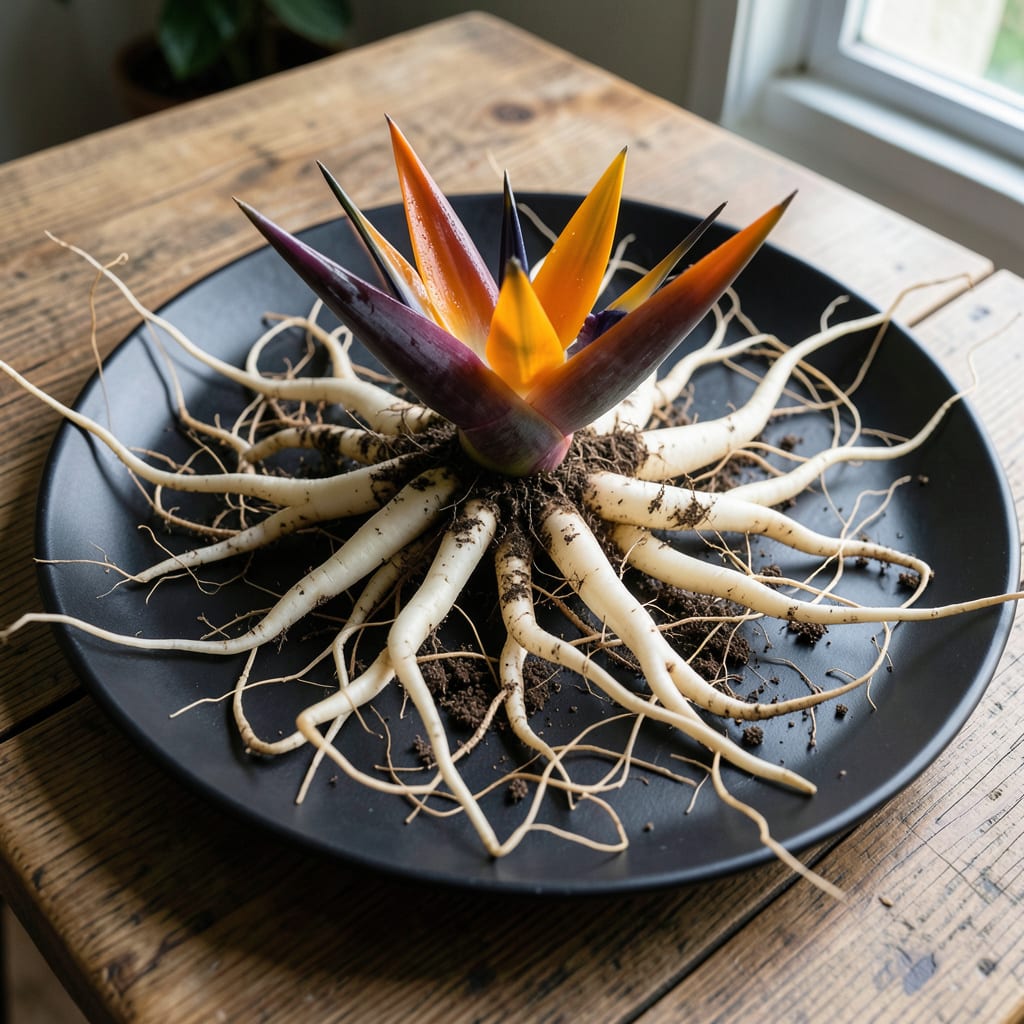
That first time I saw a Bird of Paradise’s roots spreading wide and strong, I realized this plant doesn’t just stand tall—it builds its own foundation.
This fibrous network anchors the plant while pulling moisture from surprisingly dry soil. Give it room to stretch, well-draining soil, and consistent watering, and you’ll watch those dramatic leaves reach for the sky.
📚 In This Guide
Here’s how I nurture a healthy, spreading root network that supports those dramatic tropical leaves.
Bird of paradise thrives in full sun to partial shade, so I pick a spot receiving at least 6 hours of direct sunlight daily. The roots need room to expand—this isn’t a plant for cramped spaces. A location with well-draining soil prevents the fibrous roots from sitting in water, which causes rot.
If planting in a container, select one at least 18-24 inches in diameter to accommodate the extensive root system. Shallow pots restrict growth and lead to toppling as the plant matures. I always check that the container has multiple drainage holes to allow excess water to escape.
Loosen the soil to a depth of 12-18 inches before planting to encourage deep root penetration. Bird of paradise roots are fibrous and spread outward, so I mix in compost or well-rotted manure to improve soil fertility and structure.
Avoid heavy clay or compacted soil—it suffocates the roots and stunts growth. If your soil is poor, amend it with organic matter to create a loose, airy environment. I’ve found that adding a layer of mulch after planting helps retain moisture while keeping the soil temperature stable for root health.
Established plants need 1-2 inches of water per week, but I water deeply and then let the top 2-3 inches of soil dry out between waterings. This mimics the natural dry spells of their native environment and encourages the roots to grow deeper in search of moisture.
Overwatering is a common mistake—soggy soil leads to root rot, which can kill the plant. I check soil moisture by sticking my finger into the ground. If it feels dry at the 2-inch mark, it’s time to water. Newly planted specimens need more frequent watering until the root system establishes.
Every 2-3 years, I divide mature clumps to prevent overcrowding and rejuvenate the root system. Using a sharp spade, I carefully separate the root ball into sections, ensuring each division has several healthy roots and at least one fan of leaves.
Prune dead or damaged roots during division to prevent disease from spreading. I also trim back any leggy or overgrown foliage to reduce stress on the plant. After replanting, I water thoroughly and keep the soil consistently moist for the first 2-3 weeks to help the roots recover.
Bird of paradise is a heavy feeder, so I apply a balanced, slow-release fertilizer every 2-3 months during the growing season. The roots absorb nutrients best when the soil is slightly moist, so I fertilize after watering.
Avoid high-nitrogen fertilizers, as they promote excessive leaf growth at the expense of root development. I prefer a formula with micronutrients to support overall plant health. If the leaves start yellowing, it’s often a sign the roots aren’t getting enough nutrients—time to fertilize or check soil pH.
Small adjustments make a big difference in establishing a strong root foundation.
Sunlight Essentials: That 6 hours of direct sunlight mentioned in Step 1 isn’t just a suggestion—it’s critical. In my experience, plants getting less than this often develop weak, shallow roots. If your space only gets morning sun, position the plant where it catches those early rays without afternoon shade from buildings or trees.
Container Wisdom: When planting in pots, that 18-24 inch diameter requirement from Step 1 prevents a world of problems. I learned this the hard way after watching a beautiful specimen topple over in a 12-inch pot. The roots literally lifted the plant out of its container as they expanded.
Watering Discipline: The 2-3 inches of dry soil between waterings in Step 3 is your best defense against root rot. Here’s what nobody tells you—most people kill their bird of paradise with kindness by watering too often. Stick your finger in the soil up to the second knuckle; if it’s dry there, it’s time to water deeply.
Recovery Period: After dividing in Step 4, that 2-3 weeks of consistent moisture is non-negotiable. I’ve seen divided plants wilt dramatically in the first week, only to bounce back completely by week three. Don’t panic and overwater—just maintain that even moisture as the roots re-establish.
Bird of paradise roots typically grow 12–24 inches deep, spreading widely rather than deeply. Their fibrous system anchors the plant while absorbing moisture and nutrients from the topsoil.
While aggressive, the roots rarely damage structures unless planted too close. Keep them at least 5–6 feet away from foundations, walls, or pipes to prevent potential issues.
Water deeply 1–2 times per week during active growth (spring/summer), allowing the top inch of soil to dry between waterings. Reduce frequency in cooler months.
Yellowing leaves, wilting, or a foul odor from the soil indicate root rot. Overwatering or poor drainage is often the cause—trim affected roots and repot in fresh, well-draining soil.
Yes! Choose a large, sturdy container with drainage holes. While potted plants may grow slower, this method effectively limits root expansion. Repot every 2–3 years.
