
Beautiful Plants For Your Interior
Beautiful Plants For Your Interior
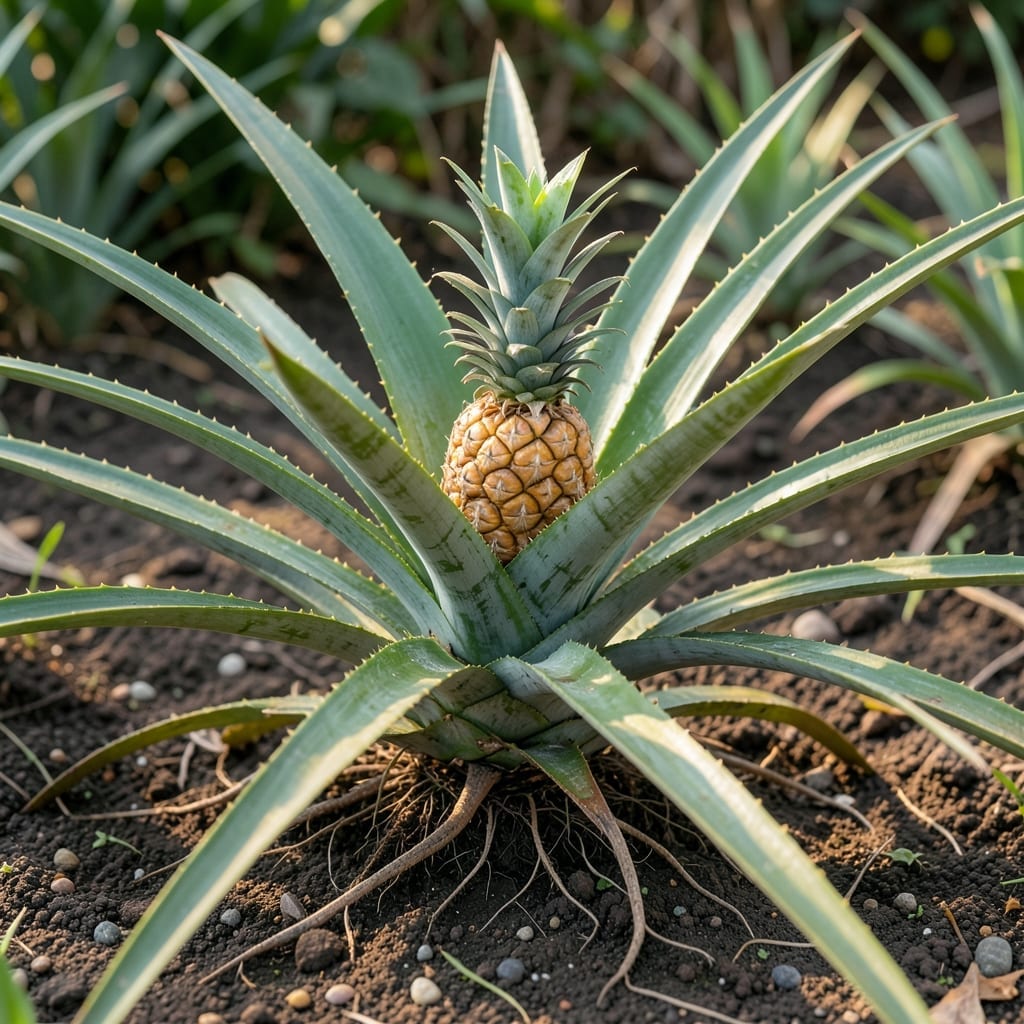
Beneath the spiky leaves of the 🍍 Pineapple lies a root system that’s more fascinating than you might think. This hidden network does the heavy lifting, pulling in water and nutrients to fuel those sweet, juicy fruits we love.
Many gardeners overlook how roots develop and spread, not realizing it’s the key to stronger plants and better harvests. The way these roots grow directly impacts your Pineapple’s health and productivity.
I’ve seen firsthand how understanding this system can transform your growing game. Whether you’re planting in the ground or containers, knowing your roots makes all the difference.
Discover how to work with your Pineapple’s natural growth patterns for more efficient cultivation and bigger rewards come harvest time.


The pineapple plant root system is a marvel of efficiency, designed to thrive in tough conditions. Unlike many plants, pineapples develop a fibrous root network that spreads widely just beneath the soil surface.
This shallow but extensive system allows the plant to quickly absorb water and nutrients from the top layers of soil, which is crucial in its native tropical environments where rainfall can be sporadic.
| Root Type | Function | Depth |
| Fibrous | Absorbs water and nutrients | Shallow, 6-12 inches |
| Adventitious | Anchors plant, supports growth | Surface to 6 inches |
| Primary | Central support | Up to 18 inches |
What makes this system special is its adventitious roots, which can grow from non-root tissues like the stem base. These roots are particularly important when propagating pineapples from crowns or suckers, as they quickly establish new plants.
The primary roots grow downward from the base, providing stability, while the secondary roots branch out horizontally. This combination creates a strong foundation that supports the plant’s 2-4 ft height and heavy fruit.
During the first 3 months, the root system develops rapidly, focusing on establishing a wide network. I’ve noticed that plants with well-developed roots at this stage tend to grow faster and produce larger fruits later on.
As the plant matures, typically around 12-18 months, the root system reaches its full potential. At this point, it’s capable of supporting the fruit development process, which is incredibly nutrient-intensive.
The pineapple’s roots are also remarkably drought-tolerant. They can store water in their thickened sections, allowing the plant to survive short dry periods. This adaptation is why pineapples thrive in USDA zones 10-12 where water may not always be abundant.
One fascinating aspect is how the root system responds to container growing. In pots, the roots will circle the container, but they still maintain their shallow nature. This makes pineapples ideal for patio gardening in large containers.
For best results, I recommend using a well-draining soil mix that mimics the pineapple’s native volcanic soils. This encourages healthy root development and prevents the root rot that can occur in waterlogged conditions.
Remember, the root system’s health directly impacts the fruit quality and plant longevity. A strong root network means better nutrient uptake, which translates to sweeter, juicier pineapples at harvest time.
The pineapple plant root system thrives under specific conditions. I’ve found that well-draining soil is non-negotiable—roots rot quickly in soggy ground. A mix of sandy loam with organic matter keeps them happy and healthy.
Whether you plant in containers or open ground affects spread too. Containers limit growth, while ground planting allows roots to expand up to 3 feet wide in ideal conditions.
⚠️ Avoid Overwatering
Pineapple roots hate soggy soil. Water only when the top inch is dry to prevent rot and fungal issues. Morning watering helps evaporation.
Watering practices matter just as much as soil. I water deeply but infrequently, letting the soil dry slightly between sessions. This encourages deep root growth and stronger anchorage.
Full sun exposure (6-8 hours daily) fuels root development. Without enough light, roots grow shallow and weak, struggling to support the plant’s tropical demands.
Temperature plays a role too. Pineapple roots prefer warm conditions (70-85°F). In cooler climates, consider container growing so you can move plants indoors during chilly spells.
Finally, avoid compacting soil around the base. Loose, aerated soil allows adventitious roots to form easily, boosting nutrient uptake and overall plant vigor. 🌱