
Beautiful Plants For Your Interior
Beautiful Plants For Your Interior
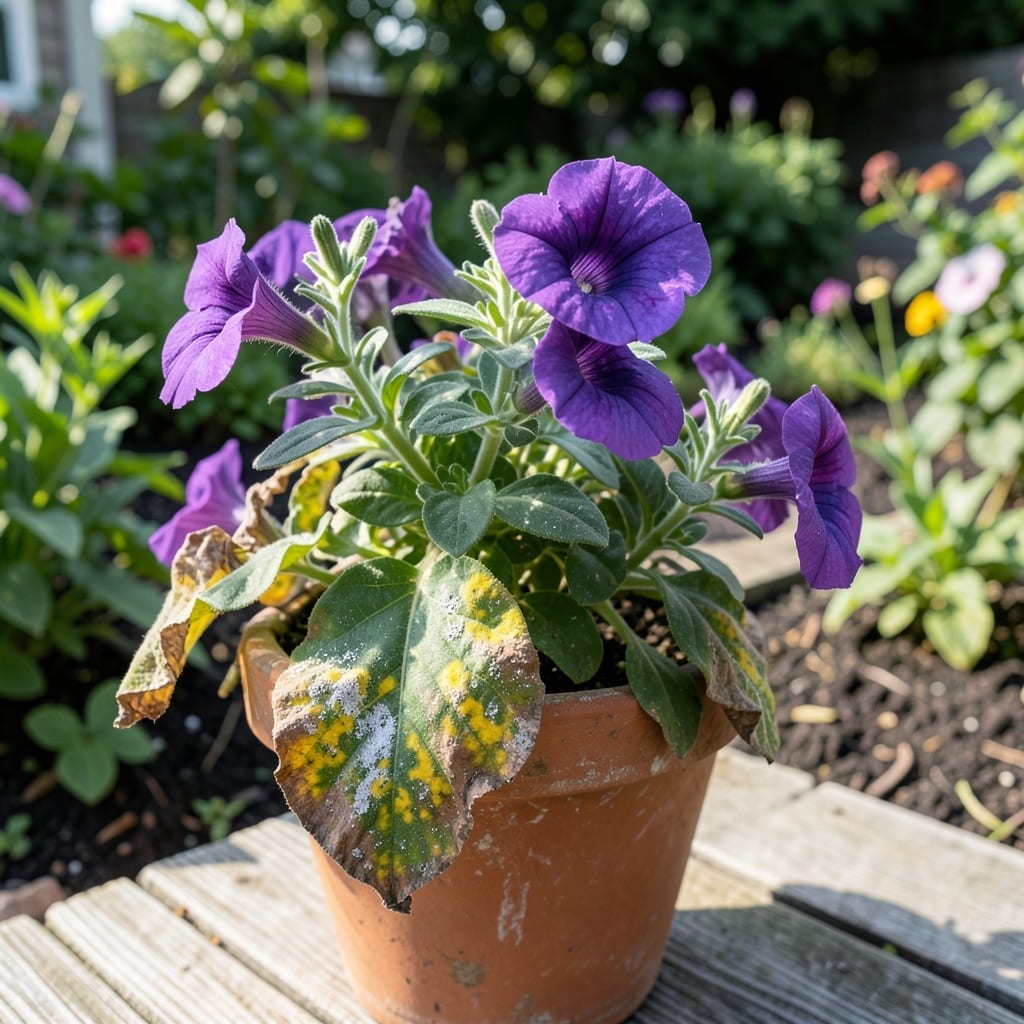
Yellowing leaves on your petunias mean trouble. I’ve lost entire hanging baskets to 3 common diseases before learning to spot the early warning signs.
Powdery mildew, leaf spot, and root rot each leave distinct fingerprints. Once you recognize the patterns, you can act fast with organic treatments before the damage spreads.
Simple fixes like better air circulation, copper sprays, or just removing infected leaves often solve the problem. Prevention is even easier with the right watering habits.
The difference between healthy petunias and a sad, spotty mess is catching these early. Here’s what to watch for.
Petunias are hardy, but even these vibrant bloomers can succumb to disease under the right (or wrong) conditions. Here’s why it happens, broken down by the most common causes.
Overwatering or poorly draining soil creates a breeding ground for fungal pathogens like Botrytis cinerea (gray mold) and Pythium (root rot). When roots sit in soggy soil, they suffocate, weakening the plant’s defenses. Fungal spores thrive in humid, wet environments, spreading rapidly across foliage and stems. Action: Ensure pots have drainage holes and use well-draining soil mixes with perlite or sand.
Airborne spores from fungi such as Alternaria or Fusarium can land on leaves, especially in crowded or poorly ventilated spaces. Bacteria like Pseudomonas syringae enter through wounds or natural leaf openings, causing spots, wilting, or leaf drop. These pathogens spread via water splashes, contaminated tools, or infected plant debris. Action: Space plants for airflow, avoid overhead watering, and sterilize pruning tools.
Insects like aphids, whiteflies, and spider mites don’t just damage petunias—they also vector viral diseases such as Tobacco Mosaic Virus or Impatiens Necrotic Spot Virus. As pests feed, they introduce viruses into the plant’s vascular system, leading to stunted growth, mottled leaves, or death. Action: Use insecticidal soaps or neem oil early, and remove heavily infested plants to prevent spread.
Extreme heat, cold snaps, or sudden temperature swings stress petunias, lowering their immunity. Heat stress can cause leaf scorch, while cold shocks may lead to wilting or blackened stems. Stress also makes plants more susceptible to opportunistic infections. Action: Provide afternoon shade in hot climates and protect plants from drafts or frost.
When your petunias show signs of trouble, quick action can save them. Below are targeted fixes for common issues, paired with prevention tips to keep your blooms thriving. 🌸
If white powdery spots appear on leaves, prune affected areas and thin out dense foliage to boost circulation. Apply a baking soda spray (1 tsp baking soda + 1 quart water + a few drops of dish soap) weekly. Prevent it by spacing plants 12–18 inches apart and watering at the base to keep leaves dry. 💡 Pro tip: Choose mildew-resistant varieties like ‘Wave’ petunias.
For tiny pests, blast them off with a strong stream of water, then apply neem oil or insecticidal soap every 3–5 days until gone. Prevent infestations by attracting beneficial insects (e.g., ladybugs) with companion plants like marigolds. ✨ Bonus: Yellow sticky traps can catch adults early.
Wilting, yellowing leaves, or mushy stems? Stop watering immediately and let the soil dry out. Repot in fresh, well-draining mix if the roots are black/brown. Prevent it by using containers with drainage holes and watering only when the top inch of soil is dry. 🌡️ Tip: Terracotta pots help wick excess moisture.
Brown or black spots with yellow halos? Remove infected leaves and avoid overhead watering. Spray with a copper fungicide or compost tea. Prevent spread by cleaning up plant debris and disinfecting tools with rubbing alcohol. 🎯 Key: Rotate petunia locations yearly to break fungal cycles.
Consistency is your best tool—monitor plants weekly and act at the first sign of trouble!
Look for white powdery spots on leaves, stems, or flowers. These often appear first on older leaves. The disease thrives in humid conditions with poor air circulation.
Yes, root rot from overwatering causes yellowing and browning leaves. Check roots—if they’re mushy and dark, it’s likely root rot. Stop watering and improve drainage immediately.
Space plants 12–18 inches apart for airflow. Water at the base, avoid wetting leaves, and use well-draining soil. Remove fallen leaves to reduce fungal spores.
Neem oil works well against aphids, spider mites, and whiteflies. Apply every 3–5 days until pests are gone. For severe infestations, combine with insecticidal soap.