
Beautiful Plants For Your Interior
Beautiful Plants For Your Interior
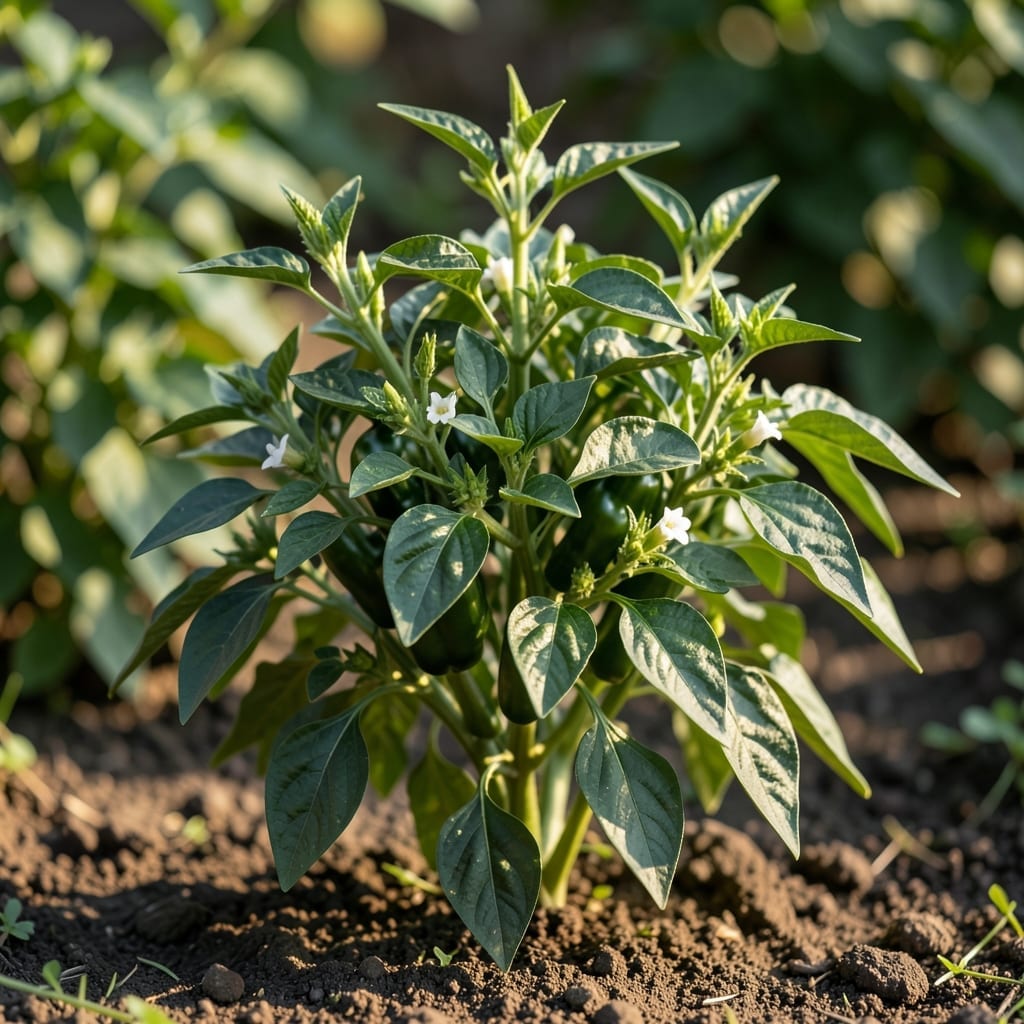
Pepper seedling leaves pointing upward often signal underwatering, over-fertilization, or light stress. Check soil moisture, reduce fertilizer, and ensure proper light exposure to correct the issue.
In my experience, these leaf movements are the plant’s way of conserving moisture or protecting itself from harsh conditions. The upward curl can also indicate root tension when the soil stays dry for too long. 🌱 I’ve noticed seedlings recover quickly once you address the specific stressor, whether that means adjusting watering frequency or moving them to a less intense light source.
💡 In This Article
This upward movement is a survival mechanism called nyctinastic response. When soil moisture drops below 40-50% of capacity, the plant’s root system struggles to absorb enough water. The leaves curl upward to reduce surface area, minimizing water loss through transpiration while exposing less tissue to direct sunlight. 🔥
Excess nitrogen creates another type of stress. Pepper seedlings can only process about 100-150 ppm of nitrogen at this stage. When over-fertilized, the roots absorb more water than the plant can use, causing cellular pressure imbalances.
This osmotic stress forces the leaf edges to curl upward as the plant attempts to regulate its internal water distribution. ✨
Light intensity plays a crucial role too. Seedlings exposed to light stronger than 20,000-30,000 lux often exhibit this curling as a protective measure. The leaves angle upward to reduce light absorption, similar to how we squint in bright sunlight.
This is especially common with LED grow lights positioned too close (under 12 inches) to the canopy. 💫
What most gardeners overlook is the relationship between these factors. Dry soil makes plants more susceptible to light stress, while over-fertilization reduces the root’s ability to absorb water efficiently. The upward curl serves as a visual distress signal, with the degree of curling often corresponding to the severity of the underlying issue. 🌟
The physiological process involves turgor pressure changes in the leaf cells. As water becomes scarce or nutrients disrupt normal function, the cells on the leaf’s upper surface lose pressure faster than those on the underside, causing the characteristic upward curl. This can happen within 24-48 hours of the stressor appearing. ⚡
Often yes! Check soil 1-2 inches deep—if dry, water until it drains from the bottom. This is the most common cause of upward curling.
Flush the soil with 2-3 times its volume in water to remove excess salts. Wait 1-2 weeks before fertilizing again at half strength.
If leaves curl under intense light, move grow lights to 12-18 inches above seedlings or diffuse direct sunlight. Improvement should appear within 24-48 hours.
Once you fix the underlying issue, new growth will be normal. Severely curled leaves may stay deformed but won’t harm the plant.