
Beautiful Plants For Your Interior
Beautiful Plants For Your Interior
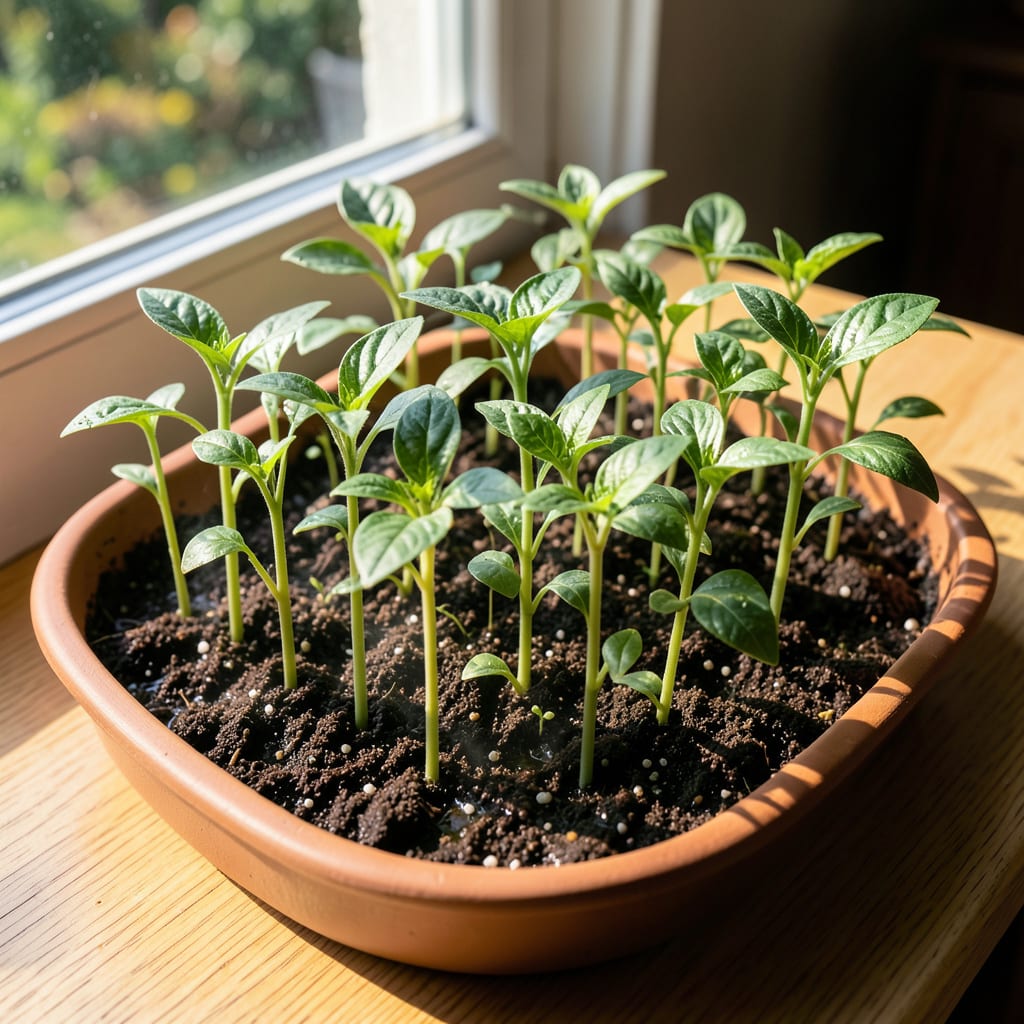
Those upward-pointing pepper leaves aren’t just quirky—they’re a red flag. I’ve seen this in my own trays when the seedlings are trying to tell me something’s wrong.
Usually it’s a light issue: too much, too little, or coming from the wrong direction. Sometimes it’s water stress or even a disease starting to take hold. The leaves curl upward like tiny cups, almost as if they’re begging for help.
Catch it early and you can fix it with simple adjustments. Ignore it and those seedlings might never recover their vigor. The solution often takes just 24-48 hours to show improvement.
Works for all pepper varieties, from sweet bells to fiery habaneros. Here’s how to diagnose and treat it fast.
Pepper seedlings with leaves pointing upward often signal an underlying issue. Here are the most common causes, explained in clear, scientific terms:
Peppers thrive in warm conditions, but excessive heat (above 90°F/32°C) can cause leaves to curl upward as a defensive mechanism. This happens because the plant transpires (releases water vapor) faster than it can absorb moisture, leading to turgor loss in leaf cells. The edges curl to reduce surface area and minimize water loss.
When soil dries out, pepper roots struggle to supply enough water to the leaves. The xylem vessels (water-conducting tissues) collapse slightly, causing leaf margins to lift. This is the plant’s way of conserving water. Check soil moisture 1 inch deep—if it’s bone-dry, it’s time to water deeply and evenly.
If roots are circling or packed tightly in a small container, they can’t absorb water and nutrients efficiently. This restricted root growth triggers stress responses, including upward-curling leaves. Transplant seedlings into larger pots with loose, well-draining soil to prevent this.
Too much fertilizer, especially nitrogen-heavy mixes, can cause salt buildup in the soil. This draws water out of the roots (a process called reverse osmosis), dehydrating the plant. Leaves curl upward as a stress response. Flush the soil with water to remove excess salts.
Sap-sucking pests like aphids and spider mites damage leaf cells, disrupting their structure. As they feed, they cause cell collapse and leaf distortion, often starting with upward curling. Inspect the undersides of leaves for tiny insects or webbing and treat with neem oil or insecticidal soap.
If your pepper seedlings have leaves pointing upward, it’s usually a sign of stress. Here’s how to address the most common causes and restore your plants to health.
If the soil feels soggy, stop watering immediately. Let the top inch of soil dry out before watering again. Ensure your container has drainage holes to prevent waterlogging. Prevention tip: Use a moisture meter or the finger test—stick your finger an inch into the soil; if it feels dry, it’s time to water. 💡Pro tip: Water in the morning to allow excess moisture to evaporate during the day.
If the soil is bone-dry, give your seedlings a thorough drink until water runs out the drainage holes. Check soil moisture regularly, especially in hot or windy conditions. Prevention tip: Mulch the soil surface with a thin layer of straw or vermiculite to retain moisture. 💡Pro tip: Use room-temperature water to avoid shocking the roots.
Move seedlings away from cold drafts or direct heat sources. Aim for a consistent temperature between 70–80°F (21–27°C) during the day and no lower than 60°F (15°C) at night. Prevention tip: Use a seedling heat mat if your home is too cool. 🌡️Pro tip: A small fan on low can improve air circulation and prevent temperature spikes.
Group seedlings together on a tray filled with water and pebbles to create a humid microclimate. Alternatively, use a humidity dome or a room humidifier. Prevention tip: Keep seedlings away from air vents or heaters that dry out the air. ✨Pro tip: Mist the leaves lightly with water in the morning to boost humidity temporarily.
Use a balanced, water-soluble fertilizer diluted to half strength to avoid burning tender roots. Focus on nitrogen if leaves are pale, or potassium if growth seems stunted. Prevention tip: Start with a high-quality seedling mix that includes slow-release nutrients. 🎯Pro tip: Over-fertilizing can be just as harmful as under-fertilizing—stick to the recommended dose.
Not always! Some varieties naturally curl slightly. But sudden, severe curling usually signals stress from heat, water, or pests.
With the right fix, you’ll often see improvement in 24-48 hours. Severe cases may take up to a week. Consistency in watering and temperature is key.
Yes, if the stems are still firm. Trim damaged leaves, adjust care, and monitor. If the stem is mushy, it’s likely too late.
If they’re near heat sources or drafts, yes. Aim for stable temps between 70-80°F and indirect light until they recover.
