
Beautiful Plants For Your Interior
Beautiful Plants For Your Interior
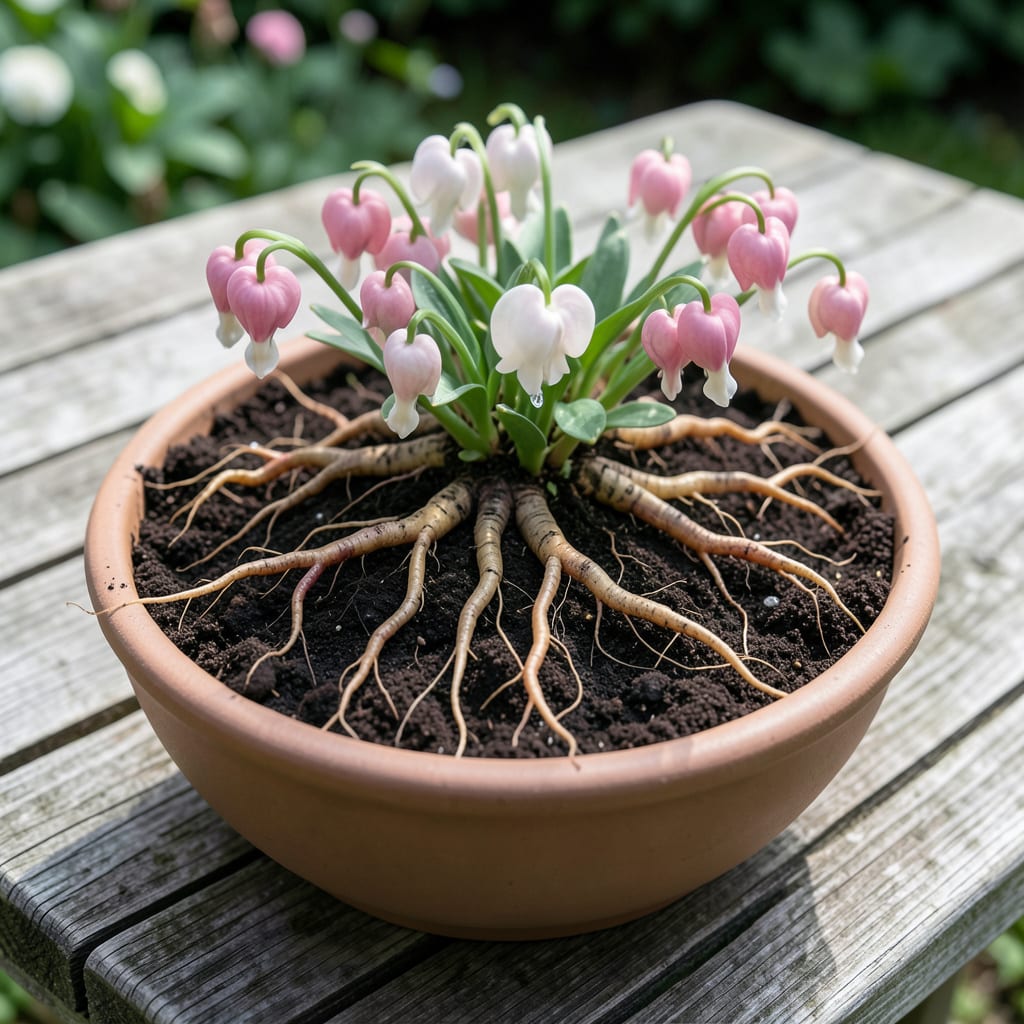
Bleeding hearts thrive when their roots stay happy. I’ve learned that healthy root systems mean lush foliage and reliable blooms year after year.
These plants prefer well-draining soil and consistent moisture. Plant them in partial shade, and they’ll reward you with vibrant growth and those iconic heart-shaped flowers. Simple care keeps them coming back.
📚 In This Guide
Understanding the growth pattern helps you care for these perennials like a professional.
Bleeding hearts develop a shallow, fibrous rhizome system that spreads horizontally just beneath the soil surface. Unlike deep taproots, these rhizomes store energy for next year’s growth and produce new shoots along their length. I often find them concentrated in the top 2-3 inches of soil when gently digging around established plants.
This surface-level growth means they’re particularly sensitive to soil disturbances. You’ll notice the most vigorous growth where rhizomes have had time to establish undisturbed for 2-3 seasons. The rhizomes themselves appear as thickened, knobby stems when exposed during division.
For optimal rhizome expansion, plant in rich, well-draining soil with consistent moisture. I maintain soil temperatures between 60-70°F during the growing season, which encourages active root development. The plants thrive in partial shade, where their shallow roots won’t dry out from intense afternoon sun.
A 2-3 inch layer of organic mulch helps regulate soil temperature and retains moisture at the critical root zone. You’ll see the best growth when the soil remains evenly moist but never waterlogged—soggy conditions will rot the rhizomes. Test moisture by inserting your finger 1 inch deep; if it feels dry, it’s time to water.
In early spring, as soil warms to about 50°F, the rhizomes send up new growth. This is when I apply a balanced, slow-release fertilizer to support the emerging shoots. The feeding roots are most active during this period, so nutrients are readily absorbed. Avoid high-nitrogen fertilizers, which can produce lush foliage at the expense of root development.
As temperatures rise in summer, the plant often goes dormant. Don’t panic when foliage yellows and dies back—this is natural. The rhizomes remain alive underground, conserving energy for next year. I mark the location with a small stake so I don’t accidentally dig into the resting root system while it’s dormant.
Every 3-4 years, I divide crowded clumps to rejuvenate the root system. The best time is in early spring or fall when the plant is dormant. Carefully dig around the clump, then use a sharp knife to separate the rhizomes, ensuring each division has at least one growing point or “eye.”
Replant divisions at the same depth they were growing, with the rhizomes just below the soil surface. Water thoroughly after planting to help settle the soil around the new root system. You’ll see new growth emerging within 3-4 weeks if conditions are right, confirming that the roots have established successfully.
Small adjustments in care can significantly improve the health of these perennials.
Soil Depth Awareness: Since the rhizomes concentrate in the top 2-3 inches of soil, avoid deep digging or planting near their base. I’ve accidentally severed rhizomes while planting annuals too close, which set back growth for an entire season.
Temperature Timing: The 60-70°F soil temperature range during the growing season is ideal for root development. I use a soil thermometer to confirm conditions before expecting vigorous growth. If temperatures drop below this, rhizome activity slows dramatically.
Moisture Management: Test soil moisture 1 inch deep as instructed—this depth matches the rhizome zone. I learned the hard way that surface dryness doesn’t always indicate the roots need water, while soggy conditions at this depth will rot them.
Seasonal Patience: The 3-4 weeks for new growth after division can feel long, but rushing the process by overwatering or fertilizing often does more harm than good. I’ve found that divisions establish fastest when left undisturbed during this period.
How deep do bleeding heart roots grow?
Bleeding heart roots typically grow 12–18 inches deep, spreading outward as the plant matures. They prefer loose, well-draining soil to establish a strong, healthy root system.
When should I divide bleeding heart roots?
Divide roots in early spring or fall when the plant is dormant. This reduces stress and helps the plant recover quickly. Aim for every 3–4 years to maintain vigor.
Can bleeding hearts grow in containers?
Yes! Use a large container with drainage holes and rich potting mix. Ensure the roots have room to spread, and water regularly to keep the soil moist but not soggy.
Why are my bleeding heart roots rotting?
Root rot usually occurs due to overwatering or poor drainage. Check soil moisture and improve drainage by amending with compost or sand. Trim affected roots to prevent further spread.
