
Beautiful Plants For Your Interior
Beautiful Plants For Your Interior
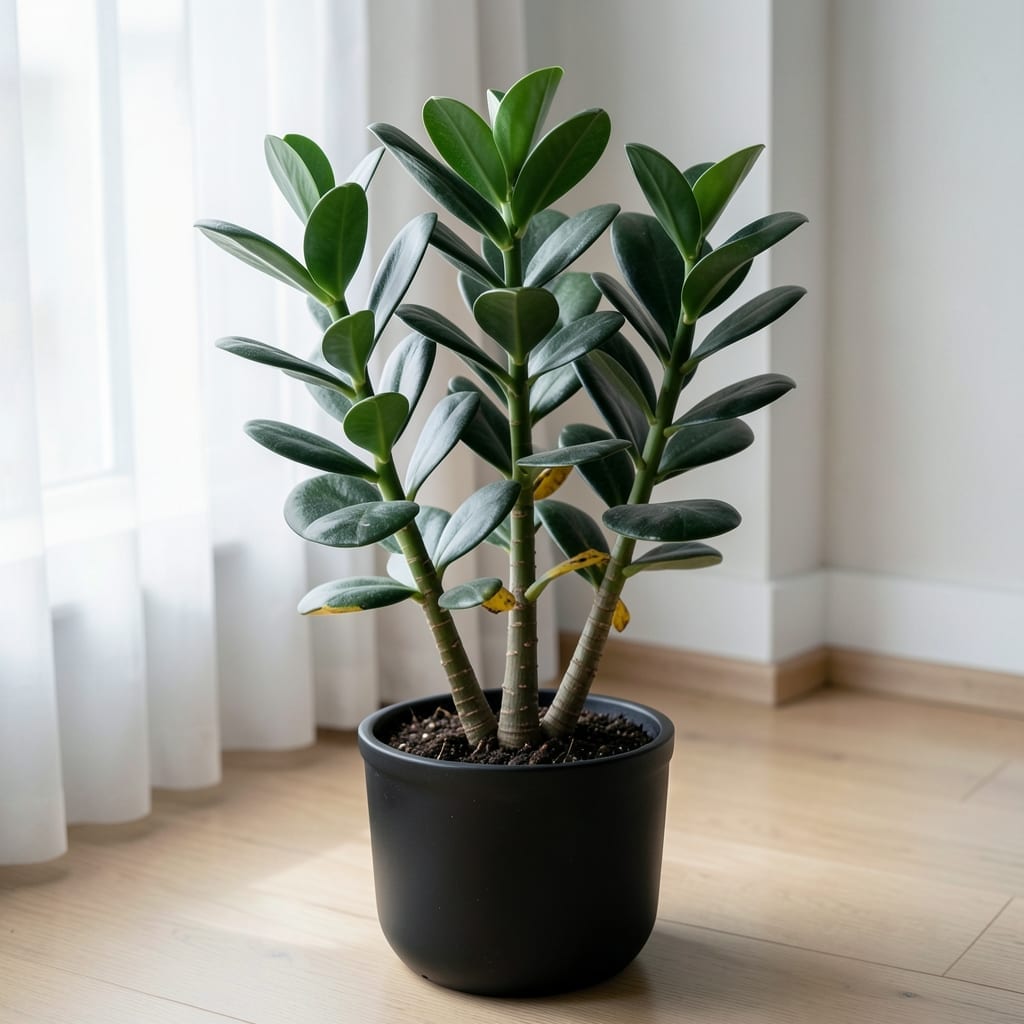
My ZZ plant’s yellow leaves were my wake-up call. 🌱 I’d been treating it like a thirsty houseguest instead of the drought-tolerant survivor it actually is.
Here’s the thing—ZZ plants store water in their rhizomes, so overwatering doesn’t just drown the roots, it invites rot. Yellow leaves, mushy stems, and soil that smells sour are the red flags I wish I’d noticed sooner.
The fix is surprisingly simple: stop watering immediately, check the roots, and repot if needed. Most bounce back within 2-3 weeks if you catch it early.
Now I water mine only when the soil is bone-dry 2 inches down. No more yellow leaves, just that glossy green I fell for in the first place.
The yellowing leaves on your ZZ plant (Zamioculcas zamiifolia) are usually a cry for help—often tied to overwatering. Here’s the science behind why it happens:
ZZ plants are drought-tolerant succulents with rhizomes that store water. When overwatered, soil pores fill with water, displacing oxygen. Without oxygen, root cells can’t perform aerobic respiration, leading to root asphyxiation. This stress triggers chlorosis (yellowing) as chlorophyll production halts.
Excess moisture creates a breeding ground for pathogens like Phytophthora and Pythium. These fungi/bacteria attack the roots, turning them mushy and brown. As roots die, they can’t absorb nutrients (especially nitrogen and magnesium), causing leaves to yellow and drop. A foul odor from the soil is a red flag.
Overwatering leaches essential nutrients (e.g., nitrogen, iron) from the soil or locks them in unavailable forms. For example, waterlogged soil raises pH, making iron insoluble. Without iron, the plant can’t produce chlorophyll, leading to interveinal chlorosis—yellow leaves with green veins.
When roots absorb water faster than the plant can use it, pressure builds in leaf cells. This causes edema—tiny blisters or yellow patches as cells rupture. Common in high-humidity environments paired with overwatering.
Actionable takeaway: Yellow leaves are your ZZ plant’s SOS. Check the roots immediately—healthy roots are firm and white, while rotten ones are dark and squishy.
When your ZZ plant’s leaves turn yellow from overwatering, act fast to restore its health. Below are targeted fixes for each cause, plus tips to keep it thriving.
If the soil feels soggy, stop watering immediately. Remove the plant from its pot and place it on a dry towel to absorb excess moisture. Let the roots air-dry for a few hours before repotting in fresh, well-draining soil. Use a pot with drainage holes to prevent future waterlogging.
Pro tip: 🌱 Check the soil’s moisture by sticking your finger 2 inches deep—only water if it feels dry.
Inspect the roots for mushy, black, or foul-smelling sections—signs of root rot. Sterilize pruning shears with rubbing alcohol, then trim away affected roots. Repot the plant in clean soil, and avoid watering for 1–2 weeks to let it recover.
ZZ plants need bright, indirect light. If yours is in a dim spot, move it closer to a window (but avoid direct sun). Pair this with a strict watering schedule: once every 3–4 weeks is plenty. In low light, stretch the interval even longer.
If your ZZ plant sits in a compacted or water-retentive mix, switch to a cactus or succulent soil blend. Add perlite or coarse sand to improve drainage. Ensure the new pot has drainage holes—no exceptions!
Prevention tip: 💡 Elevate pots on feet or a tray with pebbles to avoid water pooling at the base.
Only when the top 2 inches of soil are completely dry. In most homes, this means watering every 3-4 weeks. They thrive on neglect, so when in doubt, wait it out.
Unfortunately, no. Once leaves yellow, that damage is permanent. Focus on fixing the root issue and new healthy growth will appear within 2-3 weeks.
Use a well-draining mix like cactus or succulent soil. Add perlite or coarse sand to improve drainage. Always choose pots with drainage holes.