
Beautiful Plants For Your Interior
Beautiful Plants For Your Interior
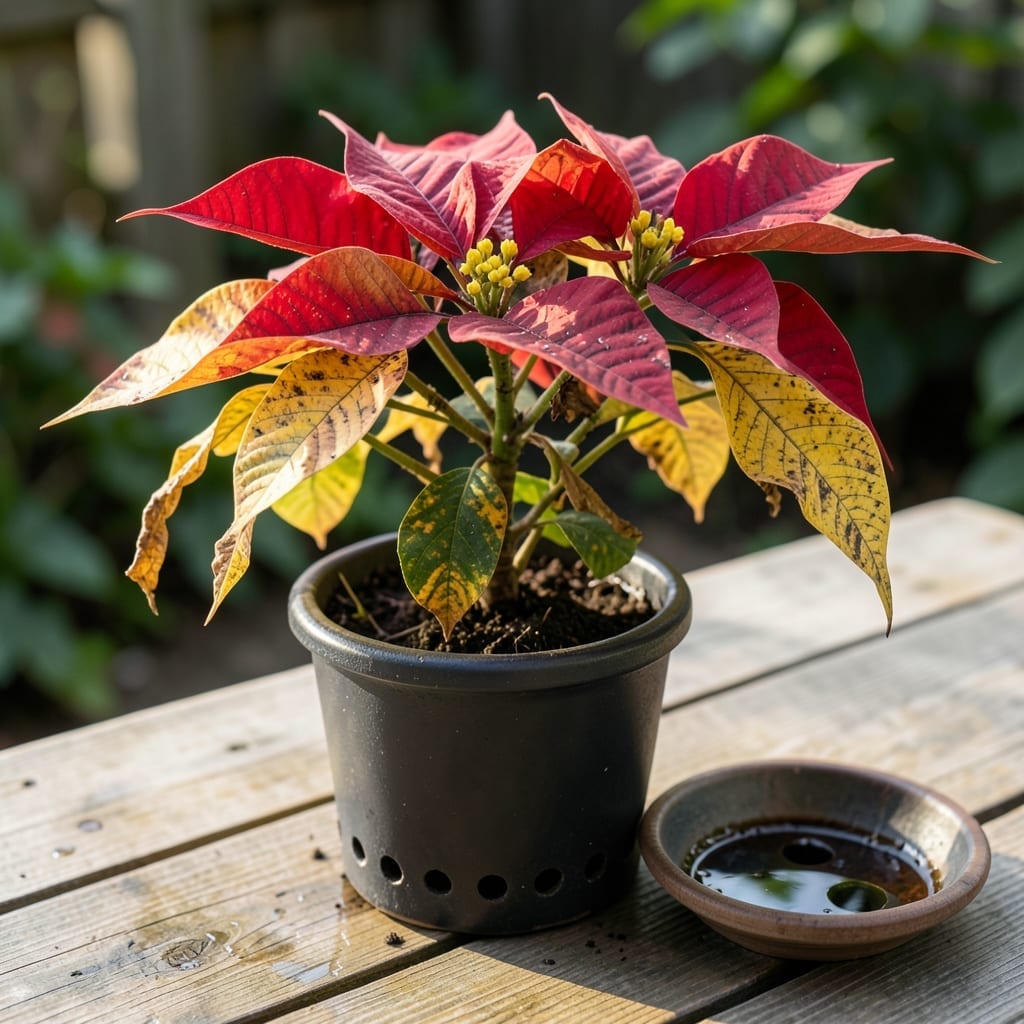
Yellow leaves and soggy soil mean your poinsettia is drowning. I’ve saved countless plants from this exact problem with a few simple moves.
The fix starts with stopping all water immediately. Let the soil dry completely, then check the roots—healthy ones are white and firm. Black, mushy roots mean trouble.
Repot in fresh, dry soil and trim any damaged roots. This gives your plant a clean start. Within 2-3 weeks, you’ll see new growth if the damage wasn’t too severe.
Going forward, water only when the top inch of soil feels dry. Your poinsettia will bounce back stronger and brighter.
Poinsettias are sensitive plants, and overwatering is a common issue that leads to drooping leaves, root rot, and even plant death. Understanding the root causes helps prevent these problems and keep your poinsettia thriving.
Poinsettias thrive in well-draining soil that dries slightly between waterings. Overwatering occurs when the soil remains soggy for extended periods, often due to watering on a fixed schedule rather than checking soil moisture. Their roots need oxygen, and waterlogged soil suffocates them, leading to root rot.
Even with moderate watering, poinsettias can suffer if the pot lacks drainage holes or uses dense, non-porous soil. Water pools at the bottom, creating a stagnant environment where roots drown. Always use containers with drainage and a well-aerated potting mix to prevent this.
Poinsettias in low-light or cold environments (below 60°F/15°C) use water more slowly. If you water them as frequently as in warmer, brighter conditions, the soil stays wet too long. Adjust watering frequency based on the plant’s environment to avoid over-saturation.
Planting poinsettias in oversized containers increases the risk of overwatering. The excess soil retains moisture, and the roots can’t absorb it all before rot sets in. Choose a pot just slightly larger than the root ball to maintain proper moisture balance.
If your poinsettia is suffering from too much water, don’t panic—there are clear steps to revive it. Below are practical fixes for each common issue, along with tips to prevent overwatering in the future.
If the leaves are turning yellow, the roots are likely drowning. Pause all watering and let the soil dry out completely. Check the moisture by sticking your finger an inch into the soil—if it feels damp, wait another day. Once dry, resume a moderate watering schedule: only when the top inch of soil is dry.
Prevention tip: 💡 Use a pot with drainage holes and empty the saucer after watering to avoid soggy roots.
Wilting often signals root rot from poor drainage. Repot the plant in fresh, well-draining potting mix (a cactus or succulent blend works well). Trim any black, mushy roots with clean scissors, then replant in a clean pot. Water lightly after repotting—just enough to settle the soil.
Prevention tip: ✨ Add perlite or sand to the soil mix to boost aeration and prevent waterlogging.
If leaves are falling off, the plant is stressed. Move it to bright, indirect light and reduce watering frequency. Poinsettias prefer slightly dry conditions over wet ones. Grouping it with other plants can raise humidity naturally, reducing the urge to overwater.
Prevention tip: 🎯 Water only when the soil feels dry to the touch, and always use room-temperature water to avoid shocking the roots.
With these adjustments, your poinsettia can bounce back—just be patient and consistent!
Water only when the top 1 inch of soil feels dry. This usually means once a week in average home conditions, but always check first. Overwatering is the most common mistake with these plants.
Yellowing leaves and drooping stems appear first. If you see these, stop watering immediately and let the soil dry out. Black, mushy roots indicate more serious damage.
Yes, if you act quickly. Trim the rotten roots, repot in fresh, dry soil, and water lightly. Recovery takes 2-3 weeks if the damage isn’t too severe.
Oversized pots hold too much moisture. Always choose a container just slightly larger than the root ball to prevent waterlogging.