
Beautiful Plants For Your Interior
Beautiful Plants For Your Interior
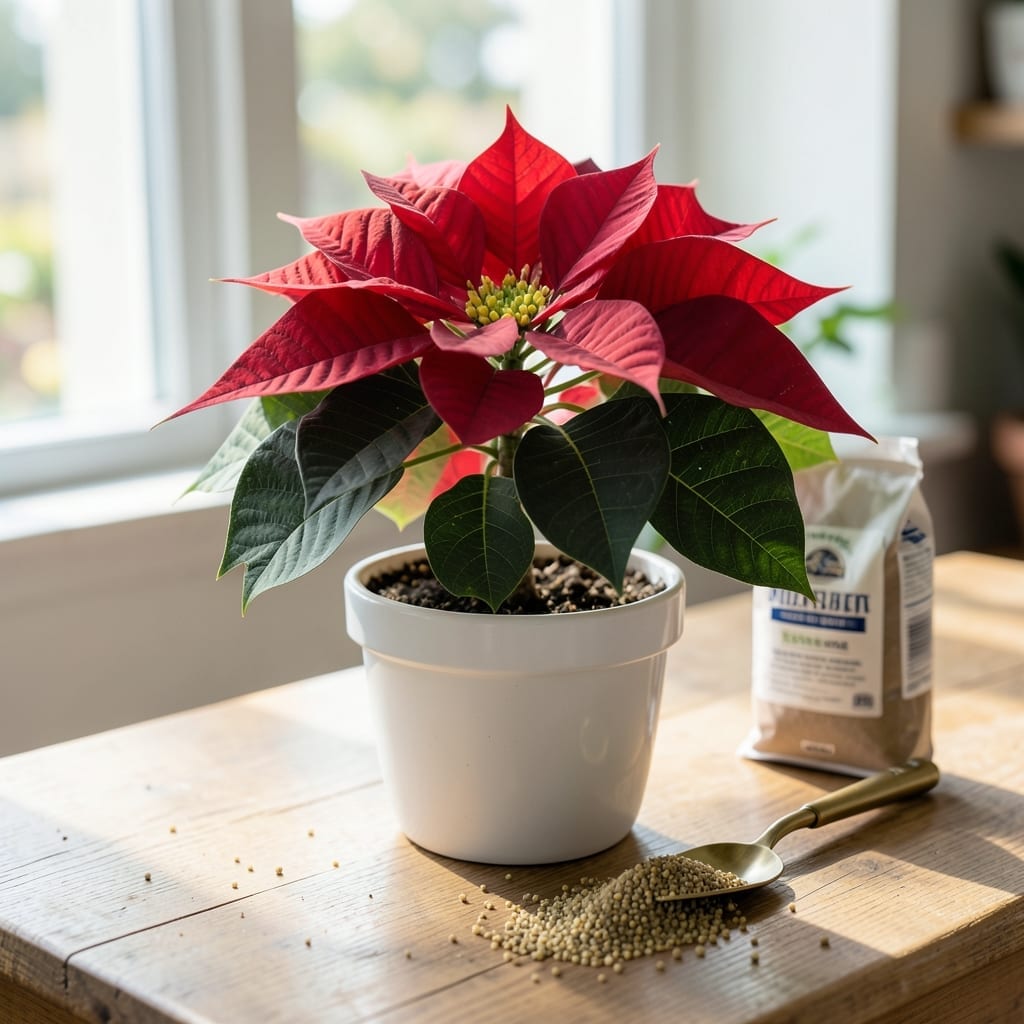
That moment when your 🌺 Poinsettia starts looking a little sad is heartbreaking. I’ve been there, staring at wilting leaves and wondering what went wrong. The good news? The right feeding routine can turn things around fast.
Poinsettias aren’t just holiday decorations—they’re living plants that need proper nutrients to thrive. With the right approach, you’ll see vibrant blooms and healthy growth all season long.
Let me show you exactly what to feed your Poinsettia and when. It’s simpler than you think, and your plant will thank you with stunning color.
I’ve learned that Poinsettias aren’t just pretty faces—they’re hungry plants. Feeding them the right nutrients makes all the difference between a thriving beauty and a sad, droopy mess.
The key is choosing a balanced fertilizer with an NPK ratio of 10-10-10 or 20-20-20. This gives them equal parts nitrogen, phosphorus, and potassium for strong stems, vibrant blooms, and healthy roots. 🌺
| Fertilizer Type | NPK Ratio | Best For |
|---|---|---|
| Balanced Liquid | 10-10-10 | Overall growth |
| Bloom Booster | 7-9-5 | Colorful bracts |
| Organic Compost | Varies | Slow-release nutrients |
For a bloom boost, I switch to a 7-9-5 formula when I see bracts forming. The extra phosphorus encourages those stunning red, pink, or white leaves we all love.
If you prefer organic options, compost tea or worm castings work wonders. They release nutrients slowly, reducing the risk of over-feeding. Just remember, organic doesn’t mean weak—it’s often gentler on roots.
Slow-release granules are another great choice. I sprinkle them into the topsoil every 2-3 months. They’re perfect for busy gardeners who want consistent feeding without frequent applications.
Always dilute liquid fertilizers to half-strength. Poinsettias are sensitive, and full-strength fertilizer can burn their roots. I use 1 tsp per gallon of water for my weekly feeding during active growth.
Watch for yellow leaves or brown edges—these are classic signs of over-fertilizing. If this happens, I flush the soil with clean water to wash away excess salts.
Under-feeding is just as bad. If your Poinsettia has pale leaves or stunted growth, it’s likely begging for more nitrogen. A quick dose of balanced fertilizer usually perks it right up.
I’ve found that early morning is the best time to feed. This gives the plant time to absorb nutrients before the heat of the day. Plus, it prevents fertilizer burn from sitting in the sun.
Remember, less is more with Poinsettias. Stick to the schedule, and you’ll be rewarded with vibrant color that lasts all season long. 🌿
Timing your Poinsettia feedings is just as important as choosing the right fertilizer. I’ve found that following the natural growth cycle gives the best results without stressing the plant.
Start feeding in early spring when you see new growth. This is when your Poinsettia wakes up from dormancy and begins its active growing phase.
During summer months, I increase the frequency to every 2-3 weeks. This is when your Poinsettia is working hardest to produce those vibrant bracts we love.
As fall approaches, I scale back to monthly feedings. The plant’s growth naturally slows, and too much fertilizer can lead to salt buildup in the soil.
Come winter, I stop feeding entirely. Poinsettias enter dormancy and don’t need extra nutrients. Resume feeding in spring when you see new leaves emerging.
For best results, always water your Poinsettia before feeding. This prevents root burn and helps distribute the nutrients evenly through the soil.
Remember, consistency is key. Stick to this schedule, and your Poinsettia will reward you with lush growth and stunning color year after year. 🌺