
Beautiful Plants For Your Interior
Beautiful Plants For Your Interior
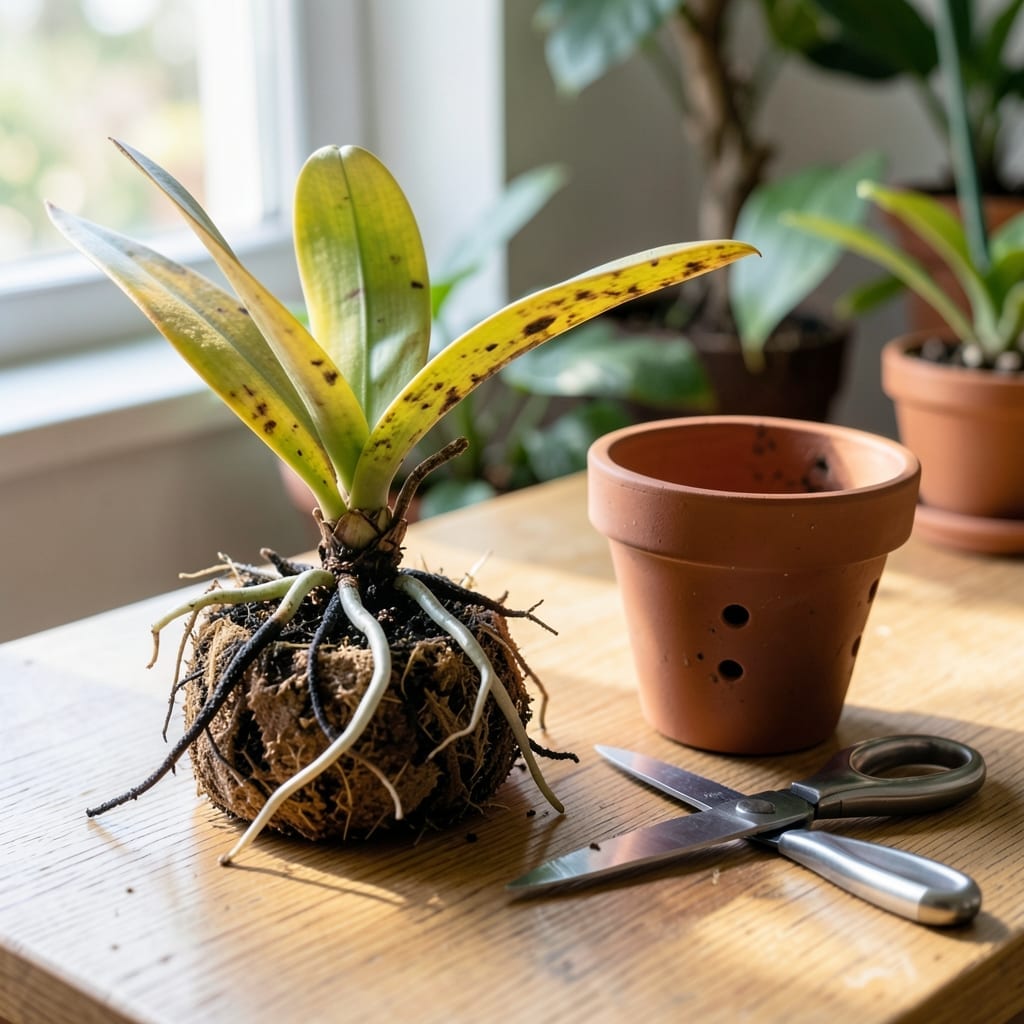
I killed my first orchid by loving it too much with water. Overwatered orchid root rot sneaks up fast, turning healthy roots to mush before you notice the leaves drooping or yellowing.
Here’s the thing—orchids hate soggy feet. The symptoms start below the surface: roots turn brown, soft, and hollow, while the leaves look wilted despite the moist potting mix.
You can save it, though. I’ve revived dozens by catching the rot early and giving the roots a chance to breathe again. The process takes patience but works.
Works for phalaenopsis, cattleya, or any orchid sitting in waterlogged bark. Here’s how to spot it before it’s too late.
Orchid root rot is often the result of excess moisture combined with poor growing conditions. Below are the primary causes, explained with actionable insights to help you prevent them.
Orchids, especially epiphytic types like Phalaenopsis, thrive in well-aerated environments. When watered too frequently or left in soggy media, roots suffocate. Stagnant water fills the air pockets in the potting mix, preventing oxygen uptake. Without oxygen, roots cannot respire, leading to cell death and Pythium or Phytophthora fungal infections—common pathogens in waterlogged conditions.
Old or tightly packed media (e.g., fine bark, moss, or soil) retains moisture and compacts over time, reducing airflow. Orchid roots require fast-draining, chunky substrates (like fir bark or sphagnum moss) to mimic their natural habitat. If the media breaks down into a dense, mud-like consistency, it traps water against the roots, accelerating rot.
Cool temperatures (below 60°F/15°C) slow evaporation, prolonging moisture exposure. Paired with high humidity (above 70%), this creates a perfect breeding ground for fungi and bacteria. Orchids in poorly ventilated areas—like closed terrariums or bathrooms without airflow—are especially vulnerable, as stagnant air exacerbates moisture retention.
Reusing unsterilized pots, tools, or even tap water can introduce pathogens directly to the roots. Fusarium and Rhizoctonia fungi, for example, thrive in damp, organic-rich environments. Always disinfect pruning shears with rubbing alcohol and use room-temperature, distilled, or rainwater to avoid chlorine or mineral buildup that stresses roots.
Save your orchid by addressing root rot head-on. Here’s how to tackle each cause with simple, actionable fixes.
If overwatering is the culprit, stop watering immediately and let the roots dry out. Repot the orchid in fresh, well-draining bark mix, and water only when the top inch of the medium feels dry. Use a pot with drainage holes to prevent waterlogging.
Prevention tip: 💡 Water in the morning so excess moisture evaporates during the day. Consider a clear pot to monitor root health easily.
Switch to a pot with multiple drainage holes and a chunky, airy medium like orchid bark or sphagnum moss. Avoid dense soil or compact mixes that trap moisture. Elevate the pot on a tray with pebbles to improve airflow underneath.
Prevention tip: ✨ Repot every 1–2 years to refresh the medium and prevent compaction.
Trim away all black, mushy roots with sterilized scissors. Soak the remaining healthy roots in a 1:10 hydrogen peroxide-to-water solution (3%) for 10 minutes to disinfect. Repot in fresh medium and isolate the plant to avoid spreading the infection.
Prevention tip: 🎯 Always sterilize tools between uses, and avoid overcrowding orchids to reduce humidity buildup.
Move your orchid to a spot with bright, indirect light to help it dry out faster between waterings. Use a small fan to improve air circulation, especially in humid climates. Aim for 40–70% humidity—use a hygrometer to monitor levels.
Prevention tip: 🌡️ Group orchids with other plants to create a microclimate, but ensure airflow isn’t blocked.
Check for brown, mushy roots that fall apart when touched. Healthy roots are firm and green or silver. Yellowing leaves and a foul odor from the pot are also red flags.
Yes, if some healthy roots remain. Remove all rotted parts with sterilized tools, treat with hydrogen peroxide, and repot in fresh medium. Recovery takes weeks to months.
Water only when the top 1 inch of medium feels dry. Typically every 7-10 days, but adjust based on your home’s humidity and temperature.
Transplant shock is normal. Ensure the new pot has drainage holes and use a chunky medium. Avoid watering for 3-5 days post-repotting to let roots heal.