
Beautiful Plants For Your Interior
Beautiful Plants For Your Interior
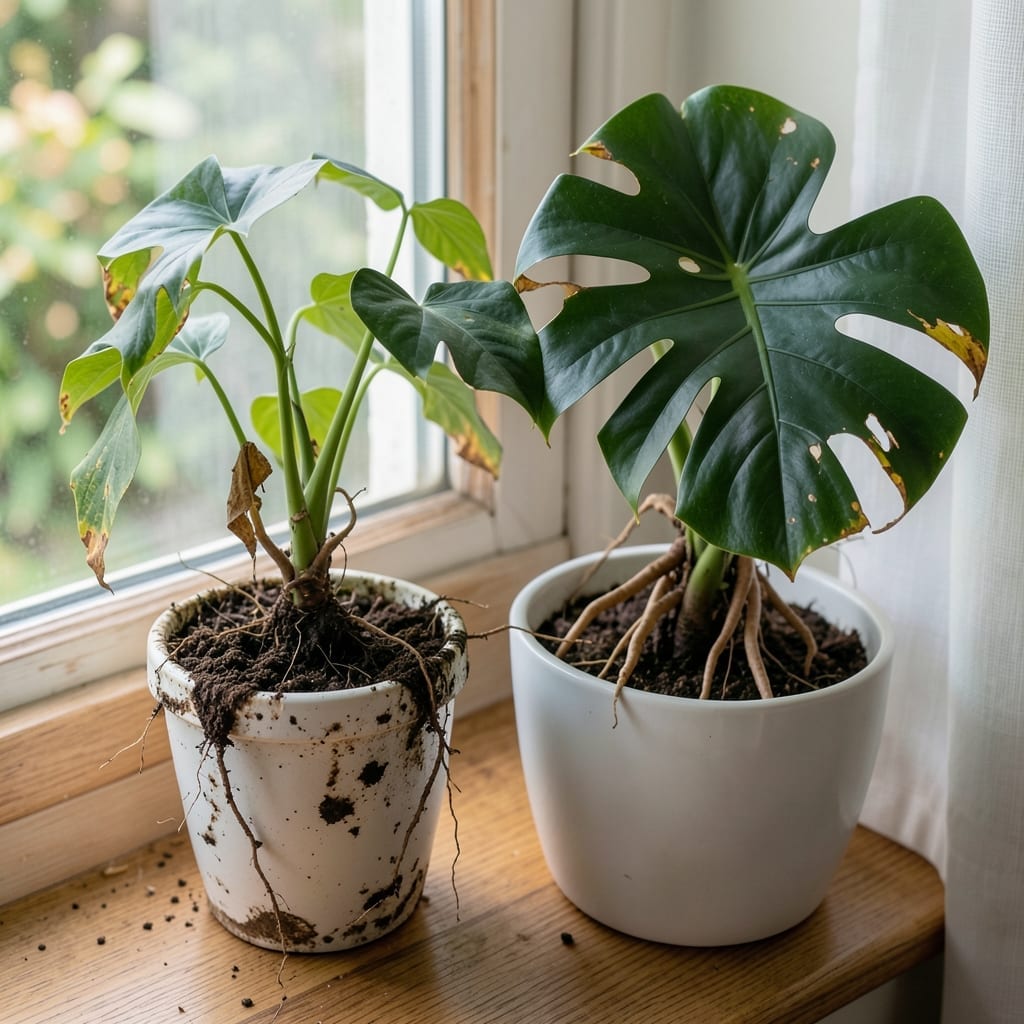
Yellow leaves and soggy soil spelled disaster for my first monstera. This silent killer starts underground, turning healthy roots to mush before you notice the damage above.
I learned the hard way that overwatering isn’t about quantity—it’s about frequency. Monstera roots need air as much as moisture, and most people drown them with good intentions.
The recovery process is shockingly simple once you know the steps. Trim the rot, repot in fresh soil, and adjust your watering routine. Your plant can bounce back stronger than before.
Prevention comes down to 3 rules: check soil moisture, use well-draining pots, and never let plants sit in water. Here’s how to save your monstera and keep it thriving.
Root rot in your Monstera deliciosa doesn’t happen overnight—it’s the result of a few key environmental and care missteps. Below are the primary causes, explained with science-backed clarity so you can pinpoint the issue and take action.
The most common culprit is overwatering, which suffocates the roots. Monsteras thrive in well-draining soil that allows oxygen to reach the roots. When soil stays soggy, anaerobic conditions develop, and harmful fungi (like Phytophthora or Pythium) and bacteria multiply, attacking the roots. A good rule: water only when the top 1–2 inches of soil are dry.
Even if you water sparingly, compacted or non-porous soil traps moisture. Monsteras need a chunky, airy mix (think perlite, orchid bark, or pumice) to prevent waterlogging. Without proper drainage, roots drown, and rot sets in. Always use pots with drainage holes to let excess water escape.
Planting your Monstera in a pot that’s too large can also lead to root rot. Extra soil retains more moisture, and the roots can’t absorb it all, leaving the medium waterlogged. Stick to pots just 1–2 inches wider than the root ball to avoid this issue.
Cool temperatures (below 60°F/15°C) slow down root metabolism, reducing their ability to absorb water. Combined with high humidity, this creates a perfect storm for stagnant moisture and fungal growth. Keep your Monstera in a warm, well-ventilated space to mitigate this risk.
If your Monstera deliciosa is suffering from root rot, don’t panic—it’s often fixable! Here’s a step-by-step guide to nurse your plant back to health, along with tips to keep it thriving.
Gently remove your Monstera from its pot and inspect the roots. Trim away any mushy, dark, or foul-smelling roots with clean scissors. Repot the plant in fresh, well-draining soil and a pot with drainage holes. Water lightly and let the soil dry out before the next watering.
If water pools at the bottom, switch to a pot with drainage holes or add a layer of pebbles. Terracotta pots are great for wicking away excess moisture. Place a saucer underneath to catch runoff, but empty it after 30 minutes.
Dense soil suffocates roots. Mix in perlite, orchid bark, or coco coir to improve aeration. For severe cases, repot entirely in a chunkier, airier mix.
Water only when the top 2-3 inches of soil are dry. This usually means every 1-2 weeks, but always check the soil first. Finger test is the most reliable method.
Yes, if there are still healthy white roots. Trim all mushy, dark roots, repot in fresh soil, and reduce watering. Recovery takes 4-6 weeks with proper care.
Yellow leaves often signal overwatering before root rot appears. Check the soil moisture and reduce watering immediately. Brown spots may indicate more advanced rot.
Use a chunky mix with 40% perlite, 30% orchid bark, and 30% potting soil. This ensures excellent drainage while retaining just enough moisture.