
Beautiful Plants For Your Interior
Beautiful Plants For Your Interior
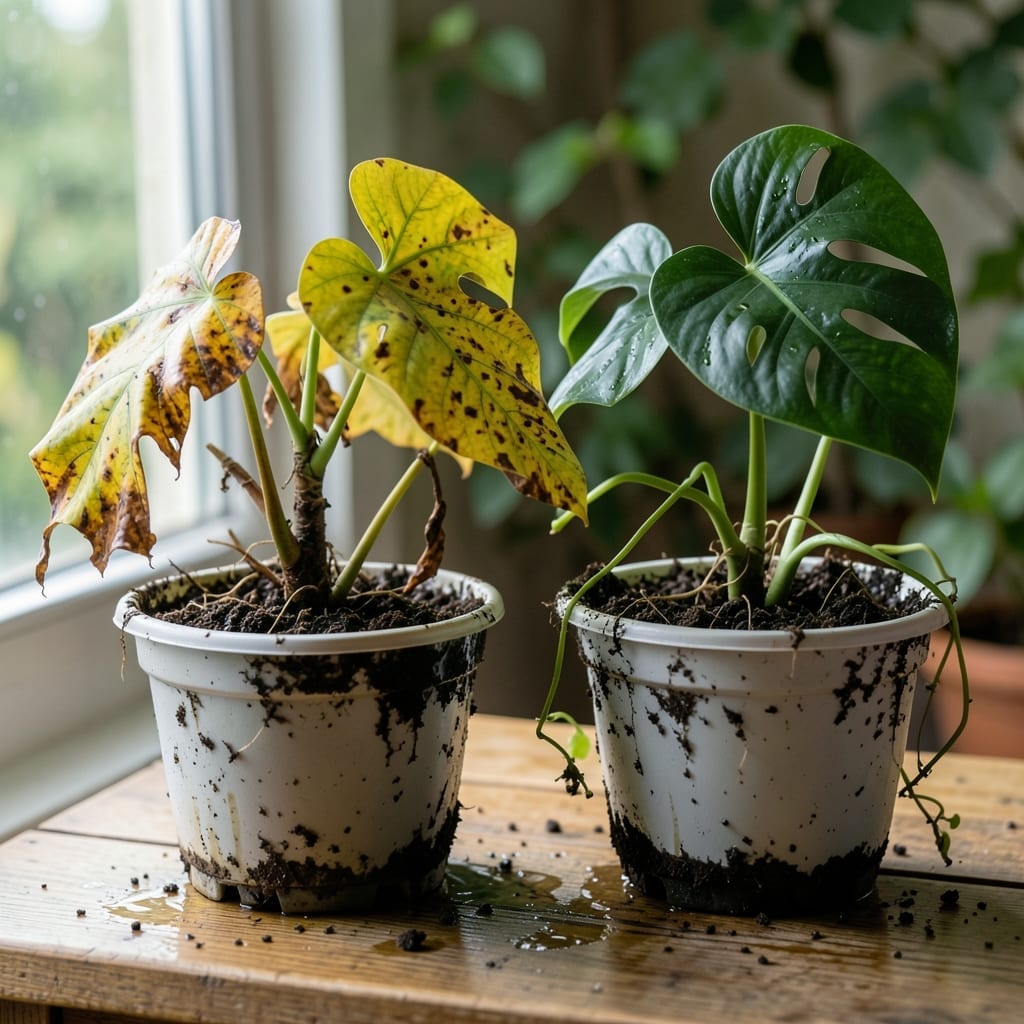
Yellow leaves and mushy stems on your Monstera Adansonii usually mean one thing: too much love in the watering department. I’ve rescued more of these from the brink than I can count.
The first sign is always the same—soft stems and leaves that turn yellow overnight. Then come the brown spots, the wilting, the dreaded root rot. The fix starts with stopping the water and letting the soil dry out completely.
After a week of no water, check the roots. Healthy ones are firm and white. If they’re brown and squishy, it’s time for a trim and fresh soil. Recovery takes 2-4 weeks, but most bounce back.
Prevention is simpler than the cure: water only when the top 2-3 inches of soil are dry. No exceptions.
Overwatering your Monstera adansonii isn’t just about giving it too much water—it’s about disrupting the delicate balance of moisture, oxygen, and root health. Here’s why it happens:
When pots lack drainage holes or use dense, compacted soil, water pools at the bottom, suffocating the roots. Roots need oxygen as much as they need water, and waterlogged soil blocks airflow, leading to root rot. Always use pots with drainage and a well-aerating potting mix (e.g., perlite or orchid bark).
Sticking to a rigid watering schedule (e.g., “every Monday”) ignores the plant’s actual needs. Factors like humidity, temperature, and season affect how quickly soil dries. Check the top 1–2 inches of soil—if it’s dry, water; if it’s damp, wait. A moisture meter can remove the guesswork.
Larger pots hold more soil, which retains moisture longer. For Monstera adansonii, this means the roots sit in damp conditions for extended periods, increasing rot risk. Choose a pot only 1–2 inches wider than the root ball to ensure proper drying between waterings.
In dim or cool environments, evaporation slows, and soil stays wet longer. If your plant sits in a low-light corner or a chilly room, reduce watering frequency and ensure it’s in a bright, indirect spot to promote healthy growth and faster soil drying.
Don’t panic—your Monstera adansonii can bounce back with the right care. Below are targeted fixes for each overwatering symptom, plus tips to prevent future issues.
Stop watering immediately and let the soil dry out. Check moisture by sticking your finger 2 inches deep—only water when it feels dry. Use a well-draining potting mix (add perlite or orchid bark) to prevent soggy roots. Prevention tip: 💡 Water on a schedule (e.g., every 10–14 days) rather than by habit.
If the pot lacks drainage holes, repot your plant ASAP into one with holes. Elevate the pot to avoid water pooling. For severe cases, gently remove the plant, trim any mushy black roots, and repot in fresh, dry soil. Prevention tip: ✨ Always empty saucers after watering to avoid root rot.
Move your Monstera adansonii to a spot with bright, indirect light and good airflow (a fan on low can help). Trim damaged leaves with clean scissors to redirect energy. Prevention tip: 🌡️ Avoid misting excessively—humidity is good, but damp leaves invite fungal issues.
For advanced rot, unpot the plant, rinse roots under lukewarm water, and snip off all dark, soft roots. Soak remaining healthy roots in a 1:10 hydrogen peroxide-water solution for 10 minutes to disinfect. Repot in fresh soil and a clean pot. Prevention tip: 🎯 Use a moisture meter to avoid guessing soil dryness.
With these steps, your Monstera adansonii should show improvement in 2–4 weeks. Be patient and resist the urge to overcompensate with extra water!
Water only when the top 2-3 inches of soil are completely dry. This usually means every 10-14 days, but always check the soil first. A moisture meter removes all guesswork.
Trim all dark, soft roots immediately with clean scissors. Soak healthy roots in a 1:10 hydrogen peroxide-water solution for 10 minutes, then repot in fresh, dry soil.
Yes, if at least 30% of roots remain healthy. Remove all rotten roots, disinfect the rest, and repot. Keep the plant in bright, indirect light and avoid watering for 1 week.
This classic sign means roots are drowning. Stop watering immediately and let the soil dry out completely. Yellow leaves won’t recover, but new growth will appear in 2-4 weeks.