
Beautiful Plants For Your Interior
Beautiful Plants For Your Interior
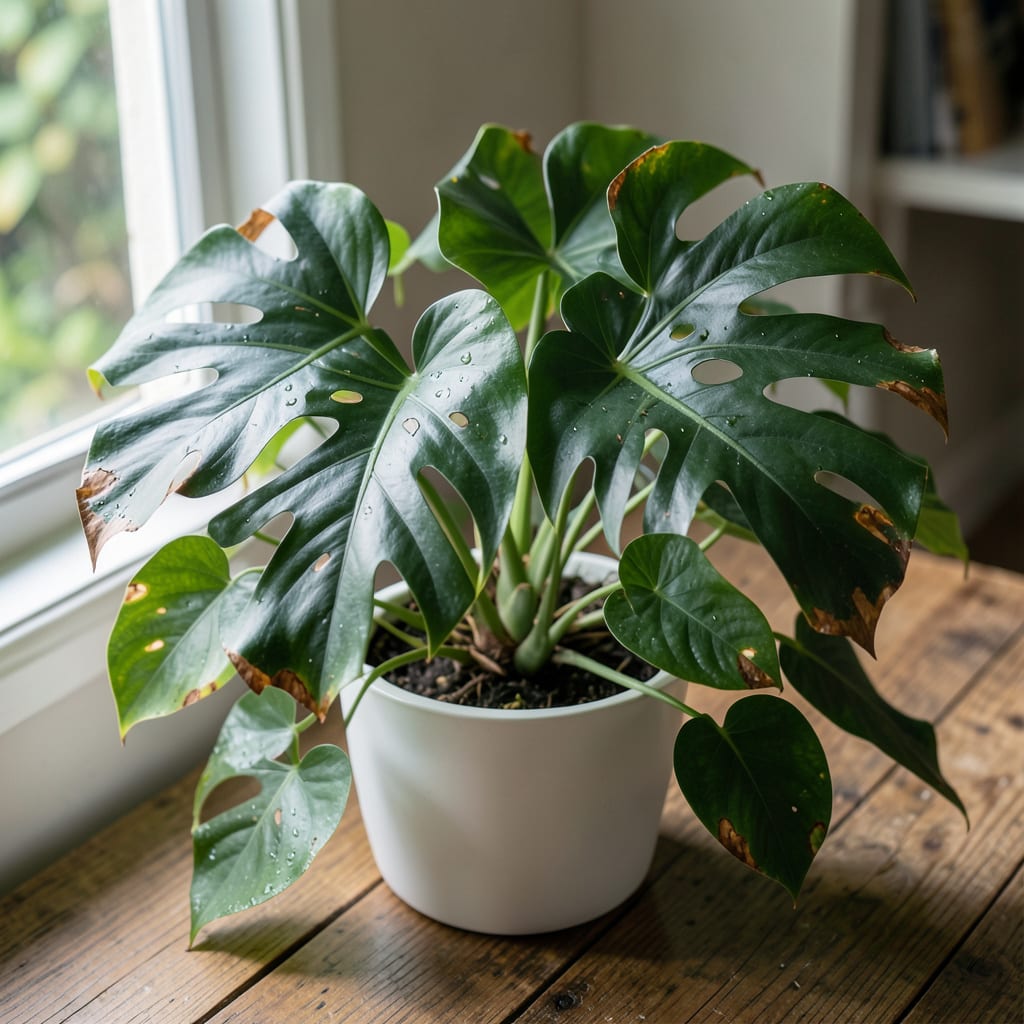
Brown tips on your Monstera adansonii aren’t a death sentence. I’ve rescued more than a few by focusing on what the plant actually needs, not what I assumed it wanted.
Most often, it’s a watering issue—either too much or too little. But light exposure and humidity play huge roles too. The leaves tell you exactly what’s wrong if you know how to read them.
You’ll see new growth within 2-3 weeks of fixing the problem. The brown tips won’t regrow, but fresh leaves will emerge vibrant and healthy.
Works for any indoor space, from bright sunrooms to dim apartments. Here’s how to diagnose and fix it for good.
Brown tips on your Monstera adansonii usually signal stress. Here’s why it happens:
Inconsistent watering disrupts the plant’s ability to absorb nutrients. Underwatering causes dry, crispy tips as cells dehydrate. Overwatering suffocates roots, leading to root rot and nutrient uptake failure. Both extremes trigger tissue death at the leaf margins.
Monstera adansonii thrives in 60-80% humidity. Dry air pulls moisture from the leaves faster than the roots can replace it, causing brown, papery tips. This is especially common in air-conditioned or heated indoor environments.
Direct sunlight or intense artificial light can scorch the delicate leaf tips. Photo-oxidative stress occurs when chlorophyll breaks down under UV radiation, leading to localized browning. Even bright indirect light can cause this if the plant isn’t acclimated.
A lack of potassium, calcium, or magnesium often manifests as brown tips. These nutrients are mobile within the plant, so deficiencies appear first in older leaves. Poor soil quality or improper fertilization can exacerbate the issue.
Tap water minerals (like chlorine or fluoride) or fertilizer salts accumulate in the soil, creating a toxic environment. This disrupts osmosis, preventing water uptake and causing tip burn. Flushing the soil every few months can prevent this.
Brown tips on your Monstera adansonii are often a cry for help, but the good news is they’re usually fixable! Below are targeted solutions for the most common causes, along with prevention tips to keep your plant thriving. 🌿
Fix: Check the soil moisture first. If the top 1-2 inches are bone dry, your plant needs water. If it’s soggy or smells musty, it’s overwatered. For underwatering, give it a thorough drink until water drains from the bottom. For overwatering, let the soil dry out completely before watering again and ensure the pot has drainage holes. Trim any mushy, black roots if root rot is present.
Prevention: Water only when the top inch of soil is dry. Use a well-draining potting mix with perlite or orchid bark. 💡 Pro tip: Lift the pot—if it feels light, it’s time to water!
Fix: Move your Monstera adansonii to a spot with bright, indirect light. If the leaves are scorched, trim the brown tips with clean scissors to encourage new growth. Gradually reintroduce it to light to avoid shocking the plant.
Prevention: Place it near an east- or north-facing window, or use a sheer curtain to filter harsh sunlight. Rotate the pot occasionally for even light exposure. ✨
Fix: Increase humidity around your plant by misting it daily or placing it on a pebble tray filled with water. For a more hands-off approach, use a humidifier nearby.
Prevention: Group plants together to create a microclimate or keep it in naturally humid areas like bathrooms (with good light). 🌫️ Pro tip: Aim for 60-70% humidity for optimal growth.
Fix: If the leaves are yellowing and browning, it might need nutrients. Use a balanced, water-soluble houseplant fertilizer (diluted to half strength) every 4-6 weeks during the growing season. Flush the soil with water every few months to remove excess salts.
Prevention: Repot your plant every 1-2 years with fresh, nutrient-rich soil. Avoid fertilizing in winter when growth slows. 🎯
Fix: Switch to filtered, distilled, or rainwater for watering. If tap water is your only option, let it sit out overnight to allow chlorine to evaporate.
Prevention: Use room-temperature water to avoid shocking the roots. Consistency is key—stick to one type of water to prevent stress. ✨
No, once the tissue is damaged and brown, it won’t recover. However, new growth will emerge healthy and vibrant once you address the underlying issue.
Water when the top 1-2 inches of soil feel dry. This typically means every 7-10 days in moderate conditions, but always check the soil first. Overwatering is a common mistake!
Misting helps but may not be sufficient alone. For best results, combine it with a pebble tray or humidifier to maintain 60-70% humidity. Grouping plants together also boosts moisture levels.
Yes, trim them with clean scissors to improve appearance and prevent further damage. Follow the leaf’s natural shape for a tidy look. New growth will replace the damaged areas over time.
