
Beautiful Plants For Your Interior
Beautiful Plants For Your Interior
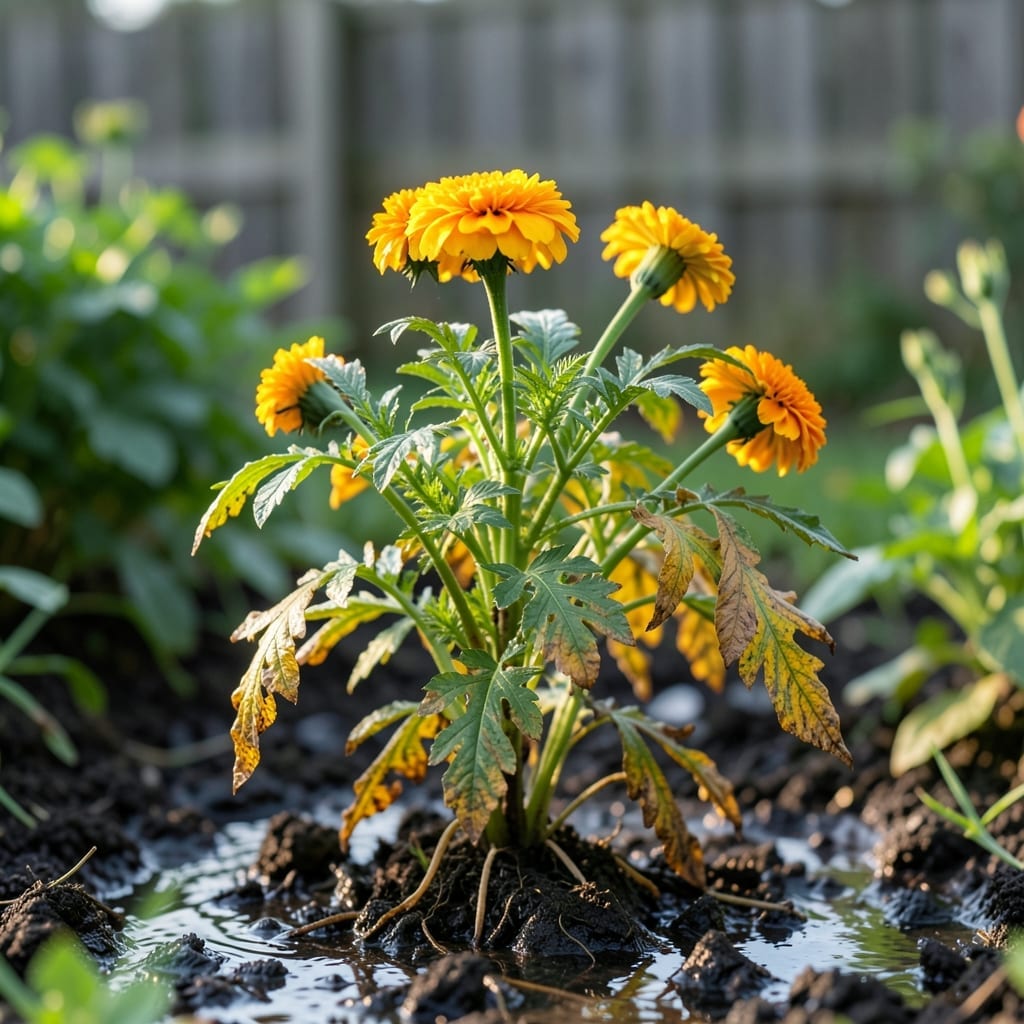
Droopy marigolds break my heart every time. I’ve watched healthy plants turn to mush overnight from too much love—well, water. The first sign is always the same: yellowing leaves that feel soft, not crisp.
The real trouble starts underground. Roots can’t breathe in soggy soil, and rot sets in fast. Most gardeners don’t realize marigolds prefer it on the dry side, thriving with 1 inch of water per week, including rain.
Here’s the thing—revival is possible if you catch it early. Stop watering immediately, let the top 2 inches of soil dry out, and trim any black, mushy roots. The plant will often bounce back within a week.
Prevention is simpler than you think. Well-draining soil and pots with drainage holes solve 90% of overwatering problems before they start.
Marigolds thrive with consistent moisture, but too much water disrupts their natural balance. Here’s why it happens:
Marigolds need well-draining soil to prevent waterlogging. When planted in heavy clay or compacted soil, water pools around the roots, suffocating them. Root asphyxiation occurs because oxygen can’t reach the root zone, leading to decay. Amend dense soil with perlite or coarse sand to improve drainage.
Overwatering isn’t just about quantity—it’s also about frequency. Light, daily watering encourages shallow root growth, making plants more susceptible to stress. Instead, water deeply but infrequently (1–2 times per week in most climates), allowing the top 1–2 inches of soil to dry out between sessions.
Wetting the foliage, especially in humid conditions, promotes fungal diseases like powdery mildew or botrytis. Marigolds’ dense foliage traps moisture, creating a breeding ground for pathogens. Water at the base using a soaker hose or drip irrigation to keep leaves dry.
Potted marigolds often suffer from overwatering due to poor container design. Pots without drainage holes trap excess water, while oversized containers hold too much moisture for the plant’s needs. Use containers with drainage and match the pot size to the plant’s root ball to avoid soggy soil.
Addressing these causes restores your marigolds’ vigor by letting roots breathe and thrive.
Don’t worry—your marigolds can bounce back! Here’s how to tackle the most common issues caused by too much water, with simple steps to revive your plants and keep them thriving.
If your marigolds are drooping or showing signs of root rot, pause all watering right away. Let the soil dry out completely before giving them another drink. Stick your finger an inch into the soil—if it feels damp, wait another day or two.
Poor drainage is a leading cause of overwatering. Move potted marigolds to containers with drainage holes, or add a layer of gravel at the bottom. For garden beds, mix in coarse sand or perlite to loosen compacted soil and help excess water escape.
Prevention tip: 💡 Always use well-draining soil and pots with holes to avoid future issues.
Snip off yellowed, mushy leaves or stems with clean scissors to redirect the plant’s energy toward healthy growth. This also improves airflow, reducing the risk of fungal diseases.
Marigolds love sunlight! If they’re in a shady, damp area, relocate them to a spot with at least 6 hours of direct sun daily. More light helps the soil dry faster and keeps roots healthy.
For severely waterlogged plants, gently remove them from the soil, trim any black or mushy roots, and repot in fresh, dry soil. This gives them a clean slate to recover.
Prevention tip: ✨ Water only when the top inch of soil is dry, and always empty saucers under pots after watering.
Marigolds typically need 1 inch of water per week, including rainfall. Water deeply 1-2 times weekly, letting the top 1-2 inches of soil dry between sessions.
Look for yellowing leaves that feel soft, not crisp, and drooping stems. The soil may smell sour or have visible mold. These often appear before root rot sets in.
If caught early, yes. Stop watering, trim black mushy roots, and repot in fresh, dry soil. Ensure the new container has drainage holes for best results.
Water in the early morning to allow foliage to dry before nightfall. This reduces fungal disease risk. Avoid evening watering, especially in humid climates.