
Beautiful Plants For Your Interior
Beautiful Plants For Your Interior
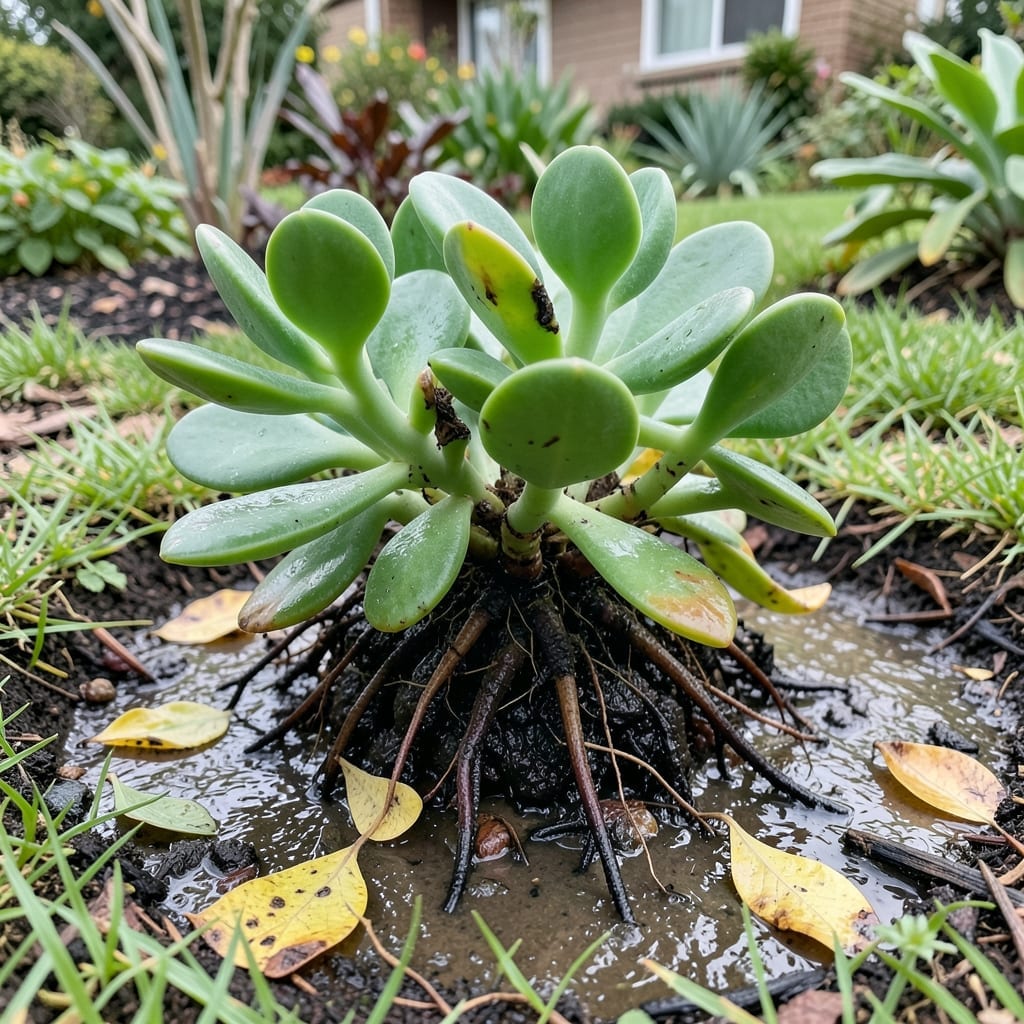
That sinking feeling when your jade plant’s leaves turn squishy instead of plump. I’ve been there—watching a once-thriving plant decline because I showed it too much love with the watering can.
Overwatering doesn’t just drown the roots; it creates the perfect environment for rot to take hold. The first sign is usually yellowing leaves, then they start dropping like flies. Left unchecked, the roots turn to mush beneath the soil.
Here’s the thing—jade plants are survivors. Even with root rot setting in, there’s a good chance you can save yours with quick action. The key is catching it early and giving those roots a chance to dry out.
Between you and me, I check soil moisture with my finger now before any watering decision. It’s saved more plants than I can count.
Overwatering is the primary trigger for root rot in jade plants, but the underlying causes run deeper. Here’s why it happens:
Jade plants (Crassula ovata) are succulents adapted to arid conditions. Their roots thrive in dry, well-draining soil. When overwatered, the soil becomes waterlogged, displacing oxygen. Without oxygen, root cells cannot respire, leading to tissue death. Anaerobic bacteria and fungi then colonize the decaying roots, accelerating rot.
Even moderate watering can cause rot if the pot lacks drainage holes or uses dense, water-retentive soil. Clay or compacted mixes hold moisture against the roots, creating a stagnant environment. Fungal pathogens like Phytophthora and Pythium thrive in these conditions, breaking down root structures.
Jade plants in cool climates (below 50°F/10°C) or drafty spots are more vulnerable. Lower temperatures reduce soil evaporation, prolonging moisture exposure. Combined with overwatering, this slows metabolic activity in the plant, making it less able to recover from water stress.
Large containers retain more moisture than the plant can use. The excess water sits unused, promoting root suffocation and microbial growth. Always choose pots only 1-2 inches wider than the plant’s root ball to minimize this risk.
Saving an overwatered jade plant starts with quick action. Below are targeted fixes for each root cause, paired with prevention tips to keep your plant thriving long-term.
If the soil feels soggy or smells foul, your jade plant is likely drowning. Gently remove the plant from its pot and inspect the roots. Trim away any dark, mushy roots with sterile scissors. Repot in fresh, well-draining cactus or succulent mix and a pot with drainage holes. Wait 5–7 days before watering again to let the roots recover.
Prevention: Water only when the top 1–2 inches of soil are completely dry. Use the “soak and dry” method: water deeply, then let excess drain fully. 💡 Stick your finger in the soil—if it’s damp, wait!
Jade plants hate “wet feet.” If your pot lacks drainage holes or the soil retains too much moisture, root rot is inevitable. Switch to a terracotta pot (it wicks away moisture) and a gritty, fast-draining mix (add perlite or coarse sand to regular soil).
Prevention: Elevate pots on saucers with pebbles to avoid waterlogging. 🎯 Always empty saucers after watering.
Jade plants prefer warm, dry air. If your plant sits in a cold draft or humid spot (like a bathroom), roots stay wet too long. Move it to a sunny, warm location (65–75°F) with good airflow. Avoid misting—jade plants don’t need humidity!
Prevention: Keep your plant near a south- or west-facing window. ✨ Use a small fan on low to improve air circulation if needed.
If you’re watering on a fixed schedule (e.g., weekly), stop! Jade plants need water only when the soil is dry. Check the soil every 7–10 days—less in winter. Remember: underwatering is safer than overwatering for these hardy plants.
Prevention: Set a calendar reminder to check soil moisture, not to water. 🌡️ Use a moisture meter for precision.
Look for yellow, mushy leaves that fall off easily. The soil may smell sour, and roots will appear black or brown and slimy. Healthy roots are firm and white.
Yes, if some healthy roots remain. Trim all rotten roots with sterile scissors, repot in fresh, dry soil, and avoid watering for 1 week. Propagate healthy leaves as a backup.
Use a well-draining cactus or succulent mix. Add perlite or coarse sand for extra drainage. Terracotta pots help wick away excess moisture.
Only when the top 1–2 inches of soil are completely dry. In warm months, this may be every 2–3 weeks; in winter, even less. Always check first!