
Beautiful Plants For Your Interior
Beautiful Plants For Your Interior
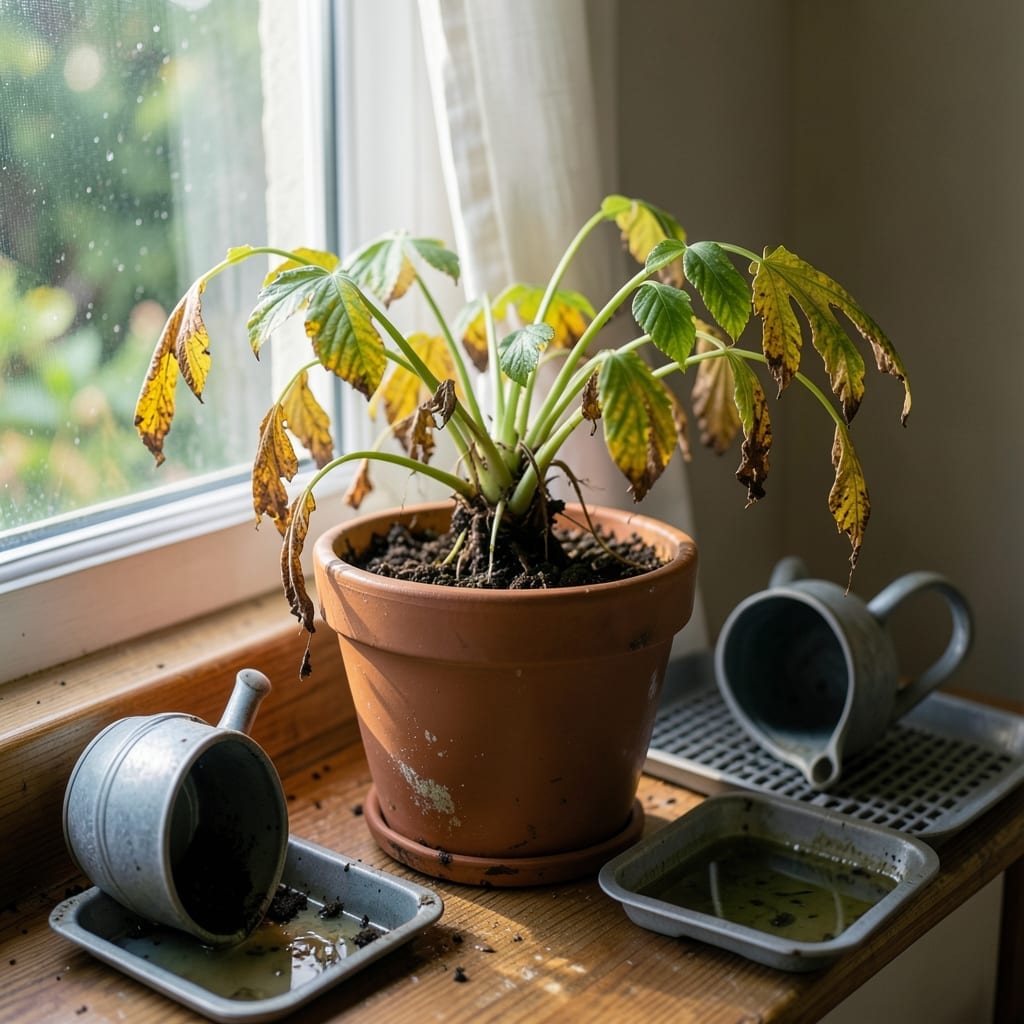
Yellow leaves and soggy soil mean trouble. I’ve saved dozens of overwatered plants with a simple rescue routine that works even when roots look hopeless.
Most people kill with kindness—too much water, not enough drainage. The fix starts with stopping the watering cycle immediately and letting the plant dry out completely.
You’ll see new growth within 2-3 weeks if the roots aren’t completely gone. Trim the black, mushy parts and repot in fresh, dry soil for the best chance.
Prevention is easier than revival: water only when the top 1-2 inches of soil are dry. No more guessing games.
Overwatering is often the result of good intentions gone wrong. Here’s why it happens, rooted in science and plant biology:
Many plant owners assume more water equals healthier plants, but roots need oxygen as much as moisture. When soil stays soggy, it suffocates the roots by displacing air pockets. This leads to anaerobic conditions, where beneficial microbes die off, and harmful bacteria (like Pythium or Phytophthora) thrive, causing root rot.
Pots without drainage holes or saucers that trap water create a standing water scenario. Even well-meaning watering becomes problematic when excess moisture has no escape. Clay or compacted soil can also prevent proper drainage, ensuring water lingers longer than the plant can tolerate.
Plants in oversized pots retain moisture longer because the soil volume stays wet between waterings. Similarly, dense, water-retentive soils (like pure peat) hold too much moisture for most houseplants. A well-aerated mix with perlite or bark helps prevent waterlogging.
Cooler temperatures or low light slow a plant’s metabolism, reducing its water needs. Watering on a fixed schedule—rather than checking soil moisture—often leads to overwatering. Always test the top 1-2 inches of soil; if it’s damp, wait to water.
Don’t toss that droopy plant just yet! With a few simple fixes, you can nurse it back to health. Here’s how to tackle the most common overwatering issues:
If your plant’s leaves are turning yellow, it’s begging for a break. Stop watering immediately and let the soil dry out completely before the next drink. Check the top 1-2 inches of soil—if it’s damp, wait. Prevention tip: 💡 Stick your finger in the soil weekly; water only when the top layer feels dry.
Wilting despite wet soil? Your plant’s roots are likely drowning. Repot it in fresh, well-draining soil and a pot with drainage holes. Remove any soggy, black roots (a sign of rot) with clean scissors. Prevention tip: ✨ Use a mix with perlite or sand to keep soil airy and prevent future waterlogging.
A stinky pot or moldy soil means bacteria or fungi have moved in. Remove the plant, discard the old soil, and wash the pot with soapy water. Repot with fresh soil and hold off on watering for a few days. Prevention tip: 🌡️ Avoid letting pots sit in saucers of water—empty excess after 10-15 minutes.
Overwatering often stems from good intentions. Switch to a watering schedule based on the plant’s needs (e.g., succulents need less, ferns need more). Use a moisture meter if you’re unsure. Prevention tip: 🎯 Group plants with similar water needs together to simplify care.
Look for yellowing leaves, mushy stems, or soil that stays soggy. A foul odor or mold on the surface are also red flags.
No, always check the soil first. Stick your finger in 1-2 inches deep—if it’s dry, it’s time to water.
No, discard old soil as it may harbor harmful bacteria or fungi. Fresh, well-draining soil gives your plant the best chance.
If roots aren’t severely damaged, you’ll see improvement in 2-3 weeks. Patience and proper care are key.