
Beautiful Plants For Your Interior
Beautiful Plants For Your Interior
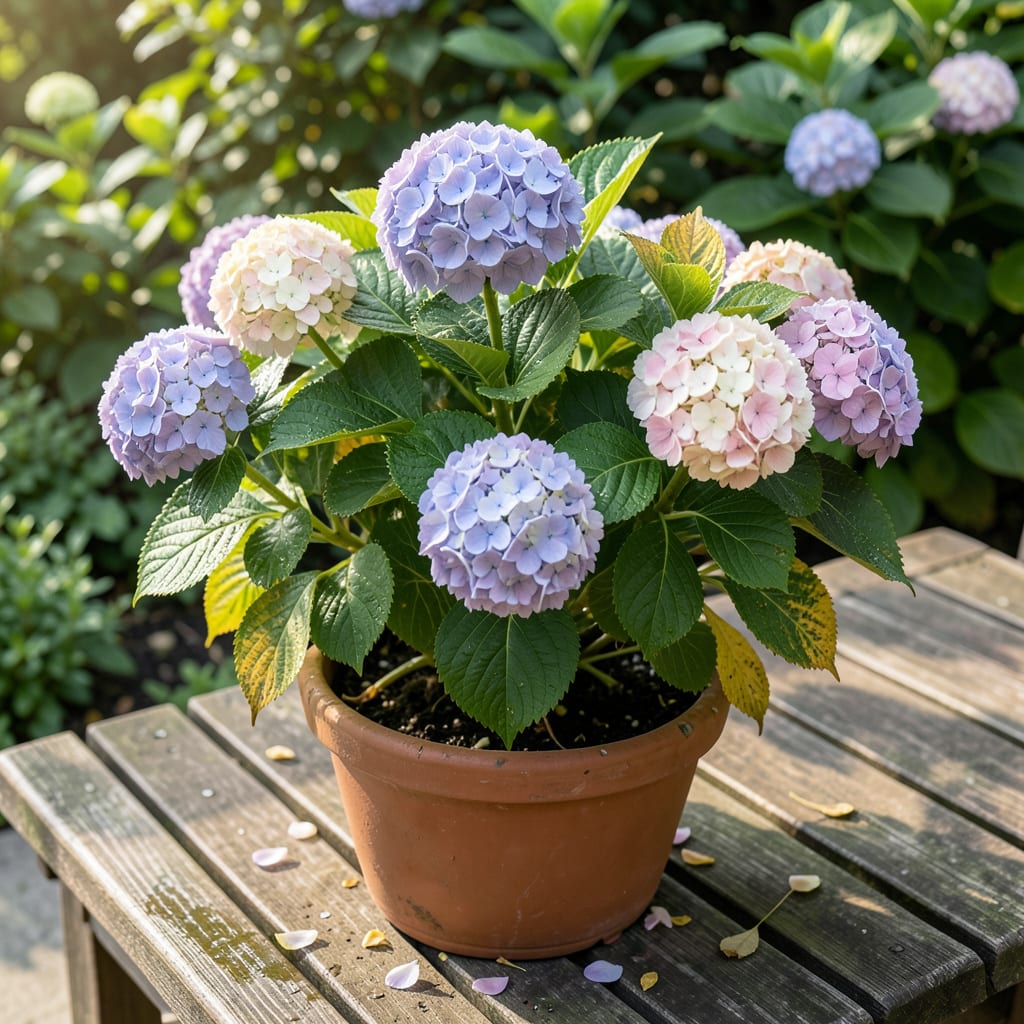
Yellow hydrangea leaves always mean something’s off. I’ve seen this in my own garden, and the fix is usually simpler than you’d think.
Most often it’s too much water, not enough iron, or the wrong soil pH. Once you identify the cause, a few small changes bring those leaves back to vibrant green within 2-3 weeks.
📚 In This Guide
Here’s how I quickly pinpoint the issue and nurse my hydrangeas back to vibrant green health.
Overwatering is the most common culprit I see. Stick your finger 2 inches into the soil—if it feels soggy, you’re likely drowning the roots. Hydrangeas prefer consistently moist but not waterlogged soil. Wait until the top inch feels dry to the touch before watering again.
Underwatering shows similar symptoms but with dry, crispy leaf edges. I water deeply at the base, never overhead, to prevent fungal issues. A good soak 2-3 times weekly in average weather keeps roots happy without stressing the plant.
Hydrangeas need slightly acidic soil (pH 5.5-6.5) to absorb iron properly. Yellow leaves with green veins often signal iron deficiency caused by alkaline soil. I use a simple pH test kit to check—if the reading is above 7.0, the plant can’t access nutrients even if they’re present.
To correct this, I mix 1 tablespoon of aluminum sulfate into a gallon of water and apply it around the base. For a gentler approach, organic matter like pine needles or coffee grounds gradually acidifies the soil over 4-6 weeks.
Nitrogen deficiency causes uniform yellowing, starting with older leaves. I apply a balanced 10-10-10 fertilizer at half strength every 2-3 weeks during growing season. Always water before and after fertilizing to prevent root burn.
Magnesium deficiency shows as yellow patches between leaf veins. I dissolve 1 tablespoon of Epsom salt in a gallon of water and spray it on leaves at sunset. Results appear within 7-10 days as the green returns.
Spider mites cause yellow stippling on leaves, often with fine webbing underneath. I blast them off with water early in the day so leaves dry quickly. For severe infestations, I use insecticidal soap, applying in the evening when pollinators are less active.
Fungal diseases like powdery mildew create yellow spots with white powder. I improve air circulation by thinning nearby plants and avoid overhead watering. A baking soda spray (1 teaspoon per quart) applied weekly prevents spread without harsh chemicals.
Too much direct sun can scorch leaves, especially in hot climates. I move potted hydrangeas to a spot with morning sun and afternoon shade. In-ground plants benefit from a layer of mulch to keep roots cool.
Cold drafts or sudden temperature drops also cause yellowing. I protect plants with burlap wraps when night temperatures drop below 40°F. Consistency is key—hydrangeas thrive when conditions remain stable within their preferred range.
These simple adjustments will help you diagnose and fix yellowing leaves with confidence.
The Watering Check: In Step 1, don’t just look at the surface—stick your finger 2 inches deep as instructed. If it feels soggy, you’re overwatering; if the top inch is dry, it’s time to water. I learned the hard way that hydrangeas prefer a deep soak 2-3 times weekly rather than daily light watering.
Soil pH Insight: For Step 2, remember that hydrangeas need that 5.5-6.5 pH range to thrive. If your test shows above 7.0, don’t panic. The aluminum sulfate fix works fast, but the organic approach with pine needles or coffee grounds takes 4-6 weeks to adjust the soil naturally.
Nutrient Timing: Step 3 mentions fertilizing every 2-3 weeks—set a calendar reminder. I noticed Magnesium deficiency fixes (Epsom salt spray) show results within 7-10 days, so be patient and consistent with applications.
Environmental Protection: In Step 5, when temperatures dip below 40°F, don’t wait for leaves to yellow before acting. Proactively wrap plants in burlap to prevent stress. Morning sun with afternoon shade is ideal, especially in hotter climates.
This is often a sign of fungal disease like leaf spot. Improve air circulation, avoid overhead watering, and remove infected leaves. A fungicide can help if the problem persists.
Yes! Overwatering leads to root rot, which can turn leaves yellow. Ensure your hydrangea has well-draining soil and water only when the top inch of soil feels dry.
Use a balanced, slow-release fertilizer (10-10-10) or one formulated for acid-loving plants. Avoid high-nitrogen fertilizers, which can worsen leaf yellowing.
Remove yellow or damaged leaves as soon as you notice them to prevent disease spread. Prune in early spring or after flowering, depending on your hydrangea variety.
If the issue is nutrient deficiency or water stress, leaves may recover with proper care. However, severely damaged leaves won’t turn green again—focus on new growth.
