
Beautiful Plants For Your Interior
Beautiful Plants For Your Interior
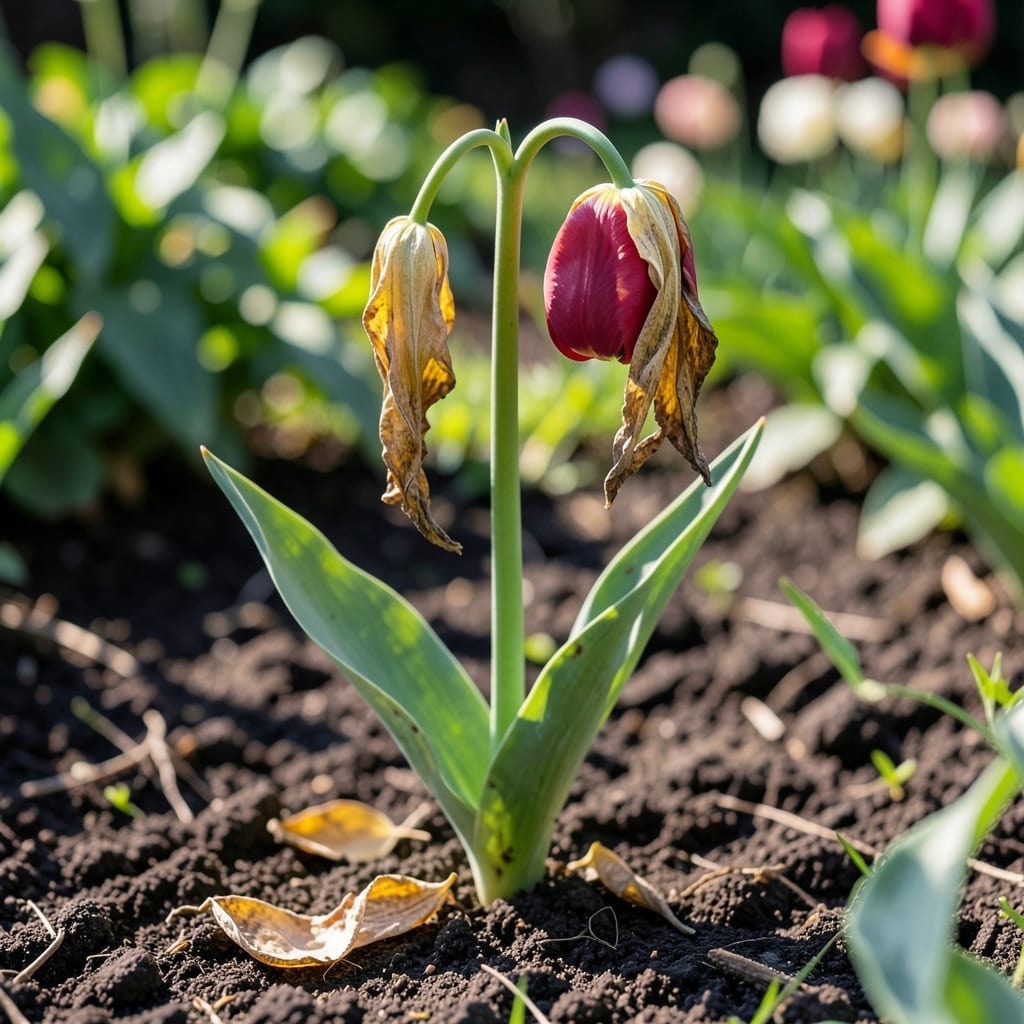
Nothing stings like watching tulips fade before their time. I’ve lost count of how many times I’ve stood in the garden, staring at drooping blooms, wondering what went wrong.
Often, it’s something simple—too much water, not enough sun, or a sneaky pest. The good news? Most issues can be fixed with a quick adjustment to your care routine.
With the right tweaks, those wilting stems can perk up within 24-48 hours. You’ll see color return to the leaves and petals regain their vibrancy.
This isn’t about luck—it’s about understanding what tulips need to thrive. Let’s get them back on track.
Tulips are hardy but not invincible. When your blooms start to droop or blacken, it’s often due to one of these fixable issues. Here’s the science behind the decline—and how to stop it. 🌱
Tulip bulbs rot in soggy soil. Their roots need oxygen, and waterlogged conditions suffocate them while encouraging fungal pathogens like Pythium or Fusarium. If your soil stays wet for days after watering or your pots lack drainage holes, root asphyxiation is likely the culprit.
Tulips thrive in cool to moderate temperatures (60–70°F). Direct, intense sunlight—especially in warmer climates—can scorch petals and accelerate moisture loss. Heat stress also disrupts the bulb’s stored energy, leading to premature wilting.
Yellowing leaves or stunted growth? Your tulips may lack potassium (vital for disease resistance) or phosphorus (critical for root and bloom development). Poor soil or overused garden beds deplete these nutrients over time, starving the plant.
Aphids, slugs, and bulb mites sap a tulip’s strength by feeding on stems and leaves. Meanwhile, fungal infections (e.g., Botrytis tulipae, or tulip fire) cause spotted, distorted foliage. These stressors weaken the plant, making it more susceptible to decline.
Tulips are cold-hardy, but sudden frost after new growth emerges can damage cell structures. The resulting tissue collapse appears as blackened, mushy stems or buds—a classic sign of frostbite in spring blooms.
Don’t panic—your wilting tulips can often be revived with a few simple tweaks. Below are targeted fixes for the most common issues, plus tips to keep them thriving.
Fix: Repot tulips in well-draining soil mixed with perlite or sand. If planted in the ground, amend heavy clay with compost. Ensure pots have drainage holes to prevent root rot.
Prevention: 💡 Always use a quality potting mix labeled for bulbs. Avoid soggy soil by watering only when the top inch feels dry.
Fix: Check the soil—if it’s waterlogged, stop watering and let it dry out. If bone-dry, give a deep soak until water drains from the bottom. Trim any black, mushy roots (signs of rot) with clean shears.
Prevention: ✨ Water 1–2 times per week in spring, tapering off as foliage yellows. Use a moisture meter for precision.
Fix: Move potted tulips to a spot with 6–8 hours of morning sun. If in the ground, add shade cloth during peak afternoon heat. Leggy, pale stems? They need more light.
Prevention: 🎯 Plant bulbs in a sunny but sheltered location, like near a south-facing fence.
Fix: Spray aphids or slugs with neem oil or insecticidal soap. For fungal issues (e.g., gray mold), remove infected parts and improve airflow. Severe cases may require discarding the plant to protect others.
Prevention: 🌡️ Space bulbs 4–6 inches apart for airflow. Rotate planting spots yearly to deter disease buildup.
Fix: Cover blooms with frost cloth if a cold snap hits. For heat stress, mulch the base to retain moisture and cooler soil temps.
Prevention: 🔥 Plant bulbs in fall (6 weeks before first frost) so roots establish before winter. In hot climates, choose late-blooming varieties.
Water only when the top 1 inch of soil feels dry. Overwatering causes root rot, while underwatering leads to drooping. Use a moisture meter for accuracy.
Yes! Cover affected plants with frost cloth immediately. Trim blackened stems but leave healthy foliage. New growth should emerge in 1-2 weeks.
Use well-draining soil mixed with perlite or sand. Amend heavy clay with compost. Always ensure pots have drainage holes to prevent soggy conditions.
Space bulbs 4-6 inches apart for airflow. Spray with neem oil at first signs of aphids. Remove infected leaves immediately to stop spread.