
Beautiful Plants For Your Interior
Beautiful Plants For Your Interior
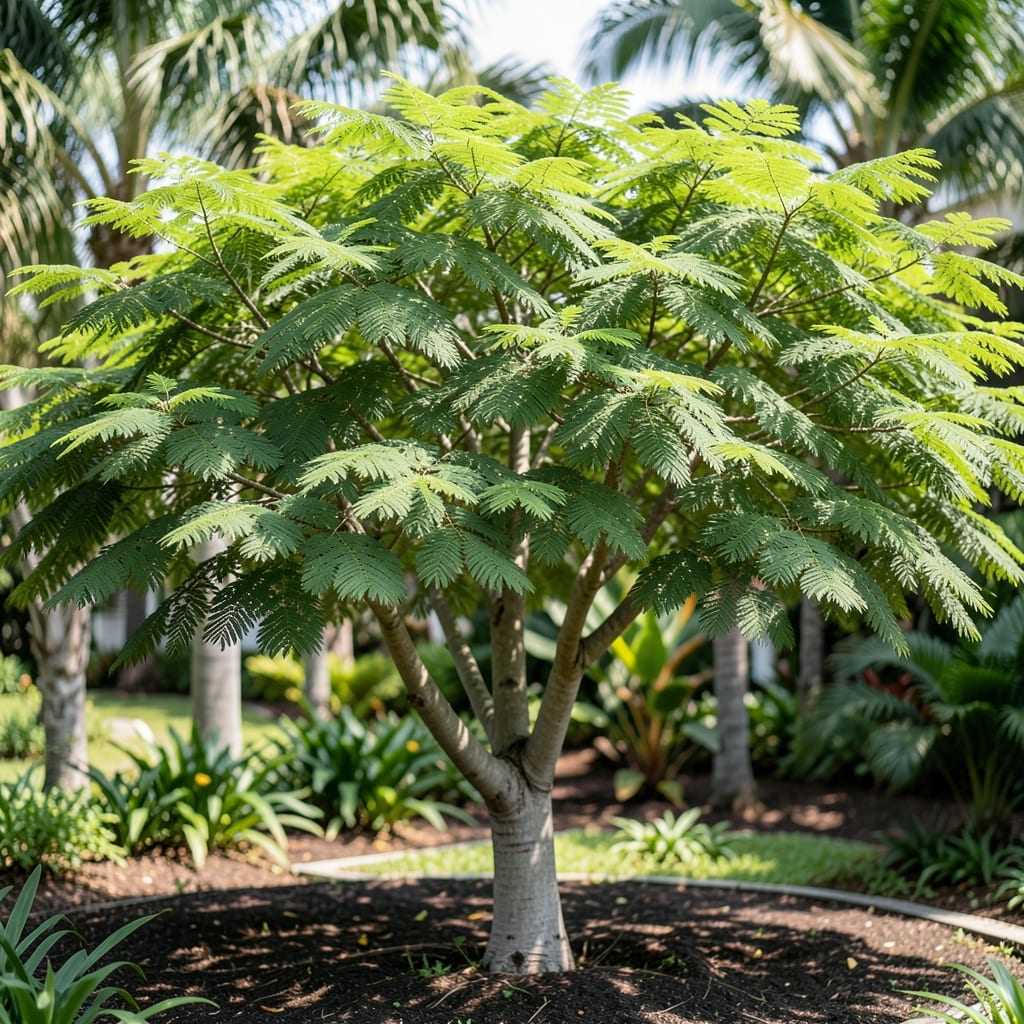
Monkeypod tree leaves are the star of this tropical beauty. I’ve watched these delicate, fern-like fronds transform a backyard into a lush oasis with their vibrant green hue.
They’re not just pretty—they provide essential shade and thrive with minimal fuss. Proper care keeps them disease-free and flourishing, even in less-than-ideal conditions.
📚 In This Guide
Here’s the method I use to ensure vibrant, dense leaves on these tropical giants.
Choose a spot with full sun to partial shade—monkeypod trees thrive in 6+ hours of direct sunlight but tolerate light afternoon shade in hotter climates. The soil should be well-draining; these trees despise waterlogged roots. I test drainage by digging a 1-foot hole, filling it with water, and ensuring it drains within 1-2 hours.
Avoid low-lying areas where cold air settles. Monkeypod trees are tropical natives and suffer below 30°F. If you’re in a cooler zone, plant near a south-facing wall or use a large container that can be moved indoors during cold snaps. The root system spreads wide, so give it at least 20 feet of open space.
Dig a hole twice as wide as the root ball but no deeper. Planting too deep suffocates the trunk and leads to rot. Set the tree so the root flare (where roots meet trunk) sits 1-2 inches above soil level. This prevents moisture from pooling against the bark.
Backfill with native soil, tampering gently to remove air pockets. Water immediately with 10-15 gallons to settle the soil. For multiple trees, space them 25-30 feet apart—their canopies spread 40-60 feet at maturity. I stake young trees only if they’re top-heavy; otherwise, let them establish naturally.
Water deeply 2-3 times weekly for the first 6 months, then reduce to once weekly once established. The goal is to keep soil moist but not soggy. I check by inserting a moisture meter 6 inches deep—if it reads dry, it’s time to water.
Drought-tolerant once mature, but consistent moisture during the first year encourages lush foliage. Use a slow drip method to deliver water directly to roots. Avoid wetting the leaves, as this can invite fungal diseases. Mulch with 3-4 inches of organic matter to retain moisture and regulate soil temperature.
Apply a balanced, slow-release fertilizer (10-10-10 or similar) every 3-4 months during the growing season. I use 2-3 pounds per inch of trunk diameter, spreading it evenly under the canopy. Water thoroughly after application to prevent root burn.
Prune in late winter to shape the tree and remove dead or crossing branches. Monkeypod trees respond well to pruning—cut back to a lateral branch or bud, never leaving stubs. Thin the canopy to improve air circulation, which reduces pest and disease pressure. Always sterilize pruning tools with rubbing alcohol between cuts.
Watch for common issues like scale, mealybugs, or powdery mildew. I inspect leaves weekly, especially the undersides, where pests often hide. Treat infestations with horticultural oil or neem oil, applying in the early morning or late evening to avoid leaf burn.
Yellowing leaves often indicate overwatering or nutrient deficiencies. If leaves develop brown spots, it may signal fungal infection—improve air circulation and avoid overhead watering. A healthy monkeypod tree rewards you with bright green, fern-like foliage that provides dappled shade and tropical beauty.
Small details make the difference between struggling foliage and thriving tropical beauty.
Sunlight Strategy: The 6+ hours of direct sunlight mentioned in Step 1 is non-negotiable for vibrant foliage. I learned this the hard way when I planted one in too much shade—it grew sparse, pale leaves. If you’re in an extremely hot climate, that light afternoon shade tolerance becomes crucial to prevent leaf scorch.
Drainage Test Insight: That 1-foot hole test from Step 1 is your best insurance against root rot. If water doesn’t drain within 1-2 hours, amend your soil with compost or consider a raised bed. Waterlogged roots are the silent killer of monkeypod trees, and they’ll show it through yellowing leaves before it’s too late.
Planting Depth Critical: In Step 2, setting the root flare 1-2 inches above soil level prevents the most common planting mistake. I’ve seen too many trees planted too deep, leading to trunk rot within a year. The flare should be visible—think of it as the tree’s collar that needs to breathe.
Watering Precision: The 2-3 times weekly for 6 months in Step 3 isn’t arbitrary. Young trees need consistent moisture to establish their root systems, but the deep watering method encourages those roots to grow downward rather than shallow. That 6 inches deep moisture check is your guide—surface dryness doesn’t always mean it’s time to water.
Yes, monkeypod tree leaves are non-toxic to cats and dogs, making them pet-friendly. However, monitor pets to prevent overconsumption, which may cause mild stomach upset. Always consult a vet if concerned.
Yellowing leaves often signal overwatering, nutrient deficiencies, or poor drainage. Check soil moisture and ensure proper fertilization. Adjust care to restore vibrant green foliage.
Prune during the dry season or early spring to encourage healthy growth. Avoid heavy pruning in winter, as it may stress the tree. Light trimming can be done year-round for shape.
Yes! Monkeypod leaves decompose quickly, enriching compost with nitrogen. Chop them for faster breakdown and mix with brown materials like dry leaves for balance.
Spray leaves with neem oil or insecticidal soap to combat pests like aphids or mites. Regularly inspect foliage and maintain tree health to prevent infestations.