
Beautiful Plants For Your Interior
Beautiful Plants For Your Interior
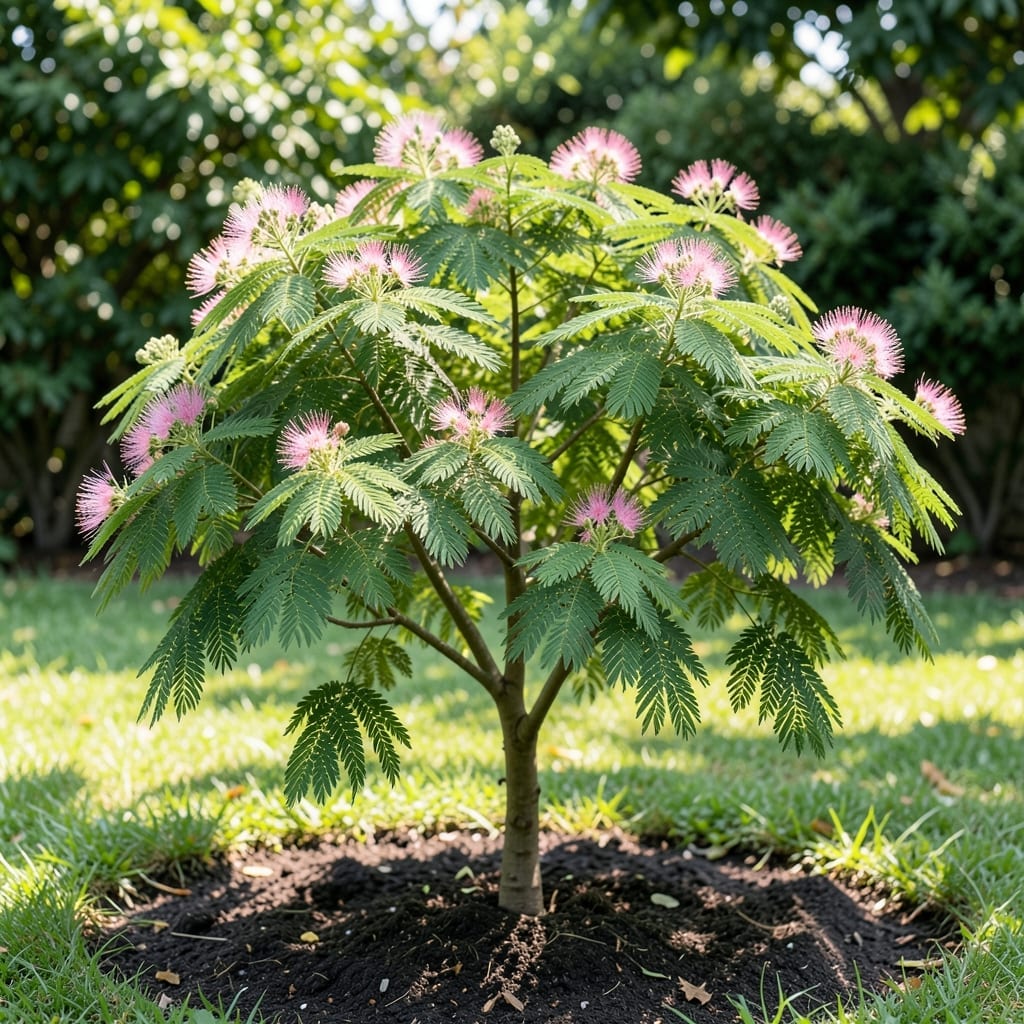
Mimosa tree leaves are fern-like and bipinnate, turning yellow or brown when affected by diseases like fungal leaf spot or powdery mildew. Healthy leaves are bright green and delicate.
What I notice about these trees is how their delicate foliage responds to stress. The fern-like structure creates a beautiful canopy, but it’s also susceptible to environmental changes. When leaves discolor, it’s often a sign of fungal infections or pest damage, which can spread quickly if left unchecked. 🌟
Regular inspection helps catch issues early, especially during humid weather when powdery mildew thrives. Keeping the area clean and improving airflow can make a big difference in maintaining their vibrant appearance.
💡 In This Article
The fern-like structure of mimosa leaves creates tiny pockets that trap moisture. This becomes a breeding ground for fungal spores, which thrive in warm, humid conditions above 70°F with 80%+ humidity. The spores germinate on the leaf surface, producing enzymes that break down cell walls. 🌟
Leaf spot diseases often start as small, circular lesions that expand rapidly. In advanced stages, they merge into large necrotic areas, reducing the leaf’s ability to photosynthesize. Powdery mildew appears as white, powdery patches that coat the surface, blocking sunlight absorption and stunting growth.
Webworm infestations create a different pattern of damage. The larvae spin silken webs around leaf clusters, then feed on the tissue within. This causes irregular brown patches and premature leaf drop. Unlike fungal damage, webworm injury often appears overnight and spreads along branches rather than randomly across the canopy.
Bacterial leaf scorch enters through natural openings or wounds, causing marginal browning that resembles drought stress. The bacteria multiply in the leaf’s vascular system, blocking water transport. This creates a distinct “scorched” appearance that starts at the leaf edges and progresses inward.
Environmental stress like drought or poor drainage weakens the tree’s natural defenses. A mimosa with waterlogged roots for 48+ hours becomes 3x more susceptible to fungal infections. Similarly, trees in compacted soil develop shallower root systems, making them more vulnerable to both biotic and abiotic stress factors. ✨
Seasonal patterns also play a role. Most fungal diseases peak in late summer when temperatures are high and rainfall is frequent. Webworm populations typically surge in early summer, with a second generation appearing in late summer if conditions remain favorable.
Yellowing often signals fungal infections or overwatering. Poor drainage creates ideal conditions for root rot, which restricts nutrient uptake. Check soil moisture and look for spots on the leaves.
Improve air circulation by pruning dense branches and avoid overhead watering. Apply neem oil every 7-10 days during humid weather. Remove fallen leaves promptly to reduce spore spread.
Leaf spot diseases create circular brown lesions that expand over time. These fungal infections thrive in wet conditions. Remove affected leaves and apply a copper-based fungicide if the problem persists.
Act immediately when you spot silken webs. Apply Bt (Bacillus thuringiensis) in the evening when caterpillars are active. Physical removal of webs also helps control the infestation effectively.