
Beautiful Plants For Your Interior
Beautiful Plants For Your Interior
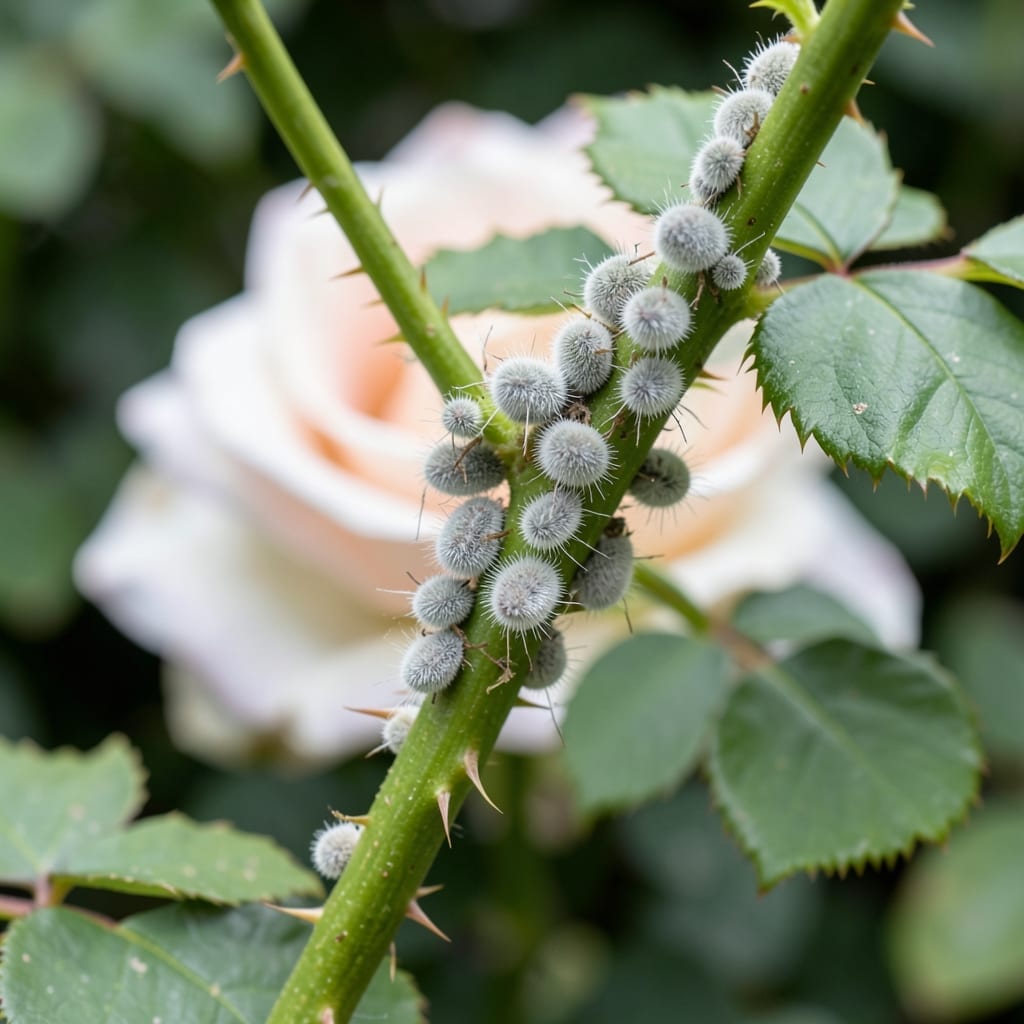
White cottony spots on your rose stems mean trouble. Mealybugs can weaken plants and ruin blooms if left unchecked, but I’ve found natural solutions that work without harsh chemicals.
These pests thrive in warm, dry conditions, often hiding in leaf axils and undersides. A simple soap-and-water spray disrupts their protective coating, while neem oil smothers them entirely. Consistency is key—repeat treatments every 5-7 days for best results.
Prevention starts with healthy plants. Strong, well-fed roses resist infestations better. Keep an eye out for early signs, like sticky residue or stunted growth, and act fast.
With the right approach, your roses will bounce back—thriving and bloom-filled in no time.
Mealybugs thrive on roses due to specific environmental and cultural conditions. Understanding these triggers helps prevent and manage infestations effectively.
Mealybugs Planococcus citri and Pseudococcus spp. flourish in temperatures between 70–80°F (21–27°C) with high humidity (60%+). Roses grown in greenhouses, shaded areas, or during humid seasons are prime targets. The bugs’ waxy coating retains moisture, accelerating their reproduction cycle.
Dense foliage or crowded planting restricts airflow, creating stagnant microclimates. This not only traps humidity but also deters natural predators like ladybugs. Prune roses to improve ventilation, especially in the center of the plant where mealybugs hide.
Excess nitrogen from heavy fertilization promotes soft, succulent growth—a mealybug favorite. Similarly, overwatering stresses roses, weakening their defenses. Use balanced, slow-release fertilizers and water at the base to avoid damp foliage.
Mealybugs multiply unchecked when beneficial insects (e.g., lacewings, parasitic wasps) are absent. Pesticides often kill these allies, so opt for organic controls like neem oil or insecticidal soap to preserve the ecosystem.
Addressing these factors disrupts mealybug lifecycles and protects your roses naturally.
Mealybugs can be stubborn, but these practical solutions will help you reclaim your roses. Address the issue based on its severity and keep future infestations at bay with these easy steps.
If you spot a few mealybugs early, act fast:
For widespread problems, try these effective, chemical-free options:
Stop mealybugs before they start with these habits:
🎯 Pro Tip: Always apply sprays in the early morning or late evening to avoid harming pollinators like bees!
They appear as small, white, cottony clusters often found in leaf axils or undersides. These pests resemble tiny cotton balls and leave a sticky residue called honeydew.
Mealybugs return due to warm, humid conditions or poor air circulation. Overwatering and over-fertilizing also encourage their growth by creating soft, vulnerable plant tissue.
Yes, dabbing 70% rubbing alcohol on mealybugs with a cotton swab kills them instantly. Always test on a small area first and avoid applying in direct sunlight.