
Beautiful Plants For Your Interior
Beautiful Plants For Your Interior
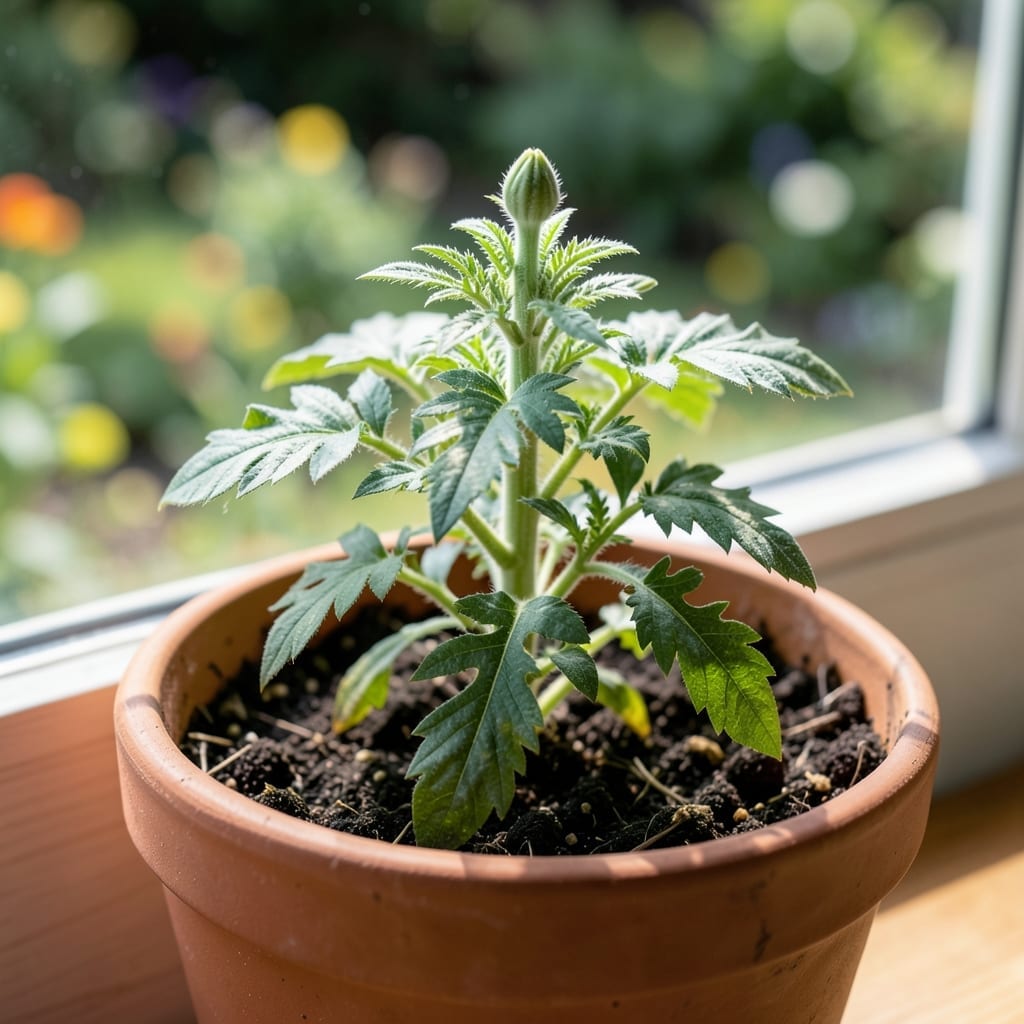
Those first two leaves on your marigold seedlings? Not the real deal. True leaves appear after the initial pair, looking rougher and more jagged—this is when your plants start acting like actual marigolds.
By this stage, they’re ready for brighter light and less frequent watering. Watch for that vibrant green color and sturdy growth—it means you’re doing it right. These leaves handle photosynthesis, so your seedlings will really take off now.
📚 In This Guide
Here’s how I spot the difference between true leaves and cotyledons every time.
When marigold seedlings first emerge, you’ll see two small, round leaves called cotyledons. These are the seed leaves, not the true ones. They’re smooth-edged and usually a uniform light green color. Cotyledons appear in pairs and look identical on every seedling.
I check for these first because they’re always there before true leaves form. They’ll wither and fall off once the plant matures, so don’t be alarmed when they start turning yellow—that’s completely normal.
True leaves appear 7-14 days after germination, growing from the center of the seedling between the cotyledons. Unlike cotyledons, true leaves have serrated edges and a more complex shape. On marigolds, they typically form in pairs as well, but with a distinct marigold leaf pattern.
You’ll notice the color is deeper green than the cotyledons. This color change happens because true leaves contain the full chlorophyll structure needed for photosynthesis. The texture also feels slightly rougher when you gently run your finger across the surface.
Healthy true leaves on marigolds will be vibrant green with no yellowing or browning at the edges. Each leaf should be firm to the touch and stand upright rather than drooping. The stem connecting the leaves should be sturdy, not thin or spindly.
I watch for new growth daily. Once you see 3-4 sets of true leaves, your seedling is strong enough for transplanting. If the leaves look pale or the stem is weak, the plant likely needs more light or has been overwatered.
If true leaves appear yellow between the veins, your seedling might need iron. When edges brown and curl, it’s usually too little water. Black spots or wilting often mean overwatering or a fungal issue.
Here’s the thing—marigolds are tough, so most leaf problems correct themselves once you adjust care. I’ve found that moving seedlings to brighter light solves 90% of early growth issues. Just avoid direct, harsh sunlight until they’ve hardened off.
Small details make all the difference when identifying healthy seedling growth.
Visual Distinction: In Step 1, notice how cotyledons are perfectly round and smooth-edged, while true leaves in Step 2 have those distinctive serrated edges. I always compare both leaf types side by side to spot the difference instantly. The color shift from light to deep green is another clear indicator you’re looking at true leaves.
Health Check: For Step 3, I run my finger gently across the surface—healthy true leaves feel slightly rough and stand upright. If they’re drooping or the stem feels thin, your seedling likely needs more light or has been overwatered, as mentioned in the instructions.
Timing Matters: True leaves appear between 7-14 days after germination, as specified in Step 2. I check daily starting at day 5 so I don’t miss their emergence. Once you spot 3-4 sets, your seedling is ready for transplanting.
Troubleshooting Tip: If you notice yellowing between the veins in Step 4, it’s often an iron deficiency. I’ve found that moving seedlings to brighter light, as suggested in the instructions, resolves most early growth issues before they become serious problems.
True leaves appear after the initial seed leaves (cotyledons) and have a jagged, serrated edge, unlike the smooth cotyledons. They grow in pairs and resemble miniature versions of mature marigold leaves.
Marigold true leaves typically emerge 7–14 days after germination, once the seedling has developed a few sets of cotyledons. Growth time can vary based on light, temperature, and soil conditions.
Be patient! If seedlings are healthy and growing, true leaves will appear soon. Ensure they’re getting enough light (12–16 hours daily) and consistent moisture to speed up development.
It’s best to wait until at least 2–3 sets of true leaves form. This ensures the seedling is strong enough to handle transplant shock and establish well in its new location.