
Beautiful Plants For Your Interior
Beautiful Plants For Your Interior
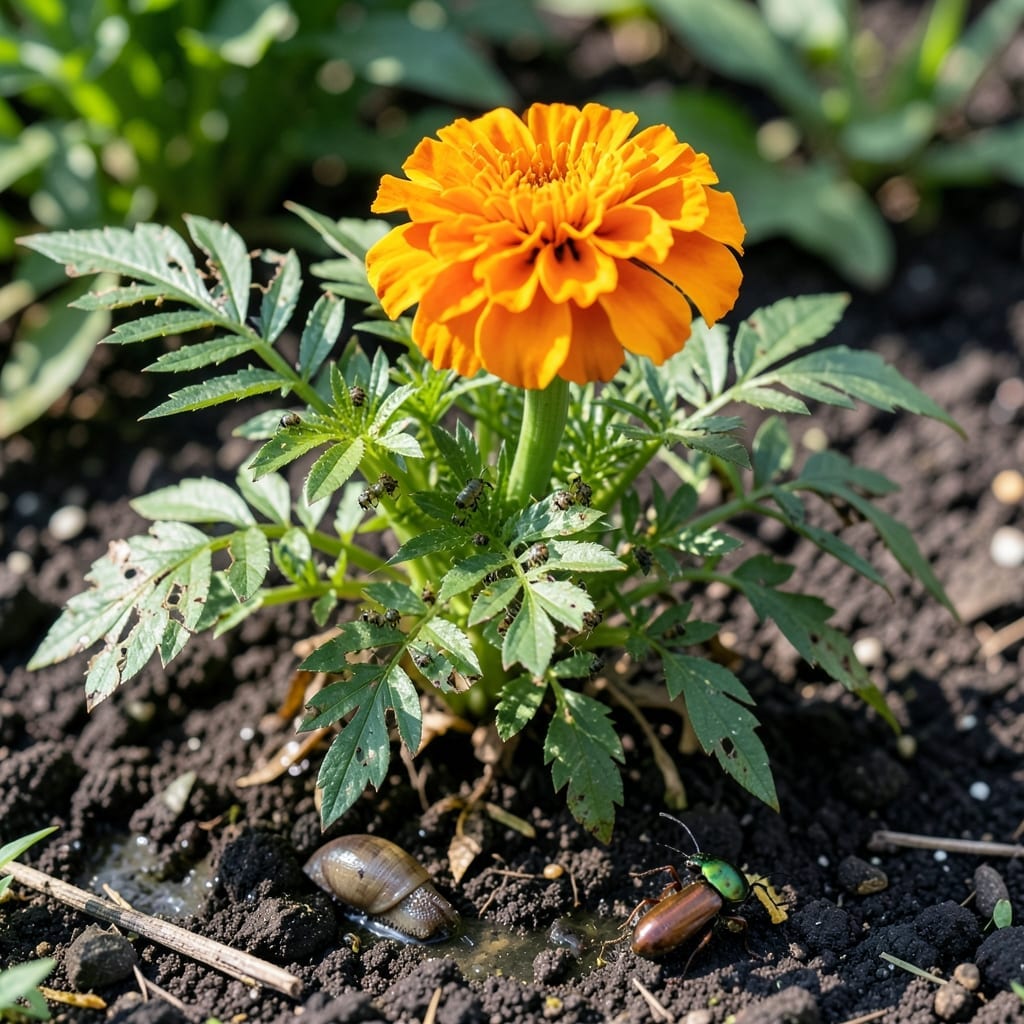
Common culprits include slugs, snails, aphids, Japanese beetles, and spider mites. Rabbits and deer may also munch on marigold foliage when other food is scarce.
I notice these pests target marigolds because the plants’ strong scent often masks other garden crops, making them a sacrifice worth making. Slugs and snails leave telltale slime trails, while aphids create sticky residue that attracts ants. Larger animals like deer tend to go for the leaves when their natural food sources are limited. 🔥
💡 In This Article
Slugs and snails carve irregular holes with ragged edges in leaves, often leaving a glistening slime trail as evidence. These mollusks feed primarily at night or on overcast days, preferring the tender new growth of marigolds. 🔥
Chewing insects like Japanese beetles create lacy, skeletonized foliage by eating tissue between the veins. Their metallic green bodies and copper wings are visible during daytime feeding frenzies, often in groups of 10-20 per plant.
Aphids cause yellowing and curled leaves while secreting a sticky honeydew that attracts ants and black sooty mold. These tiny 1/8-inch pear-shaped insects cluster on new growth and flower buds, rapidly multiplying in warm weather.
Spider mites create a different pattern, causing a stippled or bronzed appearance on leaves. Look for fine webbing on the undersides of foliage, especially during hot, dry conditions when these 0.5mm pests thrive. ✨
Deer and rabbits leave clean-cut tears at the leaf edges, often consuming entire stems. Their damage is most evident at dawn or dusk, with rabbit nibbles typically 1-2 feet above ground and deer browsing higher up.
Look for irregular holes with ragged edges and a shiny slime trail on leaves. Slugs feed at night, so check plants early morning for fresh damage.
They create lacy, skeletonized leaves by eating between veins. Their metallic green bodies with copper wings are visible during daytime group feedings.
Yes! Plant with garlic, chives, or onions. Their strong scents naturally repel many leaf-eating insects.
Install 8-foot fencing or use motion-activated sprinklers. Rabbits typically nibble 1-2 feet above ground, so barriers work well.