
Beautiful Plants For Your Interior
Beautiful Plants For Your Interior
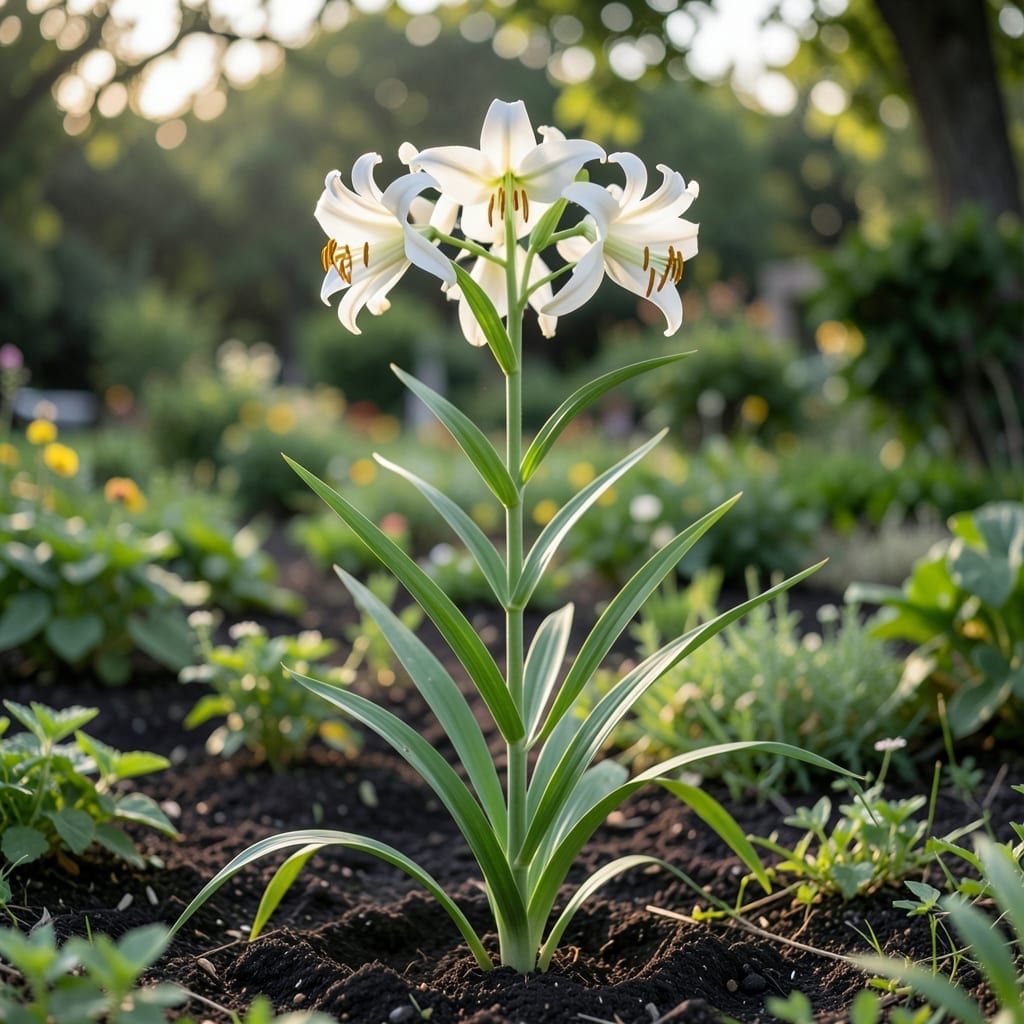
Lilies with lush leaves are the backbone of any garden display. 🌿 I’ve learned that healthy foliage means stronger stems and bigger blooms next season.
These plants thrive in well-draining soil with 6+ hours of sunlight. The right care keeps leaves vibrant and disease-free year after year.
📚 In This Guide
This method ensures vigorous growth and that signature leafy abundance you’re after.
Start with firm, plump bulbs free of soft spots or mold—this is your foundation for healthy foliage. I always choose a site with full sun to partial shade, as lilies need at least 6 hours of sunlight daily to develop strong leaves. Avoid low-lying areas where water pools, as soggy soil leads to bulb rot before growth even begins.
Test your soil drainage by digging a 12-inch-deep hole and filling it with water. If it drains within 2-3 hours, you’re good. If not, amend with compost or consider raised beds. The right site prevents yellowing leaves later from poor root health.
Plant bulbs 4-6 inches deep—about three times the bulb’s height—and space them 8-12 inches apart. Deeper planting protects against freeze damage in colder zones, while proper spacing ensures each plant gets enough nutrients for leaf production. I place bulbs pointy-end up, then backfill with loosened soil to avoid air pockets.
Water immediately after planting with 1 inch of water to settle the soil. You’ll see the first green shoots (not leaves yet) in 2-3 weeks depending on your climate. Resist the urge to dig and check—this disturbs the roots and delays that lush foliage you want.
Lilies thrive on 1-1.5 inches of water weekly, either from rain or supplemental watering. I water deeply at the base in the morning, ensuring the soil stays moist but not waterlogged. The leaves will tell you if you’re overdoing it—yellowing lower foliage is the first sign of too much moisture.
During the first growing season, I apply a 2-inch layer of mulch around plants to retain moisture and keep roots cool. This is especially important for healthy leaf development during hot spells. Pull mulch back slightly from the stem to prevent rot where leaves emerge.
Apply a balanced 10-10-10 fertilizer in early spring as shoots emerge, then again after flowering. I sprinkle it around the base and water it in thoroughly. For organic growers, compost tea every 3-4 weeks provides excellent foliage support. The goal is steady, even growth—not a sudden leafy burst that stresses the plant.
Watch for dark green leaves as a sign you’re doing it right. If leaves appear pale, your lilies might need more nitrogen. But don’t overdo it—excess fertilizer produces weak stems that can’t support the foliage weight.
Remove spent flowers but leave the foliage intact until it yellows and dies back naturally in fall. This is crucial—those leaves are photosynthesizing to feed next year’s growth. I cut back dead stems to 2 inches above ground only after all foliage has browned, usually by late autumn.
Divide clumps every 3-4 years when you notice fewer flowers and smaller leaves. This rejuvenates the plants and ensures that healthy foliage continues year after year. The best time is early fall, giving roots time to establish before winter.
Small adjustments in your planting and care routine make a huge difference in foliage health.
Selection Tip: In Step 1, choosing bulbs that are firm and plump with no soft spots is non-negotiable. I learned this the hard way after losing several batches to rot—those tiny imperfections lead to big problems underground.
Planting Precision: For Step 2, that 4-6 inches deep rule isn’t arbitrary. Planting too shallow exposes bulbs to freeze damage, while too deep delays sprouting. And don’t crowd them—8-12 inches apart gives roots room to spread for maximum leaf production.
Watering Wisdom: The 1-1.5 inches weekly in Step 3 is your sweet spot. Morning watering at the base prevents fungal issues, and here’s what nobody tells you—yellowing lower leaves often mean you’re overdoing it, not under.
Maintenance Insight: Step 5’s advice about leaving foliage until it yellows naturally is critical. Those leaves are solar panels for next year’s growth. I cut back to 2 inches above ground only after all greenery has browned—usually by late autumn.
Yellow leaves often signal overwatering, poor drainage, or nutrient deficiencies. Check soil moisture and ensure proper drainage. A balanced fertilizer can restore missing nutrients.
Early spring or fall is ideal for planting lilies. This timing allows roots to establish before extreme temperatures. Avoid planting in summer heat or freezing winter conditions.
Yes! Use a well-draining pot with quality potting mix. Ensure the container is deep enough for root growth and place it where it gets 6+ hours of sunlight daily.
Brown spots may indicate fungal diseases like leaf blight. Remove affected leaves, improve air circulation, and apply a fungicide if needed. Avoid overhead watering.
Consider hardy plants like daylilies, hostas, or black-eyed Susans. These thrive in similar conditions and are often more resistant to pests and diseases.