
Beautiful Plants For Your Interior
Beautiful Plants For Your Interior
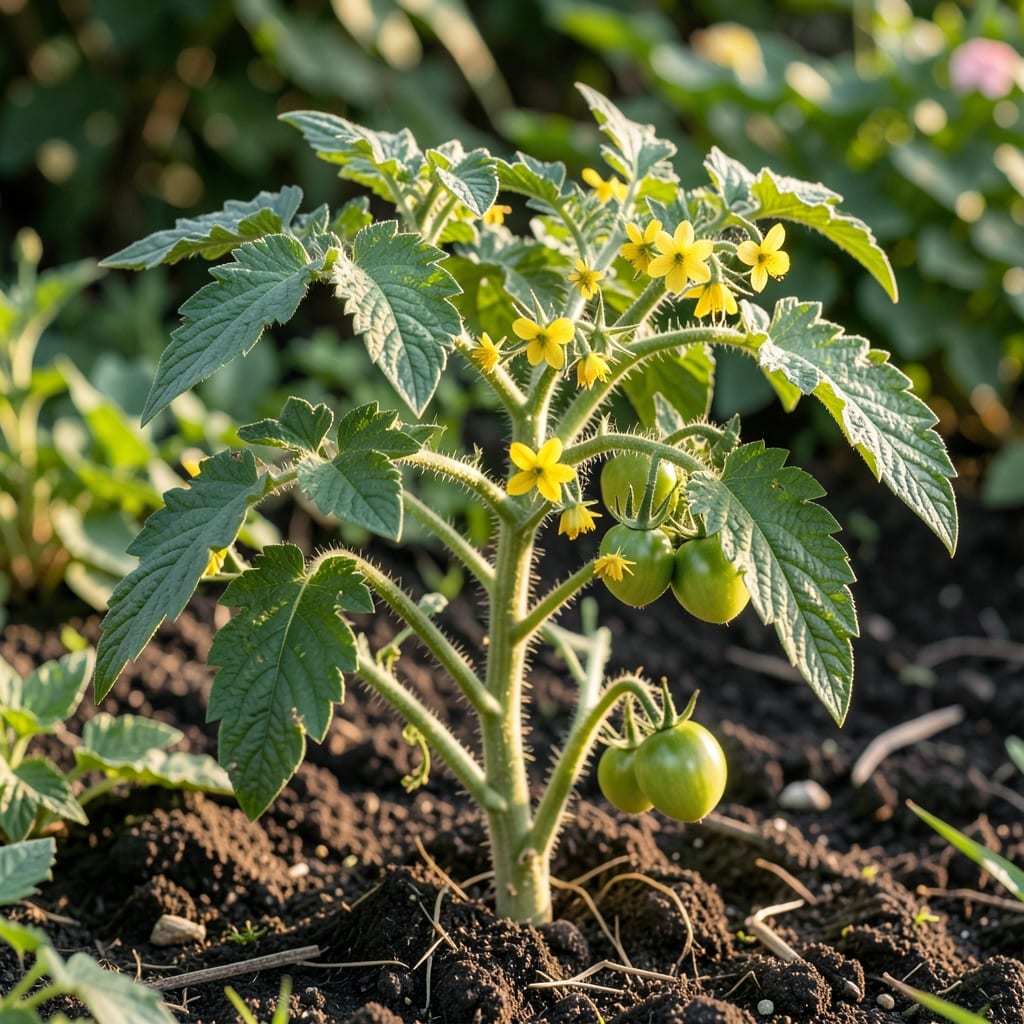
Yellow tomato leaves always signal something’s wrong, but the cause isn’t always obvious. I’ve learned to check the pattern first—bottom leaves yellowing often points to nitrogen deficiency, while spots or curling suggest pests or disease.
Early diagnosis saves plants. With the right treatment, yellow leaves can bounce back, and your tomatoes will keep producing. Here’s how to spot the issue and fix it fast.
📚 In This Guide
Here’s the method I use to identify the root cause and restore plant health before damage spreads.
Begin by examining where the yellowing appears on the plant. Lower leaves turning yellow first typically indicate a nitrogen deficiency or overwatering. When the yellowing starts between the veins of newer leaves, you’re likely seeing a magnesium deficiency.
Check the undersides of leaves for tiny webs or speckling—this reveals spider mites. Yellow spots with brown centers often signal early blight. I keep a small magnifying glass handy for this close inspection; it’s surprising what you’ll miss with the naked eye.
Push your finger 2-3 inches into the soil near the base. If it feels soggy, you’re overwatering. Tomatoes prefer soil that’s evenly moist but not waterlogged. A simple soil test kit from any garden center will reveal pH imbalances—tomatoes thrive in 6.0-6.8 pH.
If the soil is bone dry at that depth, your plant may be suffering from drought stress, which also manifests as yellowing. I’ve found that plants in containers dry out faster than those in ground soil, sometimes requiring daily watering during peak summer heat.
For nitrogen deficiency, apply a balanced 10-10-10 fertilizer at half strength to avoid burning roots. Yellowing between leaf veins calls for Epsom salts (magnesium sulfate) mixed at 1 tablespoon per gallon of water, applied as a foliar spray or soil drench.
Always water the soil before applying liquid fertilizers—this prevents root shock. I apply these treatments early in the morning when temperatures are cooler and plants can absorb nutrients most efficiently without evaporation loss.
Ensure plants receive 8-10 hours of direct sunlight daily. Shade from nearby structures can cause yellowing even with proper care. Space plants 18-24 inches apart for determinate varieties and 24-36 inches for indeterminate types to ensure good air circulation.
Remove any yellow leaves immediately using clean pruners—this prevents the plant from wasting energy on damaged foliage and reduces disease spread. I sanitize my tools between plants with a 10% bleach solution to prevent transmitting pathogens.
Apply a 2-3 inch layer of organic mulch around the base to maintain consistent soil moisture and temperature. This simple step prevents many common causes of leaf yellowing before they start.
Small details in your inspection process make a huge difference in accuracy.
Inspection Depth: When checking for soil moisture in Step 2, those 2-3 inches are critical—surface dryness can be misleading while deeper soil tells the real story. I’ve misdiagnosed drought stress by only checking the top inch before learning this the hard way.
Timing Matters: Apply treatments in Step 3 early in the morning as specified. The cooler temperatures and reduced evaporation mean plants absorb the 10-10-10 fertilizer or 1 tablespoon per gallon of water Epsom salt solution more effectively. Midday applications often waste half your effort to evaporation.
Sunlight Precision: The 8-10 hours of direct sunlight mentioned in Step 4 isn’t just a suggestion—shade from a fence or tree for even an hour can trigger yellowing. I use a sunlight calculator app to track exact exposure during growing season.
Tool Sanitation: That 10% bleach solution between plants isn’t overkill. After accidentally spreading early blight between my heirloom tomatoes one season, I now keep a spray bottle of the solution right in my gardening tote.
Yellowing leaves often indicate nutrient deficiencies (like nitrogen or magnesium), overwatering, or pests. Check soil moisture, inspect for bugs, and consider a balanced fertilizer to restore health.
If the issue is caught early (e.g., mild nutrient deficiency), new growth may return to green with proper care. However, severely damaged leaves usually won’t recover—focus on preventing further yellowing.
Remove yellow leaves as soon as they appear if they’re diseased or pest-infested to prevent spread. If it’s just aging, trim them to redirect energy to fruit production.
Try organic fixes like compost tea for nutrients, neem oil for pests, or Epsom salt (for magnesium deficiency). These are eco-friendly and gentle on plants.
Maintain consistent watering, ensure good drainage, and test soil for deficiencies. Rotate crops yearly and use mulch to retain moisture and prevent disease.