
Beautiful Plants For Your Interior
Beautiful Plants For Your Interior
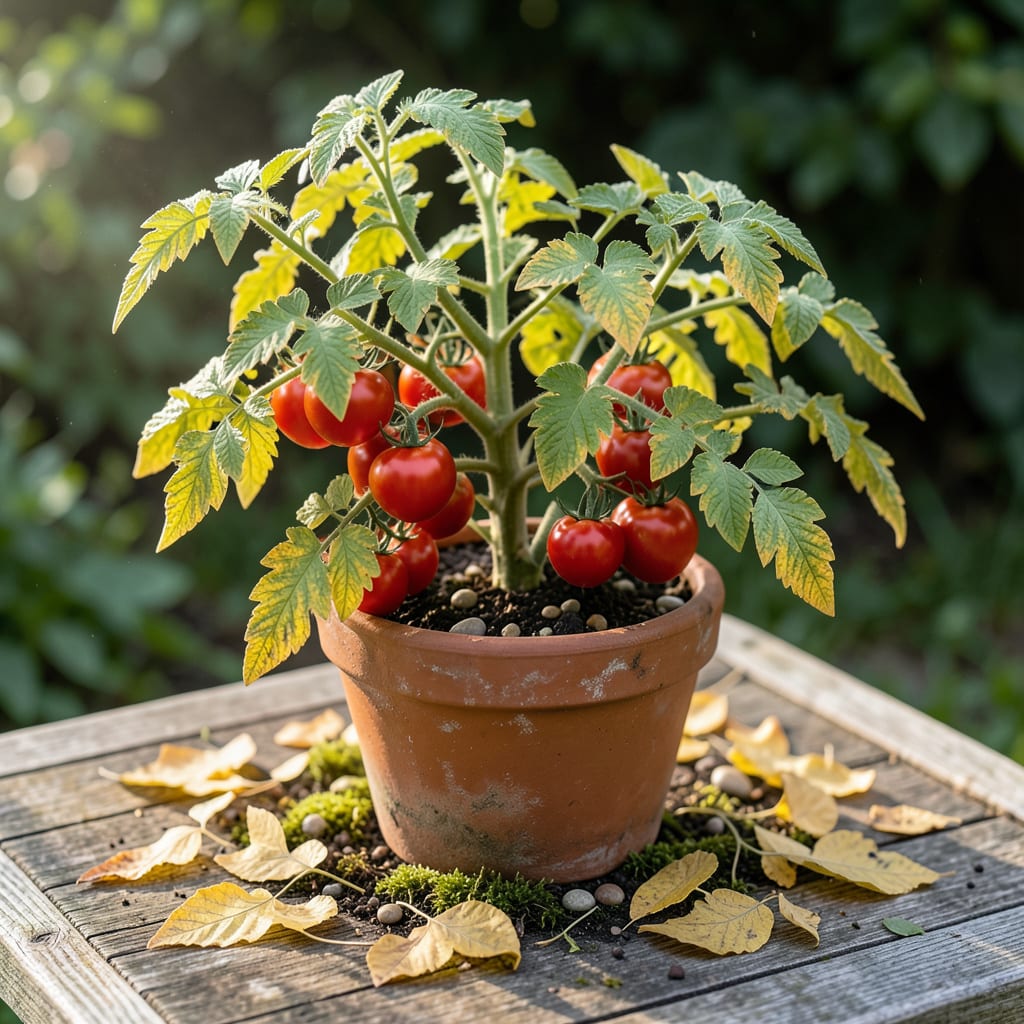
Yellow leaves on tomato plants always send my heart sinking. I’ve lost count of how many times I’ve panicked, only to discover it’s usually an easy fix.
Here’s the thing—most yellowing comes down to 3 common culprits: too much water, not enough nutrients, or sneaky pests. Each leaves its own pattern on the leaves.
Once you learn to read the signs, you’ll catch problems early. I’ve saved entire crops just by adjusting my watering schedule or adding a simple fertilizer.
The solution is often simpler than you think. We’ll walk through how to diagnose and fix it before your plants suffer.
Yellowing leaves on tomato plants, or chlorosis, signal an underlying issue disrupting chlorophyll production. Below are the most common causes, explained with actionable insights.
Tomatoes are heavy feeders, and deficiencies in key nutrients often manifest as yellow leaves. Nitrogen deficiency typically starts with lower leaves turning pale green to yellow, as the plant redirects nitrogen to newer growth. Magnesium deficiency causes interveinal chlorosis (yellowing between veins) on older leaves first, often due to acidic or sandy soil. Iron deficiency triggers yellowing in young leaves while veins stay green, common in alkaline soils (pH > 7.0). A soil test can pinpoint the exact imbalance.
Excess water suffocates roots, limiting oxygen uptake and nutrient absorption. This leads to root rot (often accompanied by wilting) and yellowing leaves, starting at the bottom. Tomato roots need consistent moisture but not soggy conditions. Check drainage by digging a 1-foot hole—if water pools for hours, amend soil with compost or perlite.
Fungal diseases like early blight (Alternaria solani) cause yellow spots with concentric rings on lower leaves, while viral infections (e.g., mosaic virus) create mottled yellow-green patterns. Pests such as aphids or whiteflies sap nutrients from leaves, leading to stippling and yellowing. Inspect leaf undersides for eggs or webbing, and treat with neem oil or insecticidal soap.
Extreme temperatures (below 50°F or above 90°F) or sudden sunlight exposure can shock plants, halting chlorophyll production. Transplant shock may also cause temporary yellowing. Acclimate seedlings gradually and use shade cloth during heatwaves.
Here’s how to tackle each common cause of yellowing leaves on your tomato plants, with simple fixes and prevention tips to keep them thriving.
💡 Pro Tip: Always water at the base (not leaves) to prevent fungal spread and maximize absorption!
Yes, prune yellow leaves at the base to prevent disease spread. Use clean shears and remove only 1/3 of foliage at a time to avoid stressing the plant.
Water deeply 1-2 times per week, allowing soil to dry slightly between waterings. Stick your finger 2 inches deep—if moist, wait.
No, once yellow, leaves won’t regain color. Focus on fixing the root cause to save newer growth. Check for pests, nutrients, or drainage issues.
Use a balanced 10-10-10 fertilizer or foliar spray like Epsom salt (1 tbsp/gallon) for magnesium. Results appear in 5-7 days.
