
Beautiful Plants For Your Interior
Beautiful Plants For Your Interior
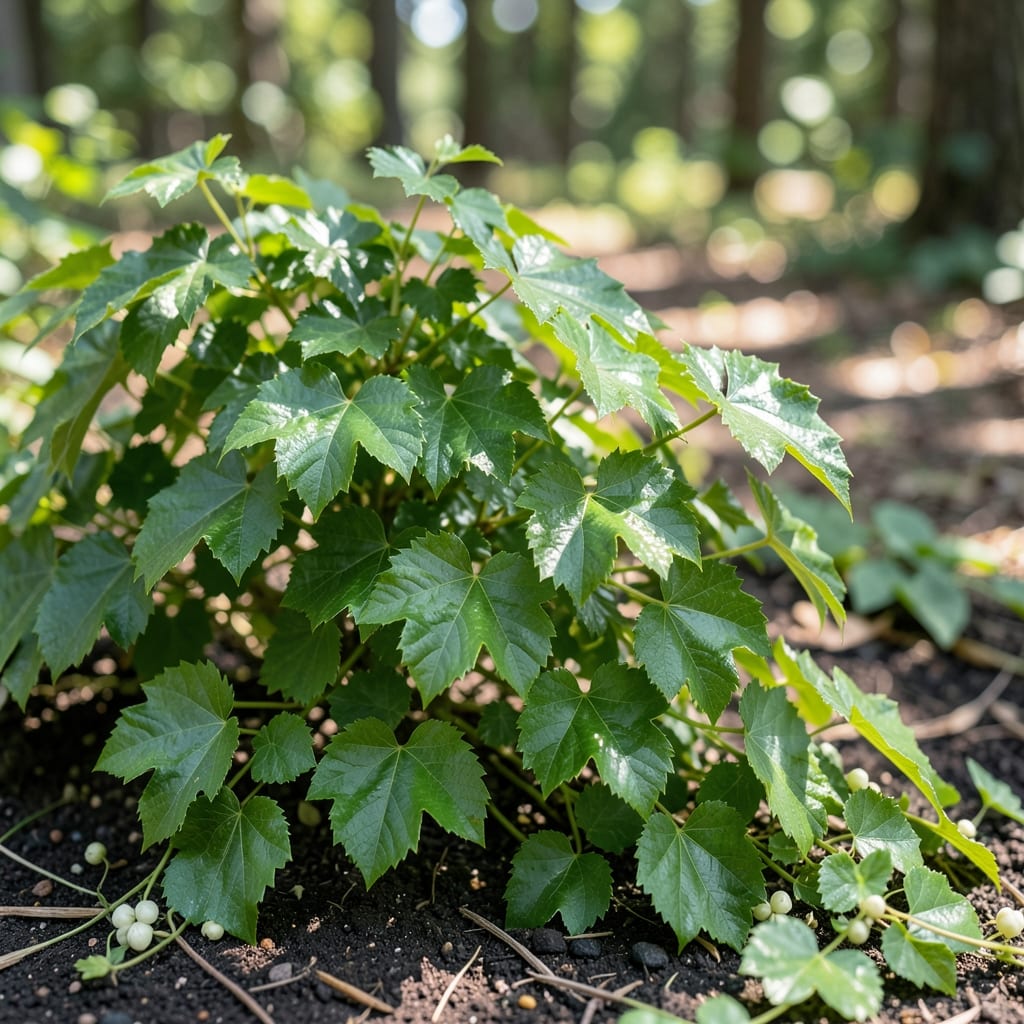
This saying helps distinguish poison ivy (leaves in groups of three) from Virginia creeper (five leaflets). Always avoid the three-leaf pattern to prevent a painful rash.
This old adage serves as a critical warning for outdoor enthusiasts and gardeners alike. I’ve seen many cases where misidentification led to itchy rashes, as the oils in poison ivy cause severe skin reactions in most people. Virginia creeper, while harmless, often grows nearby, making proper identification essential for safety. 🌿
💡 In This Article
The leaves of three pattern in poison ivy features one central leaflet with two opposing side leaflets, all growing from a single stem. These leaflets are typically 2-6 inches long with smooth or slightly toothed edges.
The middle leaflet often has a longer stem than the side ones, creating an asymmetrical appearance that’s a key identifier.
Virginia creeper, with its five leaflets, arranges them in a palmate pattern where all leaflets radiate from a single point like fingers on a hand. Each leaflet is 2-6 inches long too, but they’re uniformly sized with serrated edges.
The plant often climbs structures with aerial rootlets, unlike poison ivy which grows as a vine or shrub.
Color provides another clue: poison ivy leaves turn brilliant red or orange in autumn, while Virginia creeper transforms into a spectacular deep crimson. In spring, poison ivy’s new leaves often have a reddish tint, whereas Virginia creeper’s emerge with a bronze hue. 🌈
Growth habits differ significantly. Poison ivy thrives in both sunny and shady areas, often as a ground cover or climbing tree trunks with hairy aerial roots. Virginia creeper prefers open woodlands and can climb 30-50 feet up trees using tendrils with adhesive pads, creating a dense canopy.
Both plants produce berries, but poison ivy’s are white to cream-colored and grow in loose clusters, while Virginia creeper’s are dark blue to black and appear in tight groups. These berries appear in late summer and persist through winter, providing year-round identification clues. ✨
It highlights the key difference in leaf patterns. Poison ivy always has three leaflets per stem, while Virginia creeper has five. This consistent pattern makes the saying a reliable quick-check in the wild.
No, Virginia creeper is harmless to most people. However, some sensitive individuals may experience mild irritation. The real danger comes from poison ivy’s urushiol oil, which causes a rash in 80% of people.
That’s likely boxelder or another lookalike. True poison ivy never has more than three leaflets, and Virginia creeper maxes out at five. When in doubt, avoid contact entirely.
Think: “Harm comes in threes.” Or use the full rhyme: “Leaves of three? Let it be! Berries white? Danger in sight!” This mental trick helps reinforce the warning.