
Beautiful Plants For Your Interior
Beautiful Plants For Your Interior
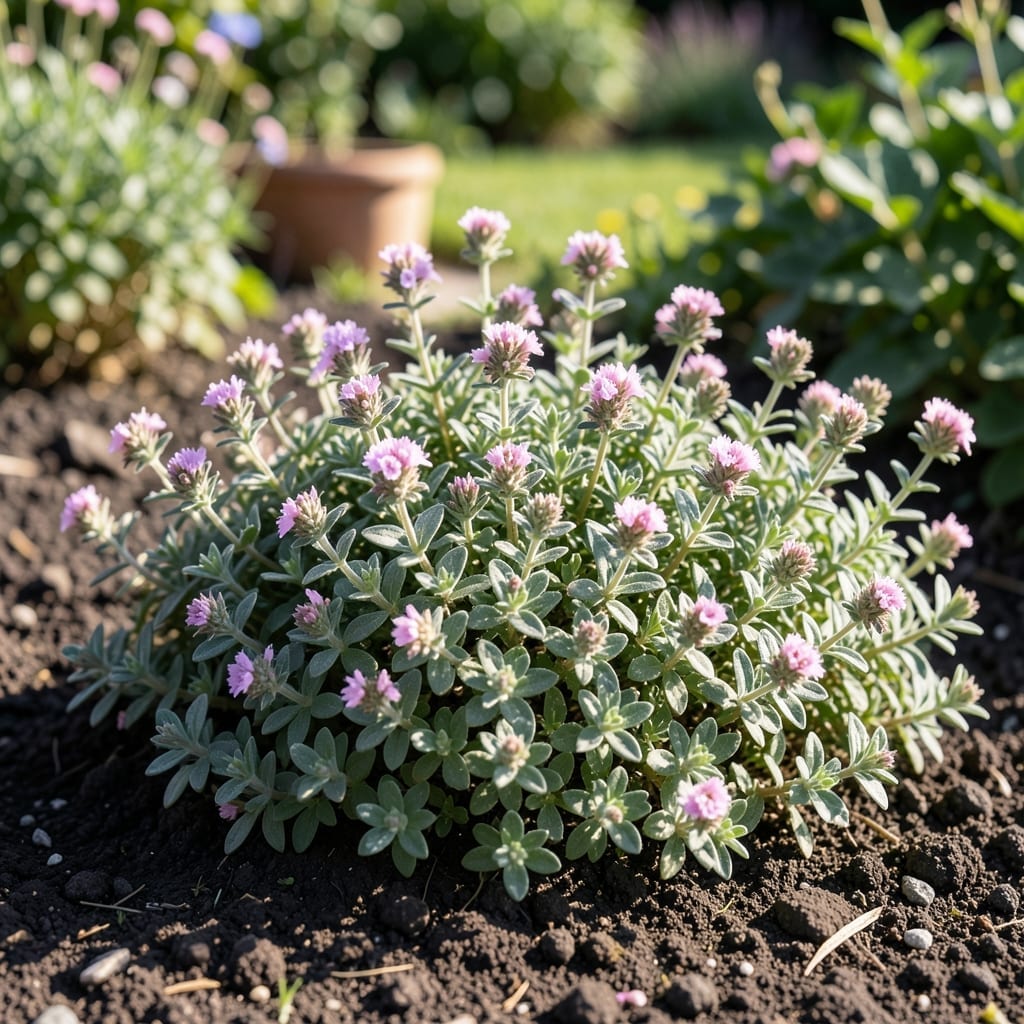
Creeping thyme 🌿 is a gardener’s dream for its fragrant foliage and drought tolerance. But how long until it forms that lush green carpet you’re envisioning?
I’ve watched this hardy herb transform bare patches into vibrant ground cover. The timeline might surprise you – it’s faster than many realize under the right conditions.
Discover what affects its growth speed and how to create the ideal environment. Let’s explore how to get the most from your Creeping Thyme.

One of the first questions I get about creeping thyme is how quickly it spreads. In ideal conditions, you’ll see noticeable growth within 4-6 weeks after planting established plugs or cuttings.
From my experience, a single plant can spread 6-12 inches in its first growing season. For full ground cover, you’re typically looking at 12-18 months depending on spacing and care.
| Stage | Timeframe | What to Expect |
|---|---|---|
| Initial Growth | 4-6 weeks | New shoots appear |
| Early Spread | 2-3 months | Forms small mats |
| Established Growth | 6-12 months | Fills gaps between plants |
| Full Coverage | 12-18 months | Complete ground cover |
I’ve found that spring planting gives the fastest results, as the plant can take advantage of the entire growing season. The warm soil and increasing daylight hours really accelerate growth.
For those starting from seed, expect to add 8-12 weeks to these timelines. Seeds require more patience as they first develop into seedlings before beginning their horizontal spread.
Spacing dramatically affects your timeline. Planting 6-8 inches apart will give you full coverage in about a year, while 12-inch spacing may take closer to 18 months.
In my own garden, I’ve seen the most rapid growth when plants receive full sun and are in well-draining soil. These conditions seem to supercharge the horizontal spread.
The first year is all about establishment. You’ll see vertical growth first as the plant develops its root system. Then the real magic begins as it starts spreading outward.
By the second year, your creeping thyme should be filling in nicely. This is when you’ll really start to see that lush green carpet forming between your plants.
Remember, these are averages. In ideal conditions with perfect care, some gardeners report full coverage in as little as 12 months. In less favorable conditions, it might take up to two full growing seasons.
🌿
In my gardening experience, creeping thyme growth speed depends heavily on environmental conditions. The biggest factor is sunlight exposure – this plant thrives in full sun, with 6+ hours daily producing the fastest spread.
I’ve noticed that soil quality makes a huge difference too. Well-draining, slightly alkaline soil encourages more rapid growth than heavy clay or overly acidic conditions.
Watering practices also play a key role. I recommend deep watering weekly rather than frequent shallow watering. This encourages deep root development, which supports faster horizontal spread.
Plant spacing dramatically affects your timeline. Closer spacing (6-8 inches) creates competition that actually stimulates faster growth, while wider spacing (12+ inches) takes significantly longer to fill in.
From my trials, spring planting consistently outperforms fall planting for first-year growth. The warming soil and increasing daylight give the plant a natural boost to establish quickly.
Lastly, minimal fertilization works best. I’ve found that too much fertilizer can actually slow the horizontal spread, as the plant focuses on vertical growth instead. A light feeding in early spring is all this hardy herb needs. 🌿