
Beautiful Plants For Your Interior
Beautiful Plants For Your Interior
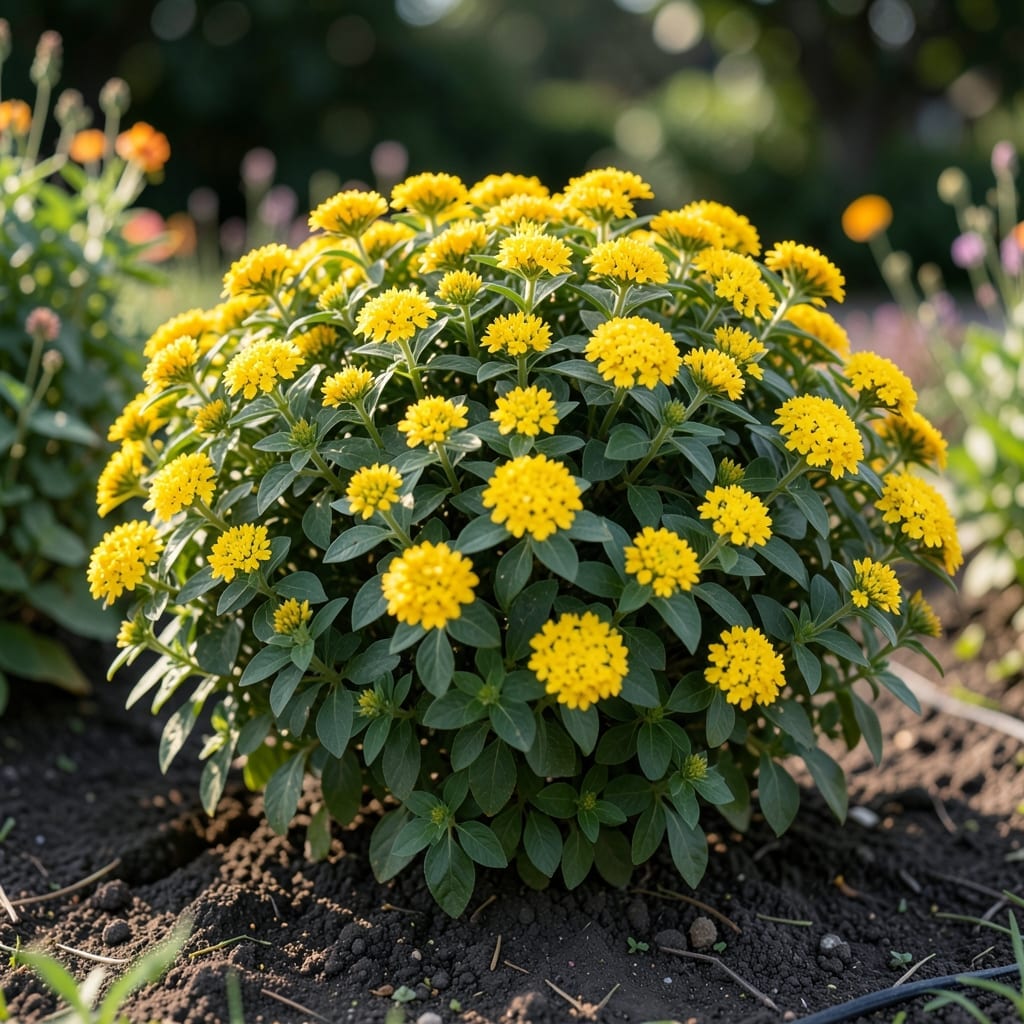
Bright yellow blooms that refuse to quit. Landmark Yellow lantana thrives where other plants wilt, pushing out clusters of vibrant flowers from spring until frost with almost no effort from you.
This drought-tolerant powerhouse handles heat, poor soil, and occasional neglect. I’ve watched mine attract butterflies daily while asking for little more than sunlight and the occasional drink. Here’s how to keep it flourishing all season.
📚 In This Guide
Here’s my proven approach to cultivating these vibrant, heat-loving plants with maximum blooms and minimal fuss.
Choose a spot that receives full sun—at least 6-8 hours of direct sunlight daily. Lantana Landmark Yellow thrives in intense heat, so don’t shy away from the hottest part of your garden. The more sun it gets, the more prolific the blooms will be.
Ensure the soil is well-draining to prevent root rot. If your garden has heavy clay, amend it with compost or plant in raised beds. I’ve found these plants tolerate poor soil better than soggy conditions, so prioritize drainage over fertility.
Dig a hole twice as wide as the root ball but no deeper. Place the plant in the hole so the top of the root ball sits slightly above the surrounding soil level—this prevents water from pooling around the stem. Backfill with native soil and press gently to remove air pockets.
Space plants 18-24 inches apart to allow for their mature spread. Lantana Landmark Yellow grows 2-4 feet wide, so giving it room reduces competition and encourages air circulation, which keeps foliage dry and disease-free.
After planting, water thoroughly to settle the soil around the roots. Once established, Lantana Landmark Yellow is drought-tolerant—in fact, it blooms best when slightly stressed. Water deeply once a week, allowing the top 1-2 inches of soil to dry out between waterings.
Overwatering is the fastest way to kill lantana. If leaves start yellowing or wilting, check the soil first—it’s likely too wet. I’ve seen more plants lost to kindness (overwatering) than neglect with this variety.
Prune back spent blooms and leggy stems to encourage new growth and more flowers. Use clean, sharp shears to cut just above a leaf node or branching point. A light trim every 4-6 weeks keeps the plant compact and bushy.
In early spring, before new growth starts, give the plant a harder prune to remove dead or winter-damaged wood. I cut mine back by one-third to rejuvenate them—this variety responds well to aggressive pruning and rewards you with vigorous new growth.
Lantana Landmark Yellow doesn’t need rich soil, but a light feeding can boost blooms. Apply a balanced, slow-release fertilizer (like 10-10-10) once in early spring and again in midsummer. Avoid high-nitrogen fertilizers, which promote leafy growth at the expense of flowers.
I’ve found that over-fertilizing leads to excessive foliage and fewer blooms. If your plant looks healthy but isn’t flowering, cut back on the fertilizer—it’s likely getting too much. A little neglect often results in the best displays with this tough, resilient plant.
These insights will help you avoid common pitfalls and get the most from your plants.
Sunlight Maximization: The 6-8 hours of direct sunlight daily mentioned in Step 1 is non-negotiable for vibrant blooms. I learned this the hard way after planting mine in partial shade—resulting in sparse, lackluster flowers. Position them where they’ll get that full sun exposure, especially during peak afternoon hours when sunlight is most intense.
Watering Wisdom: That once a week watering schedule in Step 3 works perfectly once established, but here’s what nobody tells you—new plantings need more frequent watering for the first 2-3 weeks while roots establish. After that, stick to the weekly deep watering and trust the drought tolerance. Overwatering truly is the number one killer of these resilient plants.
Pruning Precision: For Step 4’s 4-6 week light trims, always use clean shears and cut at an angle just above leaf nodes. This prevents water from pooling on the cut surface and encourages bushier growth. I also recommend sterilizing your shears between plants to prevent disease transmission—especially important when doing that harder one-third prune in early spring.
Soil Strategy: While Step 1 mentions well-draining soil, I’ll add this: if you’re dealing with heavy clay, don’t just amend the planting hole—improve the entire bed area. Plants growing in amended holes surrounded by clay create a “pot effect” where water pools around the roots. A raised bed works beautifully for this variety if drainage is a persistent issue.
Lantana Landmark Yellow is cold-hardy to USDA zones 7-11. In colder areas, mulch heavily or grow in containers to move indoors. Reduce watering but keep soil slightly moist.
Lack of blooms often means insufficient sunlight (needs 6+ hours daily) or over-fertilizing. Prune spent flowers to encourage new growth. Ensure well-draining soil to avoid root stress.
Yes! Use a well-draining potting mix and a container with drainage holes. Water when the top inch of soil is dry. Container plants may need more frequent fertilizing during the growing season.
Watch for aphids, whiteflies, and spider mites. Treat with insecticidal soap or neem oil. Proper spacing improves airflow, reducing pest issues. Regularly inspect leaves for early signs.
Once established, it’s highly drought-tolerant. Water deeply but infrequently to encourage deep root growth. Avoid overwatering, as soggy soil can cause root rot.