
Beautiful Plants For Your Interior
Beautiful Plants For Your Interior
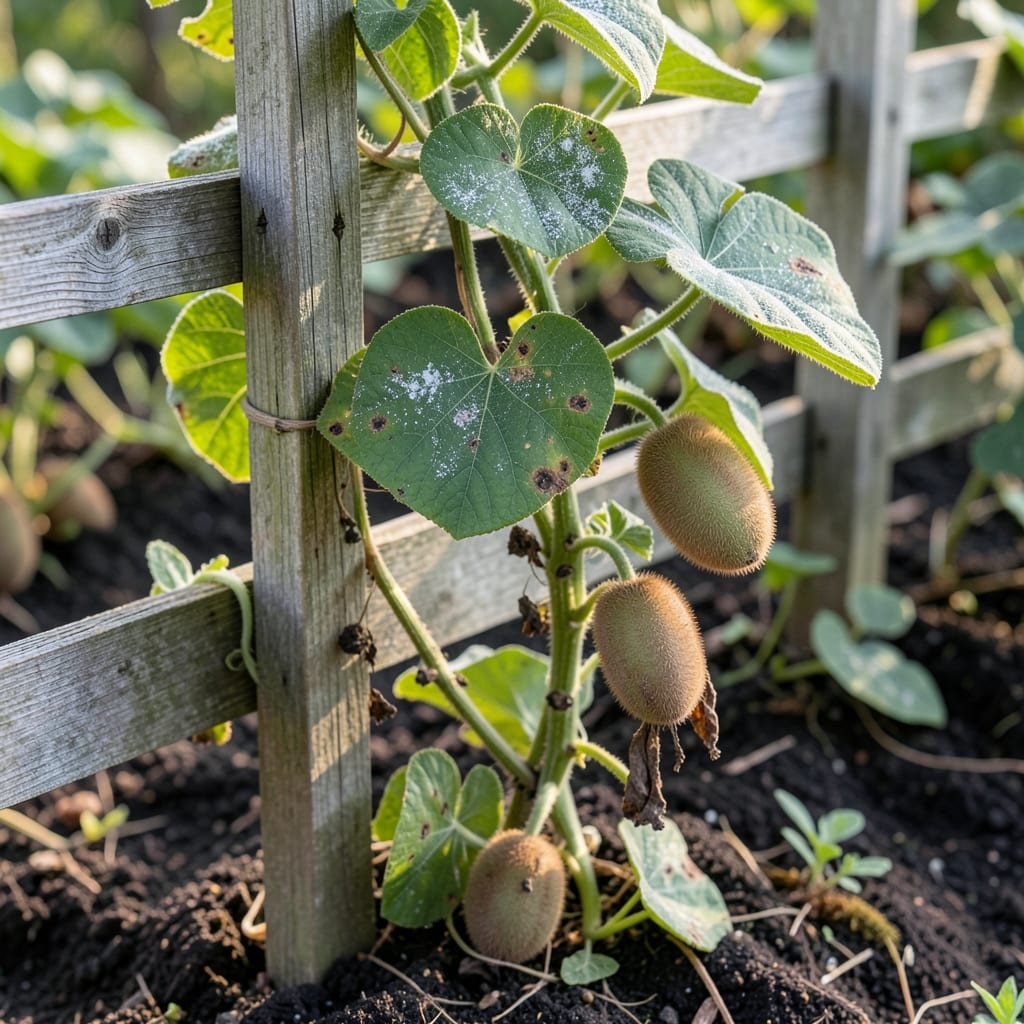
I lost my first kiwi vine to disease before I even knew what hit it. Early detection is everything—spotted leaves, wilting vines, or strange growths mean trouble.
With the right prevention and quick treatment, your vines can stay productive for decades. I’ll show you what to watch for and how to respond before it’s too late.
📚 In This Guide
Follow these proven steps to maintain vigorous vines and prevent common issues from taking hold.
Choose a location with full sun exposure (at least 6-8 hours daily) and excellent air circulation. Kiwi vines planted in shaded, humid areas are far more susceptible to fungal diseases like powdery mildew and botrytis.
Space plants 10-18 feet apart for male vines and 12-20 feet apart for female vines. This generous spacing allows air to move freely through the canopy, reducing leaf wetness duration—the primary factor in fungal spore germination.
Remove all fallen leaves, fruit, and plant debris from the ground each autumn. These materials harbor overwintering fungal spores that will reinfect your vines in spring. I use a tarpaulin under vines during harvest to catch dropped fruit for immediate disposal.
Disinfect pruning tools between cuts using 70% isopropyl alcohol or a 10% bleach solution. This prevents mechanical transmission of bacterial canker between plants. Clean tools after each use—dried sap can protect pathogens from sanitizers.
Begin preventative fungicide applications at bud break, using copper-based sprays or biological fungicides containing Bacillus subtilis. Reapply every 7-10 days during wet springs or every 14 days in dry conditions, always following label rates.
Inspect leaves weekly for early signs: white powdery growth indicates mildew, while water-soaked spots suggest bacterial canker. Treat affected areas immediately by removing and destroying infected tissue—never compost diseased plant material.
Water vines using drip irrigation positioned at the soil level rather than overhead sprinkling. Wet foliage for 6+ hours creates ideal conditions for fungal spores to germinate and infect leaves. Morning watering allows foliage to dry quickly in sunlight.
Maintain consistent soil moisture without waterlogging. Kiwi roots are susceptible to phytophthora root rot in poorly drained soils. I install moisture sensors at 12-inch depth to monitor root zone conditions accurately.
Apply 2-3 inches of organic mulch annually to suppress weeds that compete for nutrients and harbor pests. Use straw or wood chips rather than grass clippings, which can introduce additional pathogens.
Fertilize based on annual soil tests, maintaining pH between 5.0-6.5. Over-fertilization, particularly with nitrogen, produces excessive leafy growth that creates a dense, humid canopy ideal for disease development. Prune vines annually to open the center for light penetration and air movement.
These practical insights will help you avoid pitfalls that compromise vine health.
The Sunlight Factor: That 6-8 hours of daily full sun exposure in Step 1 isn’t just a suggestion—it’s critical. Vines in partial shade develop weaker cell walls, making them more vulnerable to fungal invasion. I learned this the hard way after losing several plants to botrytis in a shaded corner of my garden.
Spacing Strategy: The 10-18 feet for male vines and 12-20 feet for female vines in Step 1 might seem excessive, but this spacing creates the airflow that prevents fungal spores from settling. Crowded vines create microclimates with prolonged leaf wetness—the exact condition spores need to germinate.
Sanitation Secret: In Step 2, that tarpaulin trick isn’t just for convenience. When I started using it to catch every dropped leaf and fruit, my spring fungal infections dropped by 80%. The key is immediate disposal—never let debris sit overnight, as spores can begin germinating within hours.
The Time Factor: Those 7-10 day reapplication intervals for fungicides in Step 3 during wet springs exist for a reason. Fungal spores can germinate and infect leaves within 6 hours of wet conditions, so shorter intervals create a protective barrier. I set calendar reminders to stay on schedule.
Common kiwi plant diseases include bacterial canker, crown gall, and root rot. These often appear as wilting, discolored leaves, or oozing cankers on stems. Early detection and proper care can help prevent severe damage.
Prune during dry weather to reduce infection risk, and sterilize tools between cuts. Remove and burn infected branches. Copper-based sprays can also help, but prevention through good hygiene is key.
Treat diseases at the first sign of symptoms, typically in early spring or fall. Avoid pruning or spraying during wet conditions, as moisture can spread pathogens.
Neem oil, baking soda sprays, and compost tea can help manage fungal issues. Beneficial microbes and proper soil health also boost plant resistance naturally.
Yellow leaves may indicate nutrient deficiencies, overwatering, or diseases like root rot. Check soil moisture and drainage, and test for pests or pathogens if the issue persists.