
Beautiful Plants For Your Interior
Beautiful Plants For Your Interior
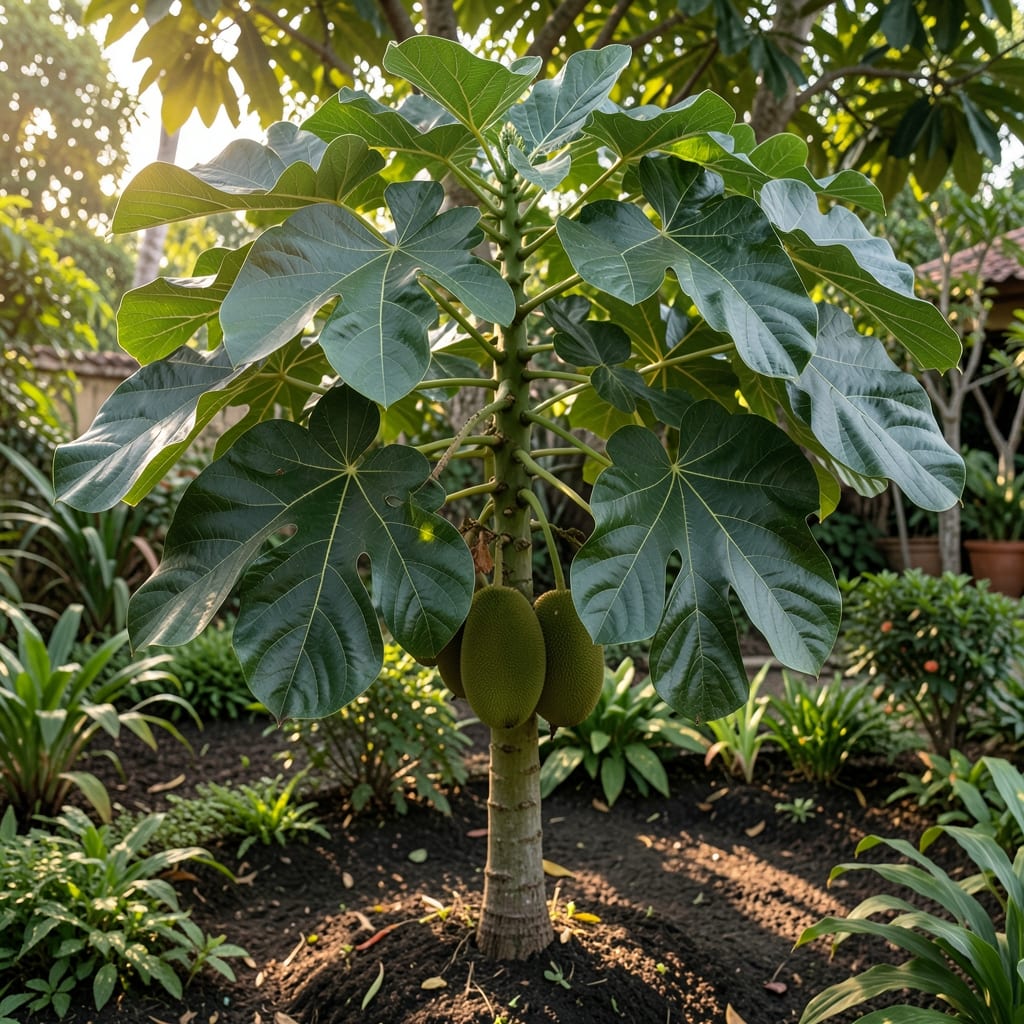
Those massive, glossy jackfruit leaves tell you everything about your tree’s health. I’ve learned that yellowing edges or brown spots aren’t just cosmetic—they’re your tree’s way of asking for help.
With the right organic care, you’ll see vibrant green foliage that resists pests and diseases. Simple adjustments to watering and soil can turn struggling leaves into a thriving canopy within weeks.
📚 In This Guide
Here’s the method I use to keep jackfruit foliage vibrant and resilient through every growing season.
Begin with a thorough inspection of your tree’s leaves, examining both upper and lower surfaces for discoloration, spots, or unusual textures. Healthy jackfruit leaves should display a deep, glossy green with no yellowing edges or brown patches. Look for early signs of stress like curling or premature leaf drop.
I pay particular attention to new growth, as this is often where nutritional deficiencies or pest issues first manifest. Note any sticky residue which could indicate pest activity, or white powdery substances that might signal fungal problems. This baseline assessment guides your next steps.
Apply a neem oil solution (mixed at 1 tablespoon per gallon of water) to both leaf surfaces using a fine mist sprayer. Neem works as both a preventative and treatment for common pests while being gentle on beneficial insects. Spray in the early morning or late evening to avoid leaf burn from sun exposure.
For soil-borne issues, I work compost tea into the root zone monthly during the growing season. This boosts microbial activity and provides slow-release nutrients. The leaves typically show improved vigor within 2-3 weeks of consistent application, with darker green coloration and reduced edge browning.
Jackfruit trees often show magnesium deficiency through yellowing between leaf veins. When I notice this pattern, I apply Epsom salts at 2 tablespoons per gallon of water as a foliar spray, repeating every 2 weeks until the leaves regain their uniform green color. The improvement becomes visible as new growth emerges fully green.
For potassium deficiencies, which manifest as brown leaf edges, I incorporate wood ash or greensand into the top 2-3 inches of soil. Water deeply after application to help the nutrients reach the root zone. You’ll see reduced edge scorching within 3-4 weeks of treatment.
Ensure your tree receives full sun to partial shade, with protection from strong afternoon winds that can tear leaves. Jackfruit thrives in well-draining soil with a pH between 6.0 and 7.5. I test my soil annually and amend with sulfur or lime as needed to maintain this range.
During dry periods, provide 1-2 inches of water weekly, allowing the soil to dry slightly between waterings. Overwatering leads to yellowing leaves and root rot. Mulch with 2-3 inches of organic material to conserve moisture and regulate soil temperature, which directly impacts leaf health.
Prune any damaged or diseased leaves immediately using clean, sharp tools to prevent the spread of issues. Remove no more than 10-15% of the foliage at one time to avoid stressing the tree. The remaining leaves will compensate by growing more vigorously.
Here’s what I’ve learned the hard way about keeping jackfruit foliage thriving.
Assessment Insight: In Step 1, don’t rush the inspection. Early signs like subtle yellowing or sticky residue are easier to treat than full-blown infestations. I once missed a small aphid cluster because I skipped checking the undersides—cost me weeks of recovery time.
Application Timing: For the neem oil solution in Step 2, spraying in the early morning or late evening isn’t just a suggestion. Direct sunlight on wet leaves can cause burning, and I’ve seen the damage firsthand. The 1 tablespoon per gallon ratio is non-negotiable—too strong, and you risk harming the leaves you’re trying to save.
Nutrient Patience: The 2-3 week timeline for compost tea results in Step 2 is accurate, but don’t expect overnight miracles. I tracked the progress daily once and nearly gave up before the dramatic improvement kicked in at week 3. Consistency is key.
Pruning Discipline: Step 4’s 10-15% foliage limit exists for a reason. Over-pruning shocks the tree, and I learned this after removing nearly 25% during a severe infestation—it took the entire season to rebound. Always err on the side of caution with pruning.
Yes! Young, tender jackfruit leaves are edible and used in traditional dishes like salads or soups. However, mature leaves may be tough and bitter. Always cook them to reduce tannins and ensure safety.
Jackfruit leaves contain antioxidants and anti-inflammatory compounds that may help treat acne, eczema, and wounds. A paste or tea made from the leaves is often used topically for skin healing.
Yellow leaves often indicate nutrient deficiency or overwatering. Test soil pH (ideal: 6.0–7.5) and adjust with compost or balanced fertilizer. Ensure proper drainage to avoid root rot.
Harvest leaves in the morning when they’re fresh and dew has dried. Young, light green leaves are best for culinary or medicinal use, while older leaves suit composting.