
Beautiful Plants For Your Interior
Beautiful Plants For Your Interior
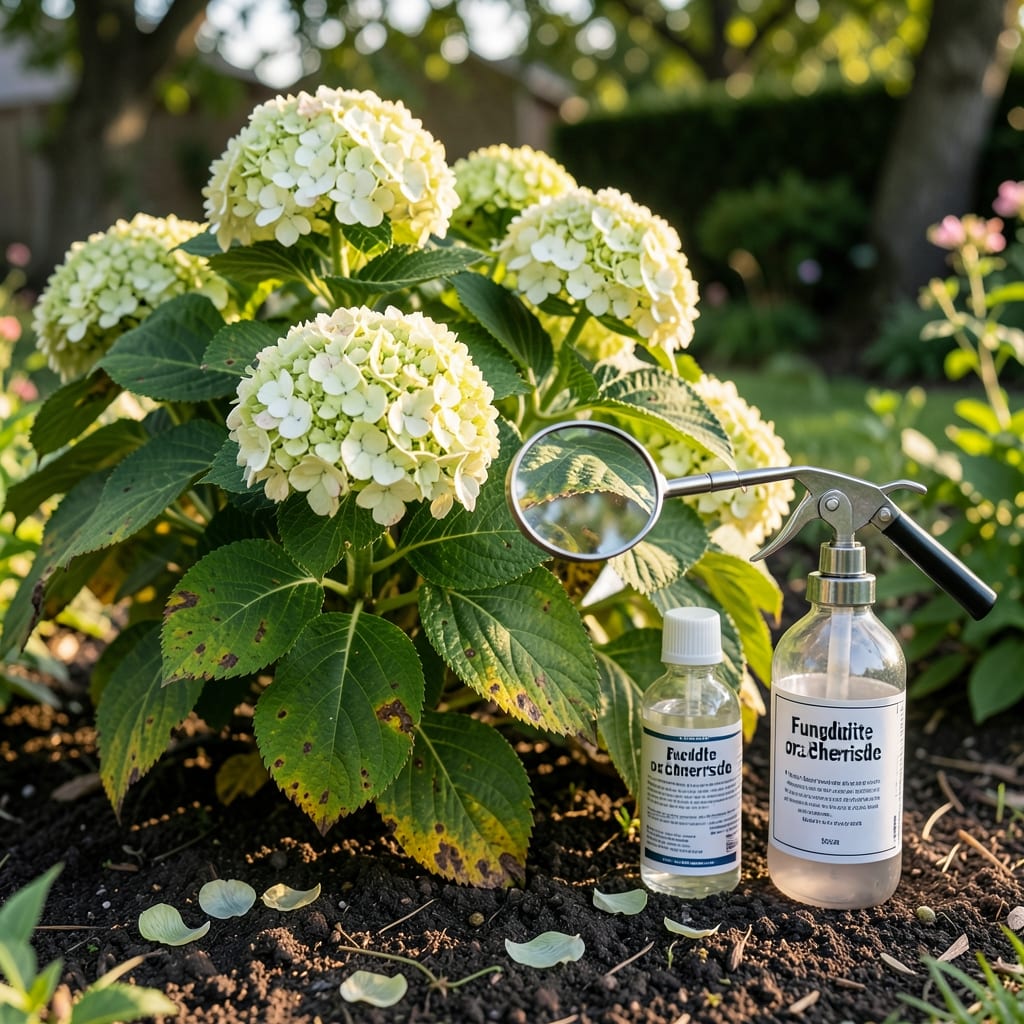
Remove infected leaves immediately and apply copper-based fungicide. Improve air circulation, avoid overhead watering, and maintain proper soil drainage to prevent recurrence.
I’ve found that copper fungicides work best because they disrupt the cellular processes of fungal spores without harming the plant. Air circulation is often the unsung hero—crowded plants trap moisture, which is a breeding ground for issues like powdery mildew. Also, watering at the base keeps foliage dry, reducing the risk of bacterial leaf spot taking hold. 🌟
💡 In This Article
Fungal pathogens like Cercospora and Powdery Mildew thrive in wet, humid conditions, which is why hydrangea leaves often develop circular brown spots or white powdery coatings. These fungi spread via spores that germinate when moisture lingers on foliage for 6+ hours, especially in temperatures between 60-80°F. 🔥
Bacterial leaf spot, caused by Xanthomonas or Pseudomonas, appears as water-soaked lesions with yellow halos. Unlike fungal diseases, bacterial infections often enter through wounds or stomata during overhead watering, and they spread rapidly in warm, wet weather. The key difference is that bacterial spots may ooze when pressed.
Environmental stressors play a huge role too. Overwatering creates anaerobic soil conditions that weaken roots, while poor air circulation traps humidity. Hydrangeas planted too closely together or in shaded areas with limited airflow are 3x more likely to develop fungal issues. Drought stress can also make leaves more susceptible to infection.
Soil pH affects disease resistance as well. Hydrangeas prefer slightly acidic soil (pH 5.5-6.5). When pH drifts too alkaline, nutrient uptake suffers, leaving plants vulnerable. A soil test can reveal if you need to amend with sulfur or aluminum sulfate to adjust acidity levels. 💫
Certain hydrangea varieties show natural resistance. Oakleaf hydrangeas (Hydrangea quercifolia) are particularly hardy against leaf diseases, while Bigleaf hydrangeas (H. macrophylla) are more susceptible, especially in humid climates. Choosing disease-resistant cultivars can reduce treatment needs by 50% or more.
Check leaves weekly during the growing season, especially after rain. Early detection of spots or discoloration means faster treatment. Look closely at both upper and lower leaf surfaces for the best results.
Remove affected leaves immediately and dispose of them far from your garden. Never compost diseased plant material, as this can spread pathogens. Seal in a bag for trash collection to prevent contamination.
Neem oil or baking soda sprays can help with mild cases. Mix 1 tablespoon of baking soda with 1 gallon of water and a drop of dish soap. Apply every 7-10 days for prevention.
Recurring issues often stem from poor air circulation or consistently wet foliage. Adjust your watering method to the base and increase spacing between plants. Test soil pH—alkaline conditions weaken resistance.