
Beautiful Plants For Your Interior
Beautiful Plants For Your Interior
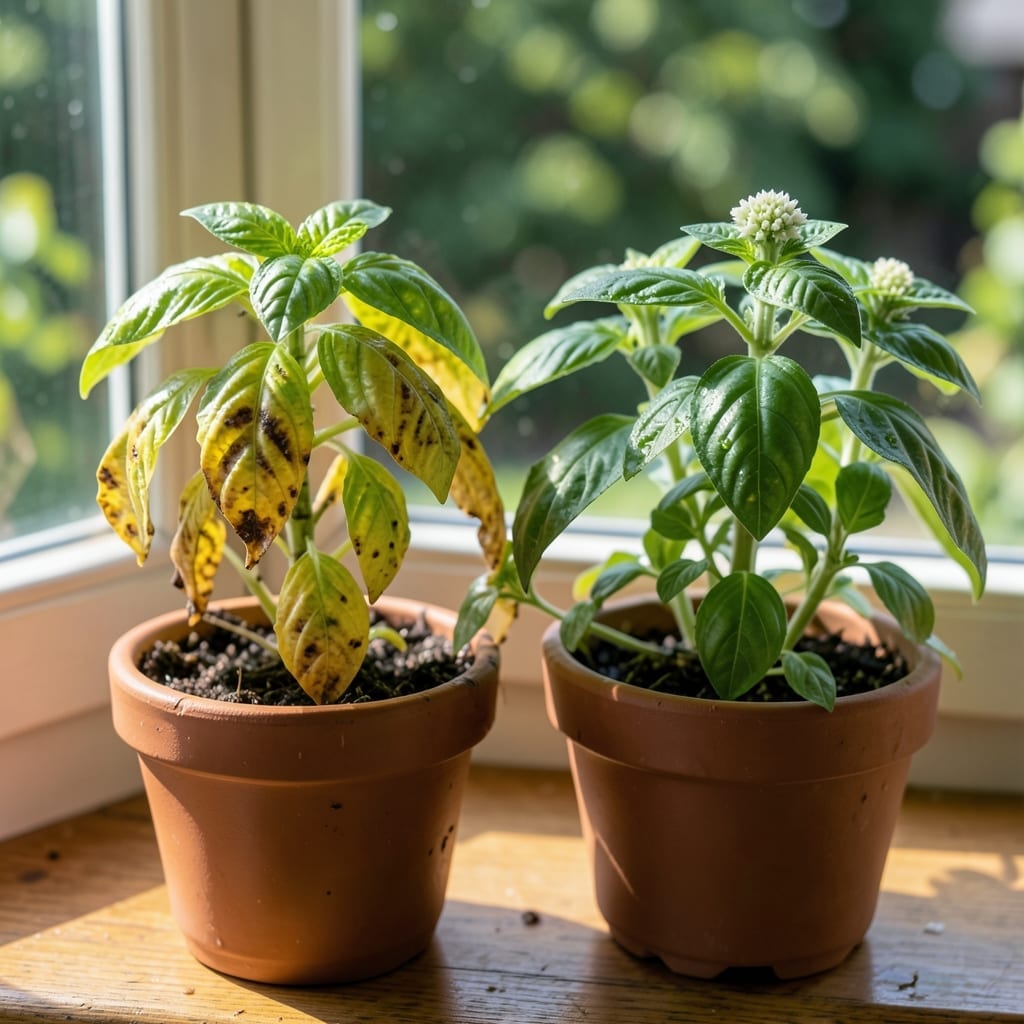
Yellow leaves and droopy stems scream trouble before you even check the soil. I’ve lost count of the basil plants I’ve drowned with good intentions—turns out, more water isn’t always better.
Overwatered basil starts with subtle signs: leaves turn yellow, stems soften, and the soil stays soggy days after watering. The roots suffocate when they can’t breathe, and that’s when the real problems begin.
Catching it early means you can still save the plant. Stop watering immediately and let the soil dry out completely. Trim any black, mushy roots and move the pot to better drainage.
Prevention is simple once you know the rhythm. Water only when the top inch of soil feels dry, and always use pots with drainage holes. Your basil will thank you.
Overwatering basil is a common mistake, often caused by well-meaning gardeners. Here’s why it happens:
Basil thrives in well-draining soil. When pots lack drainage holes or use dense, compacted soil, water pools at the roots, suffocating them. Root rot sets in as oxygen is displaced, and the plant can’t absorb nutrients.
Many assume basil needs constant moisture, but its roots need air too. Watering on a fixed schedule—rather than checking soil dryness—leads to soggy conditions. Basil prefers soil to dry slightly between waterings.
Cool temperatures or low light slow evaporation, leaving soil wet longer. Indoor basil in air-conditioned rooms or outdoor plants in humid climates are especially vulnerable. Always adjust watering to the environment.
Heavy clay or garden soil holds too much moisture. Basil needs a light, aerated mix (like a blend with perlite or sand) to prevent waterlogging. Without it, roots drown in stagnant water.
If you’ve spotted the telltale signs of overwatering—drooping leaves, yellowing foliage, or soggy soil—don’t worry. Your basil can often bounce back with the right care. Below are targeted solutions for each issue, plus tips to keep it thriving.
If the leaves are turning yellow, your basil is likely drowning. Stop watering immediately and let the soil dry out completely. Check the top 1-2 inches of soil with your finger—if it feels damp, wait another day or two. Once dry, resume watering only when the soil is dry to the touch. Use a well-draining pot and ensure excess water can escape through drainage holes.
Prevention tip: 💡 Stick to a schedule: water deeply once every 5-7 days, or when the soil is dry. Avoid misting, as basil prefers dry leaves.
Soggy soil suffocates the roots. To fix this, repot your basil in fresh, well-draining potting mix. Choose a container with drainage holes, and add a layer of perlite or coarse sand to the bottom to enhance airflow. If repotting isn’t an option, poke holes in the soil with a fork to help it dry faster and loosen compacted areas.
Prevention tip: 🌡️ Always use pots with drainage holes, and avoid saucers that trap water. If you must use a saucer, empty it 30 minutes after watering.
Drooping leaves often signal root stress. Trim off any black, mushy roots with clean scissors, then prune wilted or damaged leaves to redirect energy to healthy growth. Move the plant to a spot with bright, indirect light (like a sunny windowsill) to help it recover. Avoid direct sunlight, which can stress it further while it’s weak.
Prevention tip: ✨ Rotate your basil pot weekly to ensure even light exposure and prevent future wilting.
If you smell a foul odor or see dark, slimy roots, root rot has set in. Remove the plant from its pot, rinse the roots under lukewarm water, and trim away all rotten sections with sterilized shears. Repot in fresh, dry soil and a clean container. Hold off on watering for a few days to let the roots recover.
Prevention tip: 🎯 Water in the morning so excess moisture can evaporate during the day. Never let basil sit in standing water.
Yellowing leaves, drooping stems, and mushy brown roots are classic signs. The soil may also smell sour or stay soggy for days after watering.
Water when the top 1-2 inches of soil feel dry, usually every 5-7 days. Always check moisture with your finger before adding more.
Yes, if caught early. Trim rotten roots, repot in fresh soil, and stop watering for a few days. Recovery takes 1-2 weeks with proper care.
No—basil prefers dry leaves. Misting can promote fungal growth and doesn’t help with overwatering. Stick to soil watering only.