
Beautiful Plants For Your Interior
Beautiful Plants For Your Interior
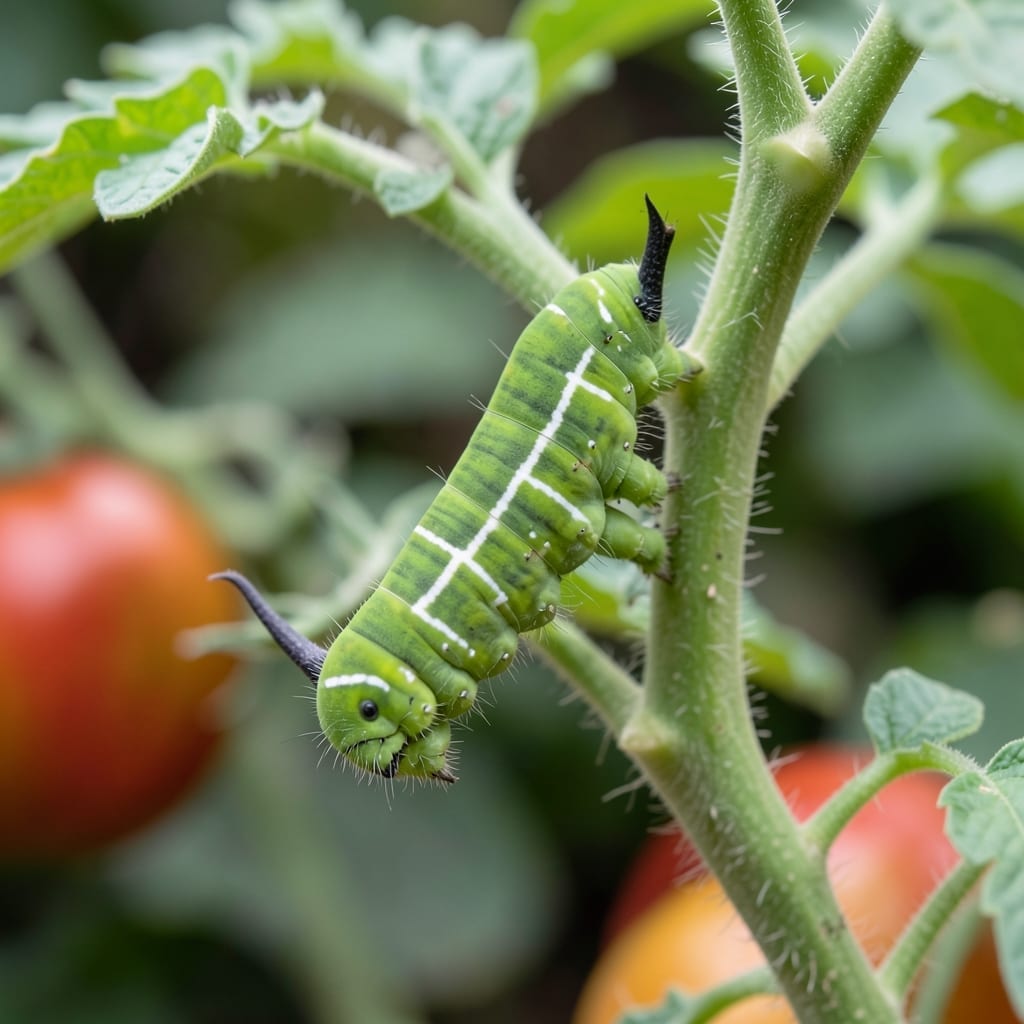
I lost half my tomato crop to these before I learned their tricks. They’re sneaky—hiding in plain sight by blending perfectly with leaves and stems.
You’ll spot them by the damage first: missing leaves, dark droppings on foliage, and chewed stems. Look closely and you’ll find thick green caterpillars with white stripes and a horn-like protrusion.
Check the undersides of leaves and stems at dawn or dusk when they’re most active. They’ll be 1-4 inches long, and trust me, they’re not shy about eating your plants.
Early detection means fast removal before they multiply. Here’s how to hunt them down effectively.
Tomato worms, or Manduca quinquemaculata, don’t just show up by accident. Understanding why they target your garden helps you prevent infestations before they start. Below are the primary reasons these pests thrive in your tomato plants.
Tomato worms are specialized feeders that gravitate toward plants in the Solanaceae family, which includes tomatoes, potatoes, peppers, and eggplants. These plants produce solamine, a compound that the worms’ digestive systems are uniquely adapted to process. Without these hosts, the worms struggle to survive, making your veggie patch a prime target.
These pests flourish in warm, humid environments. Temperatures between 75–85°F (24–29°C) accelerate their life cycle, allowing eggs to hatch in just 4–6 days. Regions with long, hot summers—especially in the southern U.S.—see multiple generations per year, increasing the likelihood of an outbreak.
The tomato worm’s life cycle begins with the five-spotted hawk moth, which lays greenish-yellow eggs on the undersides of leaves. A single female can deposit 200–600 eggs in her lifetime. If your garden lacks natural predators (like birds or parasitic wasps) or has dense foliage, these eggs go undetected until they hatch into voracious caterpillars.
Excess moisture and nutrient-poor soil stress tomato plants, making them more susceptible to pests. Overwatered plants develop soft, tender leaves—a favorite for tomato worms. Additionally, lack of crop rotation depletes soil nutrients, weakening plants and reducing their natural defenses against infestations.
Once you’ve spotted tomato worms (also called hornworms), act fast to protect your plants. Below are practical solutions for common causes and how to prevent future infestations.
Cause: Visible worms on leaves or stems.
Fix: Wear gloves and pluck worms off by hand, dropping them into a bucket of soapy water. Check under leaves and near damaged areas—they’re masters of camouflage! Do this early in the morning or late afternoon when they’re most active.
Cause: Worms persist despite manual removal.
Fix: Apply neem oil or a Bt (Bacillus thuringiensis) spray to foliage, focusing on the undersides of leaves. Bt is a natural bacteria that targets caterpillars without harming beneficial insects. Reapply after rain or every 1–2 weeks.
💡 Pro Tip: Test sprays on a small section of the plant first to avoid leaf burn.
Cause: Recurring infestations.
Fix: Encourage parasitic wasps, birds, and ladybugs by planting dill, basil, or marigolds nearby. These predators feed on worm eggs and larvae. Avoid broad-spectrum pesticides, which can kill helpful insects too.
✨ Bonus: Companion planting with borage can repel tomato worms naturally!
Check your plants at dawn or dusk when these pests are most active. They tend to hide during the hottest parts of the day.
Start with the undersides of leaves and near chewed stems. They blend perfectly with foliage, so inspect carefully for their green bodies with white stripes.
Tomato worms have a distinct horn on their rear and white diagonal stripes. Beneficial caterpillars lack these features and are usually smaller.
They may have already pupated in the soil. Look for dark droppings on leaves or missing foliage—these are telltale signs they were there.