
Beautiful Plants For Your Interior
Beautiful Plants For Your Interior
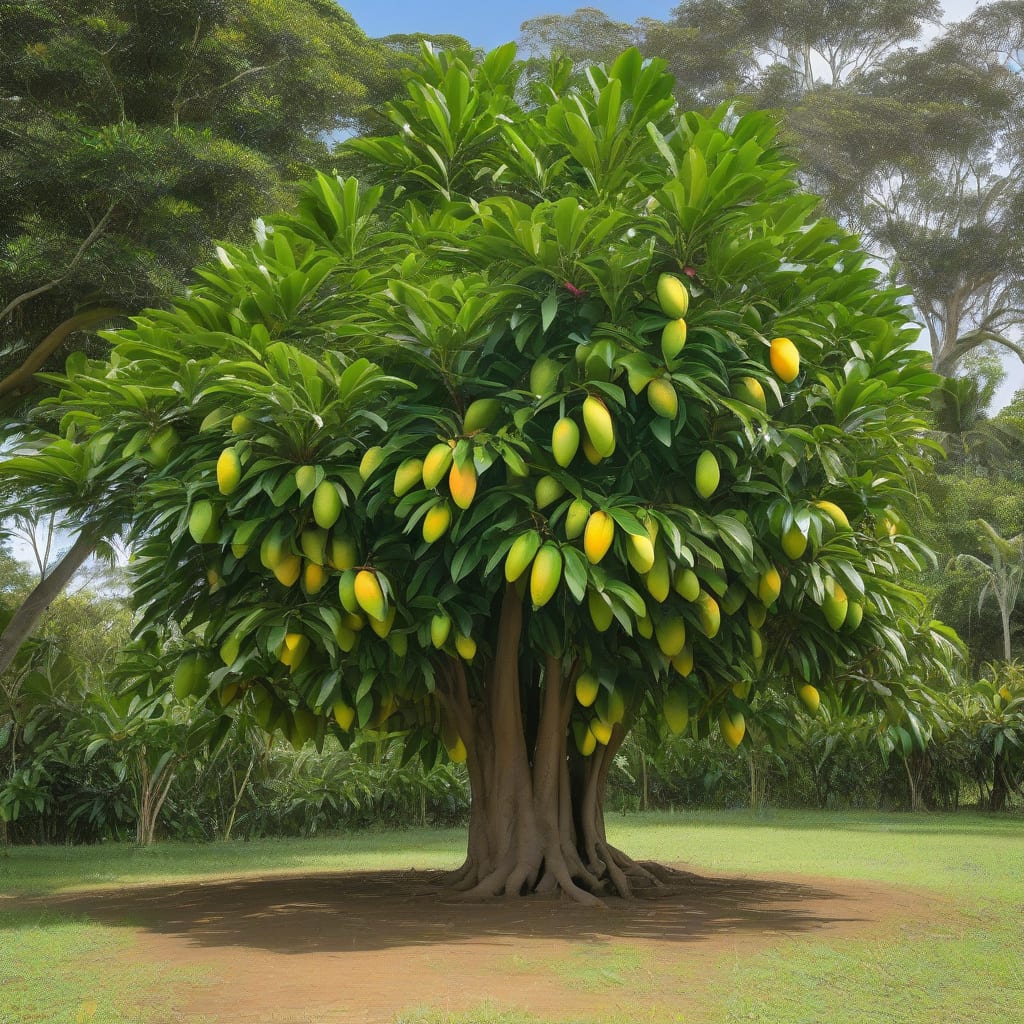
I’ve always been fascinated by the majestic Mango Tree 🥭, which can transform any garden into a tropical paradise. Growing in USDA Zone 10b, these trees can reach impressive heights, but how tall can they actually grow?
The maximum height of a Mango Tree varies depending on factors like variety and growing conditions. Let’s explore the growth potential of these incredible trees and what you can expect when cultivating them in your own garden.
Mango trees are known for their impressive height potential, but several factors influence how tall they can actually grow. Understanding these factors is crucial for gardeners and cultivators to manage their mango tree’s growth effectively.
The natural growth pattern of mango trees is one of the primary factors affecting their height. Mango trees can grow quite tall, with some varieties reaching heights of 100 feet or more in ideal conditions. However, the average mature height typically ranges between 60 to 100 feet. The tree’s genetic makeup plays a significant role in determining its maximum height potential 🌳.
Environmental conditions play a crucial role in determining how tall a mango tree can grow. Mango trees thrive in tropical and subtropical climates with warm temperatures and adequate rainfall. Regions with long growing seasons and frost-free conditions allow mango trees to reach their maximum height potential. In contrast, cooler climates or areas with frequent frost can limit the tree’s growth 🌱.
Cultivation practices, including pruning and training, significantly impact the height of mango trees. Regular pruning can control the tree’s height and promote a more compact growth habit, making it suitable for smaller gardens or orchards. In contrast, minimal pruning allows the tree to reach its natural height potential. Understanding these factors helps gardeners and cultivators manage their mango trees effectively to achieve the desired height 🌟.
By considering the variety, environmental conditions, and cultivation practices, one can better understand how tall a mango tree can grow and how to manage its height effectively. This knowledge is essential for both home gardeners and commercial growers to optimize their mango tree cultivation.
The interaction between these factors creates a complex environment that determines the ultimate height of a mango tree. By understanding and managing these factors, growers can optimize their mango tree’s growth and productivity.
For instance, a mango tree grown in ideal conditions with proper care can reach its maximum height potential, while one grown in less favorable conditions may remain smaller.
In summary, the height of a mango tree is influenced by a combination of genetic, environmental, and cultivation factors. Understanding these factors is key to managing mango tree growth effectively.
By applying this knowledge, growers can make informed decisions about planting, pruning, and caring for their mango trees to achieve the desired height and productivity.
Effective management of mango tree height not only enhances the tree’s productivity but also improves its overall health and resilience.
Managing the height of mango trees is crucial for both home gardeners and commercial growers to optimize their cultivation. The height of a mango tree can significantly impact its productivity and overall health 🌳.
To effectively manage mango tree height, it’s essential to understand the different techniques available. One of the primary methods is pruning, which involves selectively removing branches to control the tree’s height and promote a more compact growth habit 🌟.
Prune young trees to establish a strong structure and desired height
Continuously prune to maintain desired height and promote fruiting
Train the tree to a desired shape, such as an open center or central leader
Different growing conditions require different approaches to managing mango tree height. For example, in home gardens, pruning and training can help maintain a compact tree that fits within the available space 🏠.
In commercial cultivation, managing tree height is critical for efficient harvesting and maintenance. Techniques such as top-working can be used to control tree height while maintaining productivity 📈.
By understanding the specific needs of your mango trees and applying the appropriate techniques, you can effectively manage their height and optimize their growth and productivity 🌟.
Regular monitoring and adjustment of pruning and training practices are necessary to achieve the desired height and maintain the overall health of the tree 🌱.
Effective height management also involves considering factors such as soil quality, climate conditions, and pest management to create an optimal growing environment 🌿.
In conclusion, managing mango tree height requires a combination of proper pruning, training, and consideration of growing conditions. By applying these techniques, growers can achieve their desired outcomes and enjoy a bountiful harvest 🥭.
Mango trees come in various sizes, ranging from compact dwarf varieties to towering standard trees. Understanding the maximum height potential of different mango tree varieties is essential for gardeners and growers to make informed decisions about planting and cultivation 🥭.
The height of a mango tree is largely determined by its variety. Dwarf varieties typically grow between 10 to 20 feet tall, making them ideal for smaller gardens or containers. Semi-dwarf varieties can reach heights of 20 to 30 feet, offering a balance between compact growth and fruit production 🌳.
Standard mango tree varieties are known for their impressive height potential, often reaching 60 to 100 feet or more in ideal conditions. These trees require significant space to grow and are best suited for large gardens or commercial orchards 🌟.
When selecting a mango tree variety, it’s crucial to consider the available space and desired tree size. Dwarf and semi-dwarf varieties are popular choices for home gardeners due to their compact growth habits and ease of management 🌿.
In commercial cultivation, the choice of variety depends on factors such as desired tree density, harvesting ease, and overall management practices 📈.

