
Beautiful Plants For Your Interior
Beautiful Plants For Your Interior
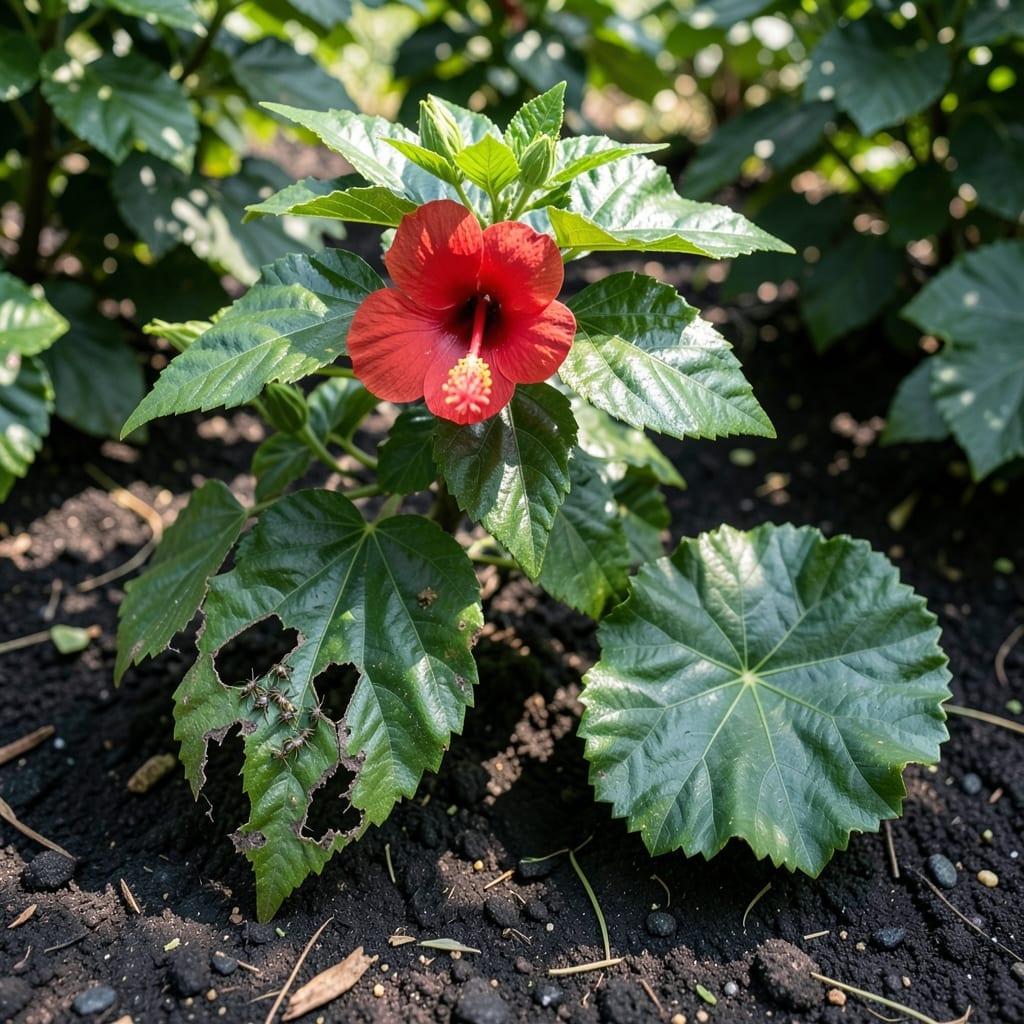
Nothing ruins a vibrant hibiscus faster than chewed-up leaves. I’ve lost count of the mornings I’ve walked outside to find my plants looking like Swiss cheese, and I’m here to help you stop it.
The usual suspects are caterpillars, beetles, or slugs—all drawn to the soft, tasty foliage. The good news? You can spot the culprit by the hole pattern and stop the damage before it spreads.
A little vigilance goes a long way. Regular checks under leaves and around the soil line catch pests early, before they multiply and turn your garden into an all-you-can-eat buffet.
With the right approach, your hibiscus will bounce back fast. Strong, hole-free leaves mean more blooms and a plant that thrives, not just survives.
Hibiscus leaves don’t develop holes on their own—something is always to blame. Below are the most common causes, each with a clear, science-backed explanation so you can identify and fix the issue fast.
Caterpillars, beetles, and sawfly larvae are the primary culprits. They chew through leaf tissue to access nutrients, leaving behind irregular holes or ragged edges. Hibiscus sawfly larvae, for example, skeletonize leaves by consuming the soft tissue between veins. Check the undersides of leaves for small, worm-like pests or dark frass (insect waste).
While they don’t create holes directly, spider mites, aphids, and whiteflies weaken leaves by piercing cells and sucking out sap. This stress makes leaves more susceptible to secondary damage, like tearing or fungal entry points that appear as holes. Look for fine webbing (mites) or sticky residue (aphids) as telltale signs.
Diseases like leaf spot (e.g., Cercospora) or bacterial blight can cause tissue death, which may fall out and leave holes. These often start as brown or black spots with yellow halos. High humidity and poor air circulation accelerate fungal spread. Unlike pest damage, these holes typically have a scorched or water-soaked appearance at the edges.
Extreme heat, drought, or nutrient deficiencies (e.g., potassium or magnesium) can cause leaf edges to die back, mimicking holes. This is often called “necrosis.” Check for uniform browning or crisping at the margins, especially on older leaves first. A soil test can confirm if your hibiscus lacks essential minerals.
Once you’ve spotted holes in your hibiscus leaves, act fast to restore your plant’s health. Below are targeted fixes for the most common causes, paired with prevention tips to keep your hibiscus thriving.
For caterpillars, beetles, or aphids:
If holes are paired with spots, yellowing, or wilting:
For holes caused by drought, wind, or nutrient deficiencies:
💡 Pro Tip: Inspect your hibiscus daily during pest season (spring/summer). Early action saves leaves—and your plant’s energy!
Caterpillars, beetles, and sawfly larvae are the most likely culprits. Check leaf undersides for pests or dark frass.
Yes, fungal infections like leaf spot can create dead tissue that falls out. Look for brown spots with yellow halos before holes appear.
Inspect leaves daily, use neem oil or insecticidal soap, and keep plants well-watered. Beneficial insects like ladybugs help deter pests naturally.