
Beautiful Plants For Your Interior
Beautiful Plants For Your Interior
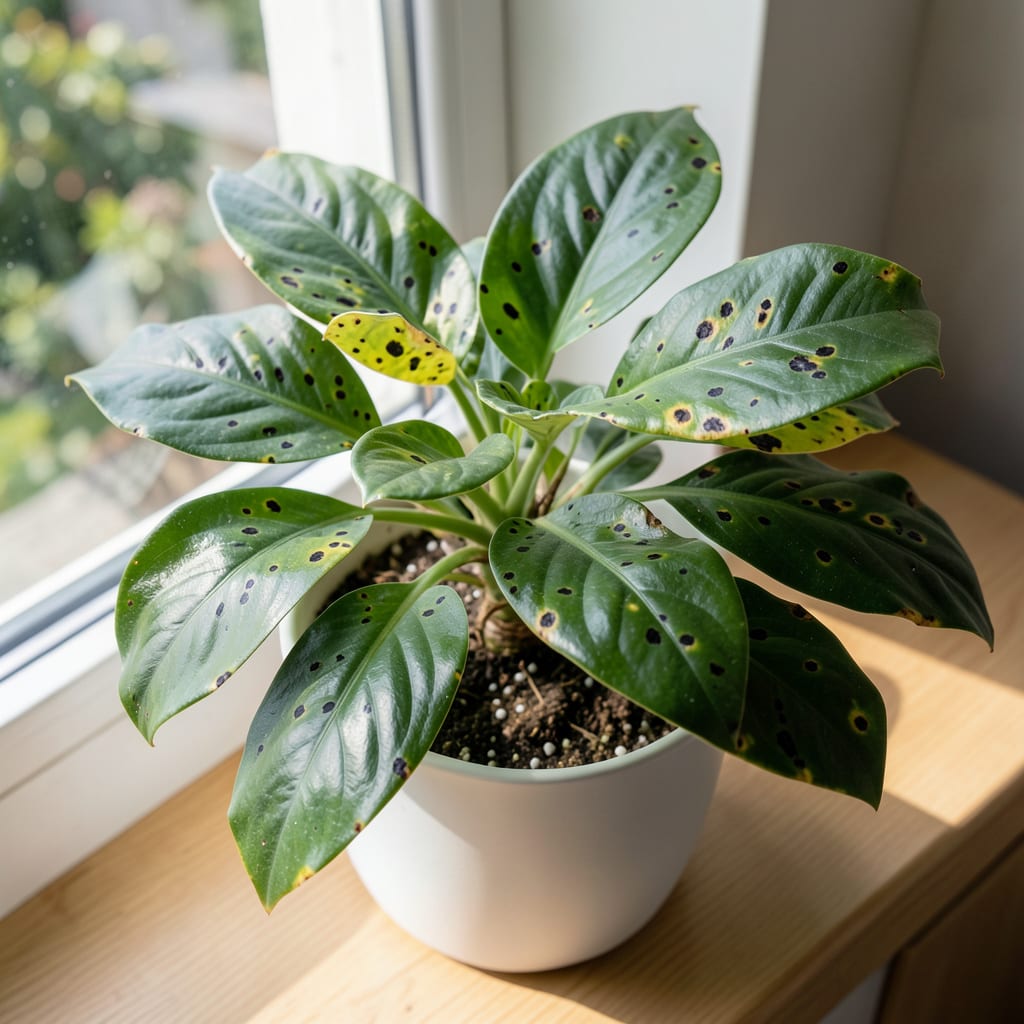
Those black spots on your plant leaves aren’t just ugly—they’re a warning sign. I’ve been there, watching healthy foliage turn into a polka-dot disaster overnight.
Most cases come down to three culprits: fungal infections, pests, or environmental stress like overwatering. The good news? You can usually fix it with same-day adjustments once you know what you’re dealing with.
I’ve saved dozens of plants by catching these issues early. The key is matching the right remedy to the actual problem—not just throwing solutions at it blindly.
Your leaves will bounce back faster than you think. Here’s how to diagnose and treat it before the damage spreads.
Black spots on foliage often signal underlying issues that disrupt a plant’s health. Below are the most common culprits, each with clear explanations to help you diagnose the problem.
Fungi like Cercospora, Alternaria, or Anthracnose thrive in warm, humid conditions. They spread via spores, which germinate on wet leaves, creating circular or irregular black spots with yellow halos. Overhead watering and poor air circulation accelerate fungal growth.
Bacteria such as Pseudomonas or Xanthomonas enter through wounds or stomata, causing water-soaked lesions that turn black. These spots often have a greasy or slimy appearance and may ooze liquid. Splashing water and contaminated tools spread bacterial infections rapidly.
Insects like aphids, thrips, or spider mites pierce leaf tissues, leaving behind wounds that darken over time. Their feeding also introduces pathogens. Look for stippling, webbing, or visible pests alongside the black spots.
Extreme temperatures, sunburn, or chemical exposure (e.g., herbicide drift) can cause tissue death, resulting in black or dark brown patches. These spots are often dry, crispy, and lack the defined edges seen in infections.
A lack of essential nutrients like calcium, magnesium, or potassium can lead to necrotic spots. These typically appear on older leaves first and may be accompanied by yellowing or stunted growth.
Act fast to stop black spots from spreading and restore your plant’s health. Here’s how to fix each common cause.
Remove infected leaves and discard them (do not compost). Apply a copper-based fungicide or a homemade mix of 1 tsp baking soda + 1 quart water + a few drops of dish soap. Spray evenly on both sides of leaves. Prevention tip: 💡 Improve air circulation, water at the base (not overhead), and avoid wet foliage in the evening.
Wipe leaves with a soapy water solution (1 tsp mild soap per 1 liter of water) to remove aphids, mites, or scale. For stubborn pests, use neem oil or insecticidal soap. Prevention tip: ✨ Inspect new plants before bringing them home and keep your garden clean to deter pests.
Let the soil dry out between waterings. If the pot lacks drainage, repot your plant in fresh, well-draining soil. Trim any black, mushy roots to prevent rot. Prevention tip: 🌡️ Use a moisture meter or stick your finger 1-2 inches into the soil—water only if it feels dry.
Test your soil for imbalances. Add a balanced fertilizer (10-10-10) or organic compost to replenish missing nutrients like magnesium or potassium. Prevention tip: 🎯 Feed plants during the growing season but avoid over-fertilizing, which can cause burn.
Move sunburned plants to a shadier spot. If cold Drafts are the issue, relocate them away from windows or doors. Prevention tip: 🌿 Acclimate plants gradually to new light conditions to avoid shock.
Yes, fungal and bacterial causes are contagious. Isolate the affected plant immediately and avoid touching other plants after handling it. Wash your hands and tools with soap and water.
Remove severely spotted leaves to prevent further spread. Use clean scissors and discard the leaves in the trash, not compost. This reduces the pathogen load.
Improve air circulation, water at the base, and avoid overhead watering in the evening. Keep tools clean and inspect plants regularly for early signs.
