
Beautiful Plants For Your Interior
Beautiful Plants For Your Interior
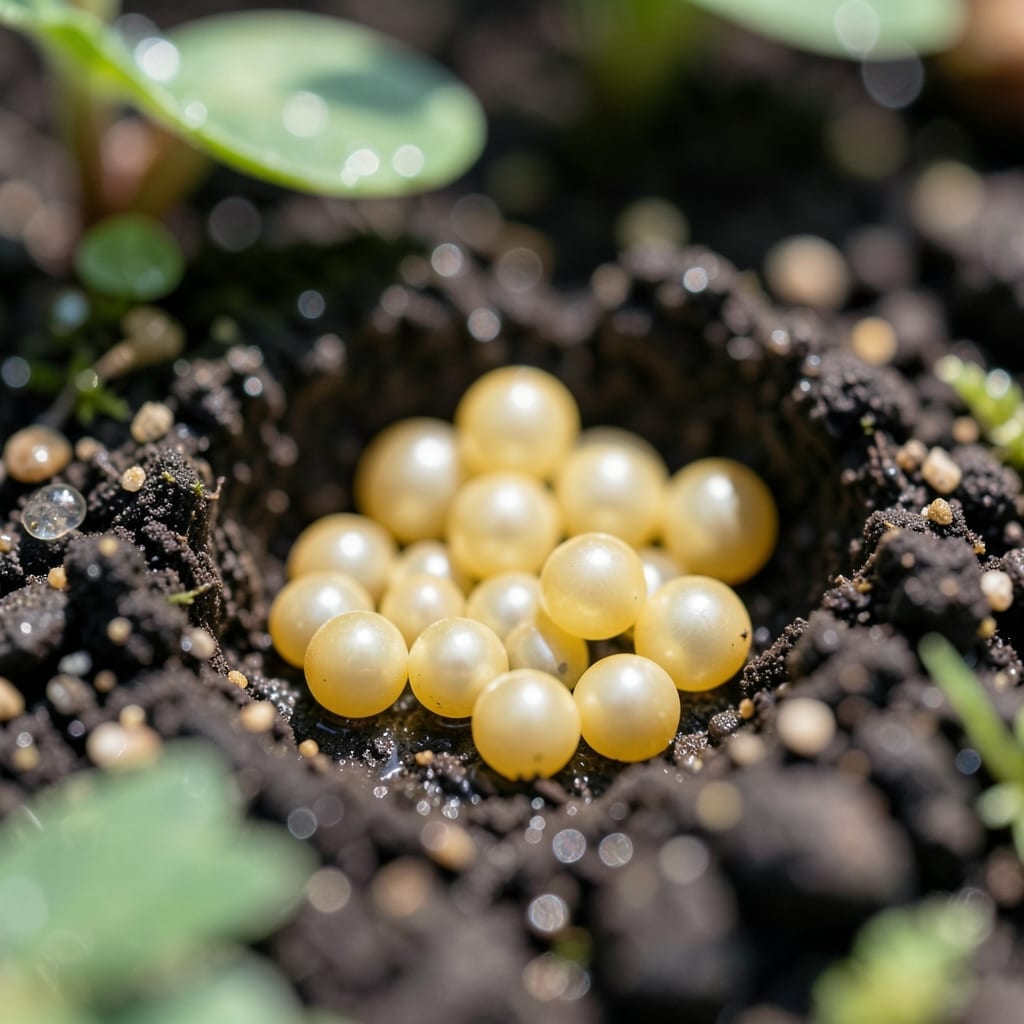
Yellow eggs in your soil aren’t dirt—they’re trouble. I found ground pearls in my raised beds last spring, and those tiny pests multiplied fast, stunting my seedlings before I knew what hit them.
These 1mm white-to-yellow spheres cluster on roots, sucking plant juices while staying nearly invisible. Grass, strawberries, and ornamentals attract them most, but any stressed garden can become a breeding ground.
Here’s the thing—organic solutions like beneficial nematodes work, but timing matters. Chemical treatments exist too, though I prefer the natural route after seeing how fast these spread.
Catching them early saves your season. I’ll show you exactly where to look and what to do next.
Ground pearls, those tiny yellow insect eggs tucked into the soil, appear for several biological and environmental reasons. Understanding these causes helps gardeners target prevention and treatment more effectively. Below are the primary drivers behind their presence:
Ground pearls are the eggs of margarodid scale insects (e.g., Eriococcus or Margarodes species). These pests lay clusters of yellow, pearl-like eggs in soil as part of their reproductive cycle. Female scales crawl or are carried by wind, animals, or water to suitable soil, where they deposit 100–1,000 eggs. The eggs remain dormant until conditions—like warmth and moisture—trigger hatching.
Well-drained, loose, and organic-rich soils create the perfect nursery for ground pearls. These conditions allow female scales to burrow 1–3 inches deep to lay eggs while protecting them from predators and desiccation. Over-watered or compacted soils may deter egg-laying, but sandy or loamy soils with high organic matter are prime targets.
Warm, humid climates accelerate the life cycle of scale insects. Ground pearls often appear in late spring to early summer when soil temperatures reach 60–75°F (15–24°C). In cooler regions, eggs may lie dormant through winter, hatching only when the soil warms. Drought conditions can also force scales to lay eggs deeper in the soil to retain moisture.
Scale insects are highly host-specific. Ground pearls are commonly found near the roots of grasses, turf, shrubs, and fruit trees (e.g., citrus, fig, or olive). If your garden hosts these plants, the likelihood of ground pearl infestations increases, as females seek out these species to ensure their offspring have immediate food sources upon hatching.
Ground pearls can be stubborn, but with the right approach, you can reclaim your soil. Below are targeted solutions for each common cause, along with prevention tips to keep them from returning.
If ground pearls are widespread, remove the top 6–12 inches of soil in the affected area. Replace it with fresh, sterile potting mix or clean garden soil. This physically eliminates the pests and their eggs. For smaller patches, solarize the soil by covering it with clear plastic for 4–6 weeks during hot weather to kill larvae and eggs with heat.
Ground pearls thrive in damp conditions. Fix drainage issues by amending the soil with sand, perlite, or compost to improve airflow and water flow. Avoid overwatering plants—let the top inch of soil dry out between waterings. Consider raised beds if your garden has persistent moisture problems.
Healthy plants resist pests better. Fertilize regularly with a balanced, organic fertilizer to strengthen your plants. Ensure they receive the right amount of sunlight and proper spacing to reduce stress. Remove and destroy heavily infested plants to prevent the spread of ground pearls to nearby vegetation.
Pro tip 💡: Early detection is key! Regularly check your soil, especially around the roots of struggling plants, to catch infestations before they spread.
They’re typically buried 1-3 inches deep in loose, well-drained soil. Female scales prefer this depth to protect eggs from drying out while still allowing easy access to plant roots for hatching larvae.
Grasses, strawberries, citrus trees, and ornamentals are prime targets. These plants provide the ideal food source for nymphs once they hatch, making infestations more likely in gardens with these species.
Only after treatment. Solarize the soil under clear plastic for 4-6 weeks in hot weather, or replace the top 6-12 inches with fresh, sterile mix to ensure all eggs and larvae are eliminated.