
Beautiful Plants For Your Interior
Beautiful Plants For Your Interior
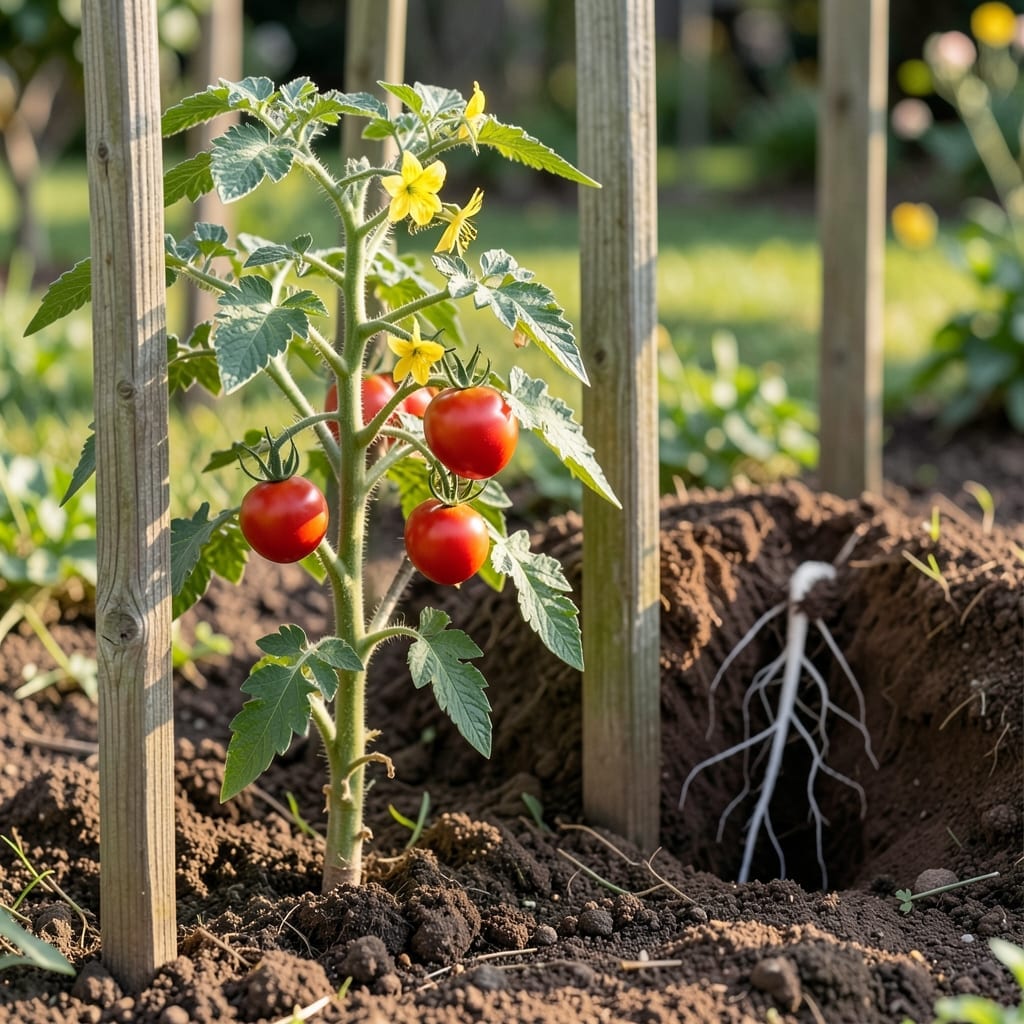
Ever struggled with wilting tomato plants despite regular watering? The answer might lie beneath the surface. Understanding root depth is the key to healthier, more productive Tomato plants.
Root systems anchor your plants and absorb essential nutrients, but their depth varies by variety and growing conditions. This knowledge can transform your gardening approach.
Discover how deep Tomato roots typically grow and why it matters for your garden’s success. Let’s dig into the details that will change how you plant and care for your Tomato crop.
I’ve learned that tomato root depth varies significantly by type and age. Determinate tomatoes typically develop shallower roots, often reaching 12–18 inches deep, while indeterminate varieties can extend 2–3 feet or more into the soil.
As seedlings, tomato roots start shallow but grow deeper as the plant matures. By the time they’re fully grown, most tomato plants will have roots that spread 12–24 inches deep, with some extending even further under ideal conditions. 🌱
| Variety | Growth Stage | Root Depth |
|---|---|---|
| Determinate | Seedling | 6–12 inches |
| Determinate | Mature | 12–18 inches |
| Indeterminate | Seedling | 12–18 inches |
| Indeterminate | Mature | 24–36 inches |
Soil conditions play a huge role in root growth. Loose, well-draining soil encourages deeper roots, while compacted or rocky soil can stunt their development. I always recommend amending your soil with compost to give roots room to grow.
Another factor is container gardening. In pots, tomato roots are limited by the container size. For dwarf varieties, a 5-gallon pot works, but larger plants need at least 10–15 gallons to thrive.
I’ve noticed that watering habits also influence root depth. Deep, infrequent watering encourages roots to grow downward in search of moisture, while shallow, frequent watering keeps roots near the surface.
Mulching is another game-changer. A 2–3 inch layer of organic mulch helps retain moisture and keeps soil temperatures stable, which supports healthy root growth.
For the best results, I plant tomatoes in raised beds or loamy soil with plenty of organic matter. This setup allows roots to spread deep and wide, giving the plant access to more nutrients and water.
Remember, root depth isn’t just about how far down they go—it’s also about how wide they spread. A mature tomato plant’s roots can extend 2–3 feet outward, so give them space to grow.
In my experience, understanding root depth helps with proper spacing, watering schedules, and fertilizing techniques. It’s the foundation for strong, productive tomato plants that reward you with a bountiful harvest. 🌿
Understanding root depth helps me adjust my watering schedule for tomatoes. Since most roots grow 12–24 inches deep, I water deeply but less often to encourage downward growth.
Shallow watering keeps roots near the surface, making plants more vulnerable to drought. I aim for 1–2 inches of water per week, delivered in long, slow sessions to reach deeper roots. 🌱
For fertilizing, I place nutrients deeper in the soil to match root depth. A side-dressing method works well—I dig a small trench 4–6 inches deep near the plant and add compost or slow-release fertilizer.
Liquid fertilizers should be applied during watering to ensure they reach the root zone. I avoid surface applications since shallow roots won’t benefit as much from them.
Mulching is another key practice. A 2–3 inch layer of straw or wood chips helps retain moisture and keeps soil temperatures stable, which supports deeper root growth.
In containers, I’m extra careful with watering since roots can’t spread as far. I check soil moisture daily and water when the top inch feels dry. Fertilizer is applied more frequently but in smaller amounts to prevent burn.
By aligning my watering and fertilizing with root depth, I’ve seen healthier plants with stronger stems and better yields. It’s all about working with nature, not against it. 🌿