
Beautiful Plants For Your Interior
Beautiful Plants For Your Interior
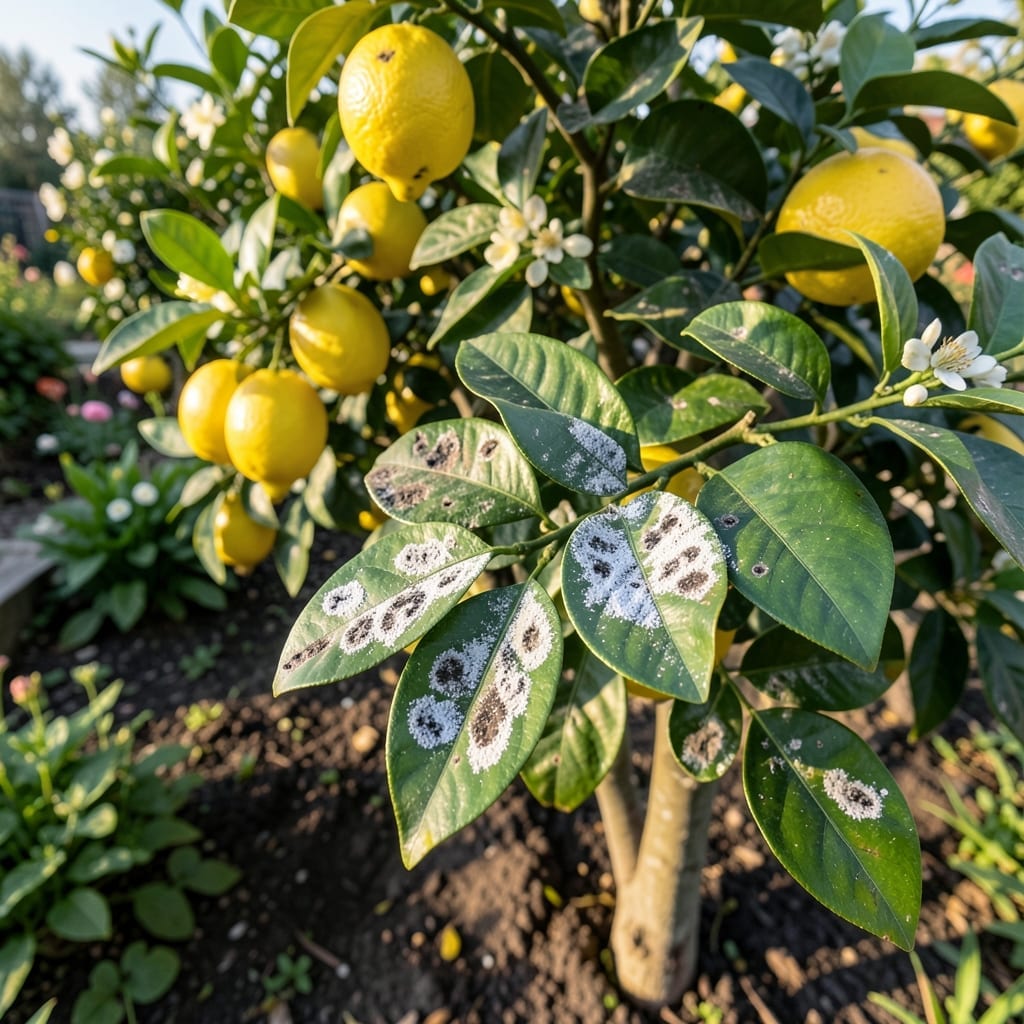
Powdery mildew appears as white, powdery patches on leaf surfaces, often starting on the upper sides. This fungus thrives in 60-80°F with high humidity, creating a perfect storm for spores to germinate within 48-72 hours of contact. 🔥
The fungus Oidium citri causes this, producing mycelium that looks like someone dusted the leaves with flour. Unlike other diseases, powdery mildew doesn’t require free water to spread—just high relative humidity above 70%. ✨
Sooty mold presents differently, forming thick black coatings that resemble soot. This isn’t a primary pathogen but grows on the honeydew secreted by pests like aphids or scale insects. The sticky residue creates an ideal substrate for Capnodium species to colonize. 💫
Leaf spot diseases like Alternaria or Septoria create circular lesions with distinct margins. These often start as tiny water-soaked spots that expand to 1/4-1/2 inch diameter, sometimes with concentric rings. The centers may dry out and drop, giving a shot-hole appearance. ⚡
All these fungi share a common weakness: they need moisture to develop. Whether it’s from overhead watering, poor drainage, or crowded canopies, water on leaf surfaces for more than 6-8 hours significantly increases infection risk. The spores overwinter in leaf litter and spring to life with the first warm rains.
Early detection is crucial. Inspect leaves weekly, especially the undersides where many fungi first establish. Use a 10x magnifying glass to spot early spore formation before it becomes visible to the naked eye. 🌟
Powdery mildew appears as white, dusty patches, while sooty mold creates black coatings. Leaf spot diseases form circular lesions, often with concentric rings or shot-hole centers.
Use a neem oil mixture every 7-10 days for active infections, or weekly during wet seasons for prevention. Always spray both leaf surfaces for full coverage.
Yes! A baking soda solution (1 tablespoon per 1 quart water) works well for prevention. Just avoid applying in direct sunlight or extreme heat.
Recurring infections usually mean excess moisture. Check for poor drainage, crowded branches, or overhead watering. Prune and adjust watering habits to improve air circulation.
Early morning is ideal, allowing leaves to dry before evening. Treat at first signs of infection, as fungi spread quickly in warm, humid conditions.