
Beautiful Plants For Your Interior
Beautiful Plants For Your Interior
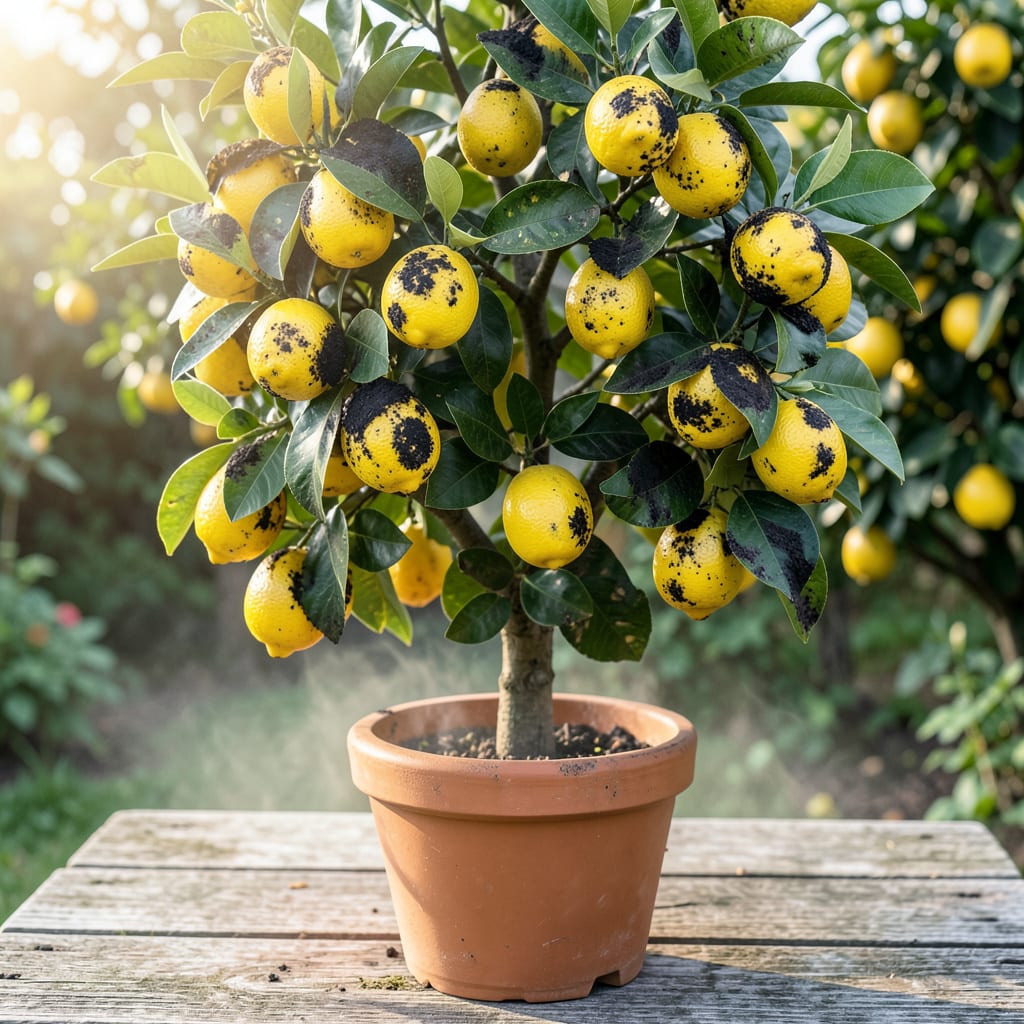
Black film on your lemon tree leaves isn’t dirt—it’s sooty mold feeding on pest secretions. I’ve battled this sticky black fungus more times than I’d like to admit, always tracing it back to the same culprits.
Scale, aphids, or mealybugs leave behind honeydew, and the mold moves in fast. Left untreated, it blocks sunlight and weakens the tree. The good news? This is 100% treatable once you tackle the underlying pest problem.
You’ll start seeing cleaner foliage within 1-2 weeks of treatment, and the tree rebounds faster than you’d expect. The key is hitting both the pests and the mold itself, not just one or the other.
Works for potted lemons, backyard trees, or even struggling citrus in greenhouses. Here’s the exact approach that saved my trees.
Sooty mold on lemon trees doesn’t appear out of thin air—it’s a direct response to underlying pest problems. Here’s why it happens:
The primary culprits are aphids, mealybugs, whiteflies, and scale insects. These pests pierce the plant’s tissue to feed on sap, excreting a sticky, sugar-rich waste called honeydew. Sooty mold fungi (like Capnodium spp.) thrive on this honeydew, forming black, crusty layers on leaves and branches. Without pests, there’s no honeydew—and no mold.
Sooty mold spores germinate fastest in humid, stagnant conditions. Lemon trees in crowded gardens, dense canopies, or shaded areas with limited airflow are more susceptible. Moisture from rain or overhead irrigation can also help honeydew spread, giving the fungus a larger surface to colonize.
Watering from above washes honeydew from infested leaves onto healthy foliage, accelerating mold growth. Drip irrigation or soaker hoses at the base of the tree reduce this risk by keeping foliage dry.
Actionable tip: Inspect your lemon tree for pests before treating the mold—eliminating the honeydew source is the only lasting solution.
Sooty mold on your lemon tree is often a sign of an underlying pest issue. Here’s how to tackle it by addressing the root causes and preventing future outbreaks.
Sooty mold thrives on the honeydew left by pests like aphids, scale, or mealybugs. Start by inspecting your lemon tree for these invaders, especially on the undersides of leaves and along stems. Use a strong blast of water to dislodge aphids, or wipe off scale and mealybugs with a cotton swab dipped in rubbing alcohol. For severe infestations, apply insecticidal soap or neem oil every 7–10 days until the pests are gone.
Once the pests are under control, the sooty mold won’t survive long without its honeydew food source. Gently scrub affected leaves and branches with a soft cloth or sponge dipped in mild soapy water (1 tsp dish soap per gallon of water). Rinse thoroughly to avoid residue. For stubborn patches, a mixture of water and baking soda (1 tbsp baking soda per gallon) can help lift the black film.
Sooty mold loves damp, shaded conditions. Prune dense foliage to improve airflow and sunlight penetration, which helps leaves dry faster and discourages mold growth. Space out potted lemon trees to reduce humidity buildup, and avoid overhead watering to keep leaves dry.
By addressing the pests and improving growing conditions, you’ll keep your lemon tree healthy and sooty-mold-free!
Look for a black, dusty coating on leaves and branches. This often starts near pest hotspots like new growth or leaf undersides.
No, but it blocks sunlight, reducing photosynthesis. The real damage comes from the underlying pest infestation weakening the tree over time.
Check weekly during growing season, focusing on new leaves and branch joints. Early detection makes treatment much easier.
Avoid harsh chemicals. A mild soap solution works best. Strong cleaners can damage the tree’s protective wax layer and foliage.
