
Beautiful Plants For Your Interior
Beautiful Plants For Your Interior
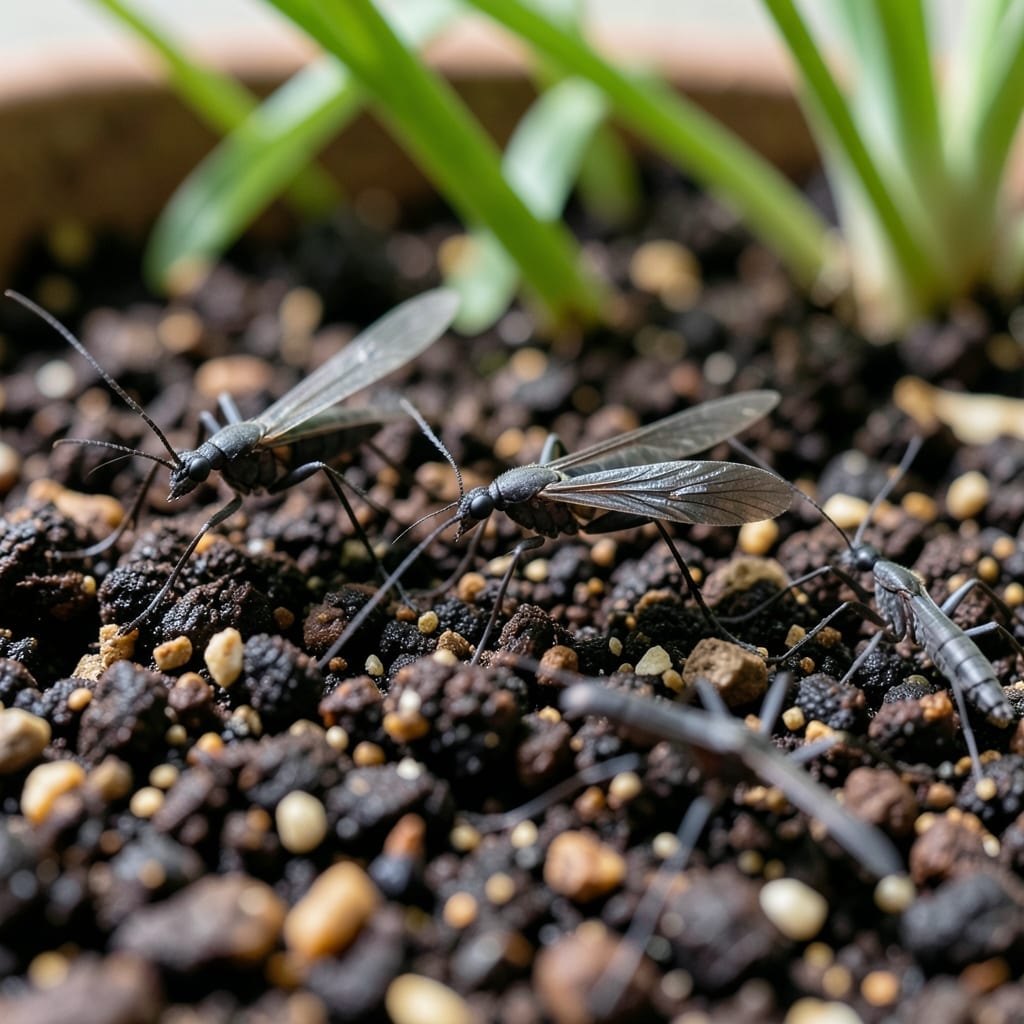
Fungus gnats in potting soil are small black flies that thrive in moist conditions. Their larvae feed on organic matter and roots, harming plants. Control involves drying soil and using traps.
I’ve learned these pests love damp environments, which is why overwatered plants often attract them. 💫 The larvae damage roots by consuming organic material, stunting growth over time. To tackle the issue, I let the top 1-2 inches of soil dry out between waterings and use yellow sticky traps to catch adults before they reproduce.
💡 In This Article
The life cycle begins when adults lay 100-200 eggs in damp soil, hatching in just 4-6 days. These eggs need consistent moisture to survive, which is why overwatered plants become prime targets. The larvae then feed on decomposing plant matter, algae, and even tender root hairs, which is what damages your plants. 🔥
Organic debris in soil provides the perfect food source for larvae. Things like fallen leaves, uneaten compost, or decaying roots create a buffet that sustains them for 2-3 weeks as they mature. Poor drainage compounds the problem by keeping the topsoil wet, preventing it from drying out between waterings.
Temperature also plays a role. Fungus gnats thrive in 65-75°F environments, which is why they’re such common houseplant pests. Their entire life cycle—from egg to adult—can complete in as little as 3-4 weeks under ideal conditions. This rapid reproduction means a small problem can explode into a full infestation quickly. ✨
What many don’t realize is that the adults themselves don’t harm plants. It’s the larvae doing the damage below the surface. The adults are mostly a nuisance, flying around your plants and potentially spreading to others.
Their presence is often the first sign you’ll notice, usually when you see tiny black flies hovering near the soil.
The moisture level in the top 1-2 inches of soil is critical. If it stays damp for more than a few days, you’re rolling out the welcome mat for fungus gnats. Even well-draining soil can become a breeding ground if watering habits aren’t adjusted. 💫
Look for tiny black flies hovering near the soil surface or resting on leaves. Check for larvae—small, translucent worms—in the top 1-2 inches of soil. Wilting or yellowing leaves may also signal their presence below the surface.
Overwatering is the most common culprit, as damp soil creates the perfect breeding ground. Organic debris, like decaying leaves or uneaten compost, also attracts them. Poor drainage traps moisture, making the problem worse.
Repotting can help if you remove all infested soil and wash the roots thoroughly. However, if the new soil is kept too moist, they’ll return. Always use fresh, well-draining soil and monitor moisture levels closely.
No, they’re primarily a nuisance to plants. They don’t bite humans or pets and aren’t known to transmit diseases. However, a severe infestation can stress or kill houseplants if left untreated.