
Beautiful Plants For Your Interior
Beautiful Plants For Your Interior
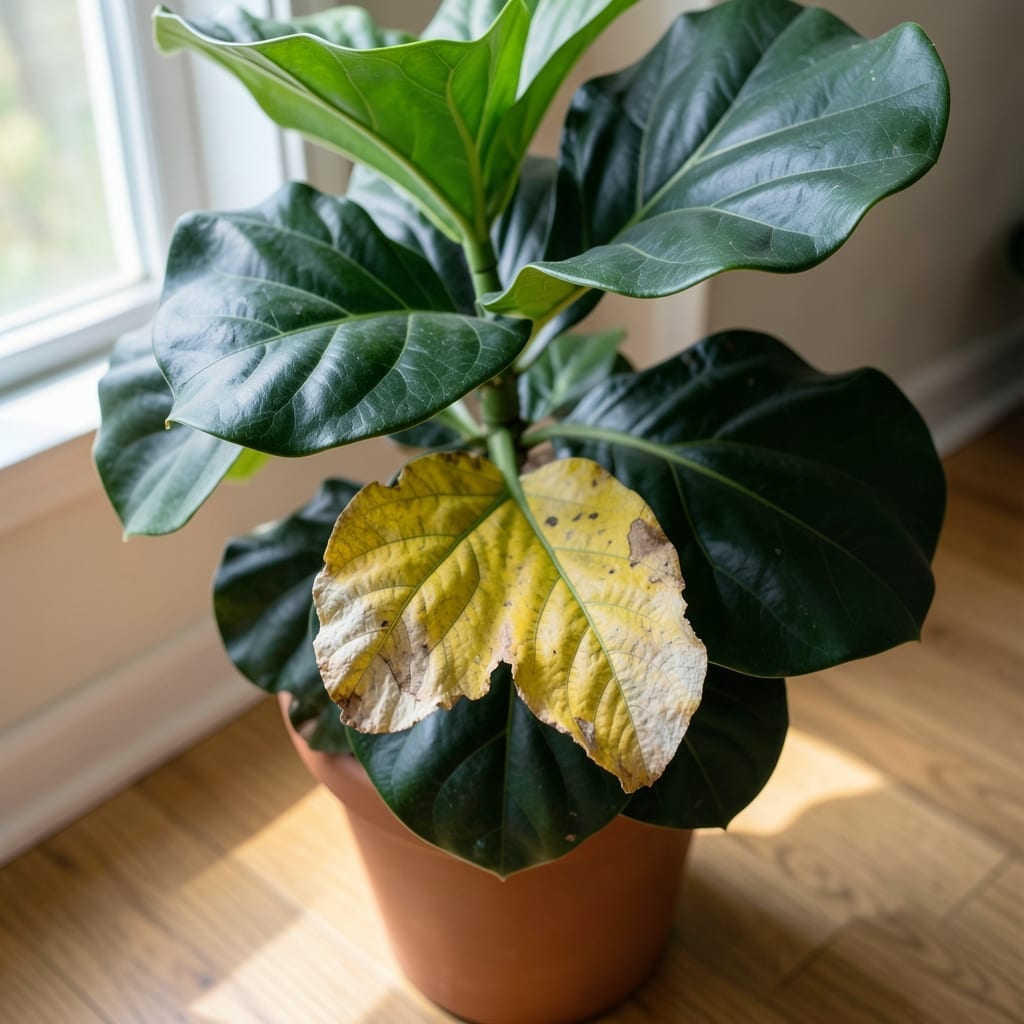
That yellow leaf on your fiddle leaf fig isn’t a death sentence. I’ve rescued mine from the brink more times than I can count with a few simple fixes.
Most often, it’s too much love—overwatering or too much light. Sometimes it’s not enough light or nutrients. The fix is usually dialing back the care, not adding more.
You’ll see new green growth within 2-3 weeks once you address the root cause. The key is catching it early and adjusting your routine.
Works for any fiddle leaf fig, no matter the size or age. Here’s how to diagnose and fix it.
Fiddle leaf figs develop yellow leaves due to several environmental and care-related stressors. Below are the most common causes, explained with actionable insights.
Excess water suffocates the roots, preventing oxygen uptake and leading to root rot. This fungal growth disrupts nutrient absorption, causing leaves to turn yellow. Check soil moisture before watering—only water when the top 1-2 inches are dry. Ensure pots have drainage holes.
Chronic dryness stresses the plant, triggering yellowing as a survival response. Fiddle leaf figs thrive in 40-65% humidity. If your home is dry, mist leaves regularly or use a humidifier. Water when the soil is dry but not bone-dry—consistency is key.
Too little light weakens the plant, causing chlorophyll breakdown (yellowing). Too much direct sun scorches leaves. Place your fig near a bright, indirect light source (east- or north-facing windows are ideal). Rotate the pot weekly for even exposure.
Fiddle leaf figs prefer 60-75°F (15-24°C). Sudden temperature drops, cold drafts (e.g., near AC vents), or heat sources (radiators) shock the plant. Keep it away from windows with cold drafts or fluctuating temperatures.
Lack of essential nutrients like nitrogen, magnesium, or iron can cause yellowing. Nitrogen deficiency often starts with lower leaves turning pale. Use a balanced liquid fertilizer (e.g., 3-1-2 NPK) every 4-6 weeks during growing season, but avoid over-fertilizing.
Don’t panic—yellow leaves on your fiddle leaf fig are often reversible! Below are targeted fixes for the most common causes, plus prevention tips to keep your plant thriving. 🌿
Fix: Stop watering immediately and check the roots. If they’re mushy or smell foul, trim the affected roots and repot in fresh, well-draining soil. Use a pot with drainage holes to prevent waterlogging. Resume watering only when the top 1–2 inches of soil are dry.
Prevent it: 💡 Use a moisture meter or the finger test—stick your finger in the soil to check dryness before watering.
Fix: Move your plant to a spot with bright, indirect light. If leaves are scorched from direct sun, trim them and gradually reintroduce the plant to gentler light. For dim spaces, supplement with a grow light (12–14 hours daily).
Prevent it: 🎯 Rotate your plant every few weeks for even light exposure and dust leaves regularly to maximize light absorption.
Fix: Fertilize with a balanced, water-soluble houseplant fertilizer (e.g., 10-10-10) every 4–6 weeks during growing season (spring/summer). If leaves are yellow with green veins, use a magnesium supplement like Epsom salt (1 tsp per gallon of water, monthly).
Prevent it: ✨ Flush the soil with water every 2–3 months to remove salt buildup from fertilizers.
Fix: Keep your fiddle leaf fig in a stable environment (60–75°F). Move it away from AC units, heaters, or drafty windows. If cold damage has occurred, trim blackened leaves and monitor for new growth.
Prevent it: 🌡️ Avoid sudden temperature changes—acclimate your plant gradually when moving it to a new location.
Fix: Wipe leaves with a damp cloth to remove pests like spider mites or mealybugs. Apply neem oil or insecticidal soap weekly until the infestation clears. Isolate the plant to prevent spreading.
Prevent it: 🔍 Inspect new plants before bringing them home and mist your fiddle leaf fig occasionally to deter pests.
Water only when the top 1-2 inches of soil are dry. This usually means watering every 7-10 days, but always check first. Overwatering is the most common cause of yellowing.
Yes, gently pull or clip off yellow leaves at the stem. This helps the plant focus energy on healthy growth. Use clean scissors to prevent infection.
Unfortunately, once a leaf turns yellow, it won’t recover. But fixing the underlying issue will prevent new leaves from yellowing. You’ll see improvement in 2-3 weeks.
Place near an east or north-facing window for bright, indirect light. Avoid harsh direct sun, which can scorch leaves. Rotate the pot weekly for even growth.