
Beautiful Plants For Your Interior
Beautiful Plants For Your Interior
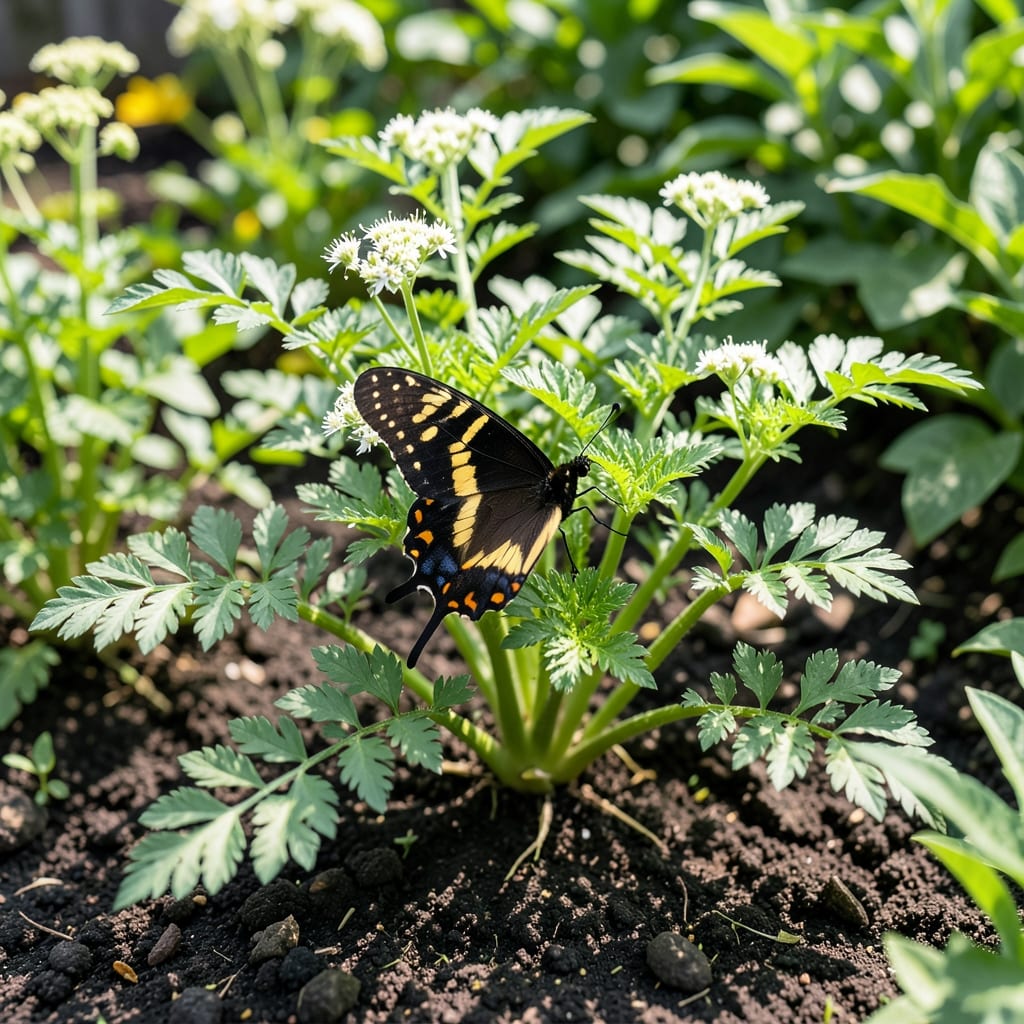
The eastern black swallowtail is a striking butterfly with dark wings featuring yellow spots and blue markings, commonly found in gardens and meadows across North America.
I love how this species transforms from a tiny egg to a vibrant adult, with its host plants including parsley and dill. Their wingspan can reach up to 4.5 inches, making them one of the larger swallowtails. Watching them flutter through wildflower patches is a sure sign of a healthy ecosystem. ✨
💡 In This Article
The adult butterfly displays a wingspan of 3.1-4.5 inches, with the upper wings showcasing a deep black base. A defining feature is the row of bright yellow spots along the wing edges, creating a striking contrast. Between these spots, you’ll notice subtle blue and orange markings near the tail, which are more visible during flight.
🔥
The underside reveals a different pattern entirely—dominated by black with rows of orange spots and a distinctive blue band near the body. This dual coloring serves as camouflage, confusing predators when the butterfly rests with its wings closed. The blue markings contain iridescent scales that shimmer in sunlight, a trait unique to swallowtails.
What truly sets them apart is the pair of elongated tails on their hindwings, resembling the swallow’s forked tail that gives them their name. These tails are about 0.5 inches long and have a subtle white tip.
The wings also feature a faint purple sheen when viewed at certain angles, caused by microscopic scale structures that refract light. ✨
Regional variations exist too. Northern populations tend to have larger yellow spots, while southern butterflies often display more prominent blue markings. The females can be distinguished by their broader blue bands and additional orange spots, which males typically lack. This sexual dimorphism helps with identification during mating season.
During flight, their wing beats create a distinctive fluttering pattern—rapid and erratic near the ground, then smooth and gliding when at height. This flight style, combined with their coloration, makes them easily recognizable even from a distance. 💫
They change dramatically through stages. Early instars resemble bird droppings (black with white saddle). Later, they turn bright green with black bands and yellow dots. When threatened, they extend orange horn-like osmeterium.
The entire process from egg to adult takes about 30-40 days in warm weather. Eggs hatch in 3-5 days, caterpillar stage lasts 10-30 days, and the chrysalis period is 9-18 days. Cooler temperatures may extend this timeline.
Females prefer host plants in the carrot family like dill, parsley, and queen anne’s lace. They lay single eggs on leaf tops, which are tiny (1mm) and round. Look for them on new growth in sunny locations.
Birds, spiders, and predatory insects are major threats to all life stages. Caterpillars use camouflage and osmeterium to deter predators. Adults rely on speed and erratic flight patterns to escape.