
Beautiful Plants For Your Interior
Beautiful Plants For Your Interior
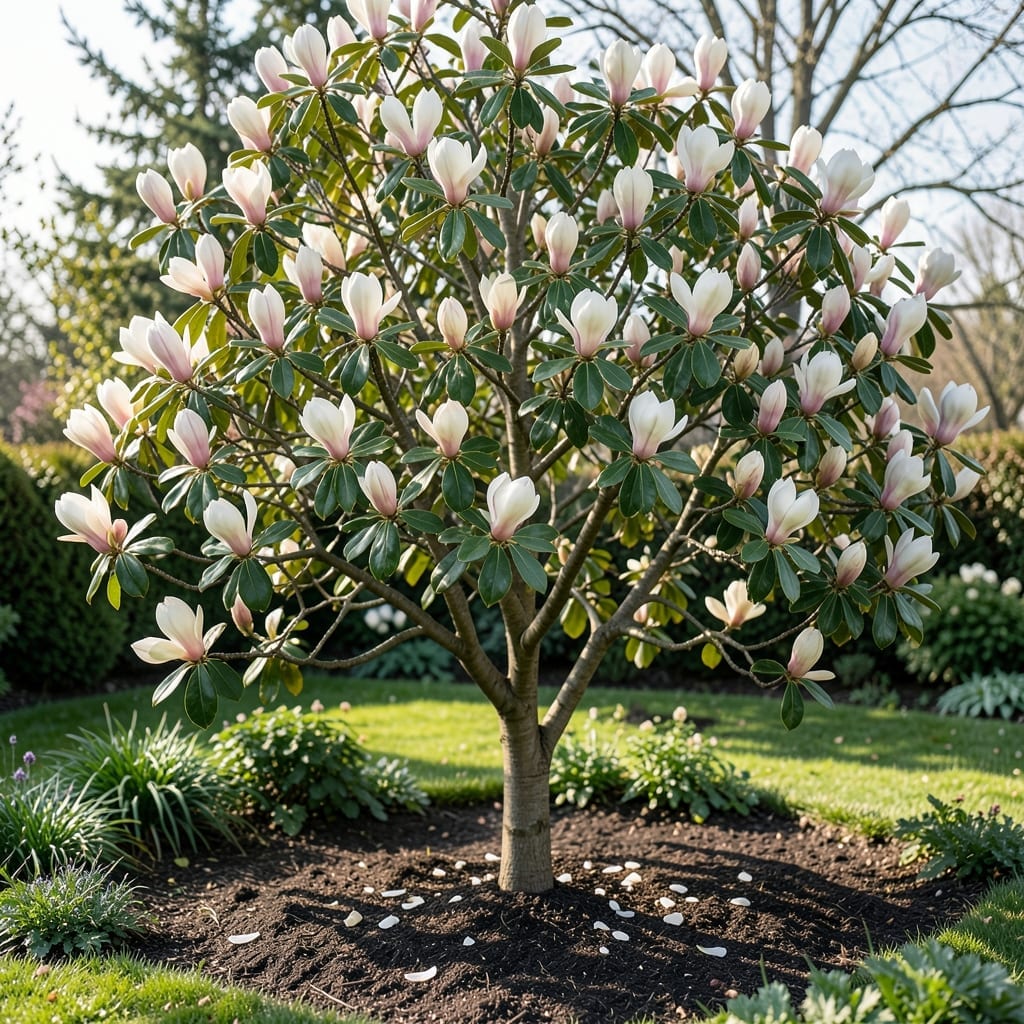
Most magnolias are deciduous and shed leaves in winter, but evergreen varieties like southern magnolia retain foliage year-round. Check your specific type to know for sure.
I’ve noticed this difference plays out in my own garden—the southern magnolia stays lush through December, while the saucer magnolia drops its leaves completely. This variation comes down to evolutionary adaptation: deciduous types conserve energy during cold months, while evergreens thrive in milder climates. 🌟
Knowing your variety helps you provide the right winter care, whether that means protecting bare branches or maintaining consistent moisture for evergreens.
💡 In This Article
The difference comes down to survival strategies. Deciduous magnolias like saucer magnolia (Magnolia × soulangeana) shed leaves to conserve water and energy during cold months. This dormancy period allows the tree to redirect resources to root and branch development instead of maintaining foliage. 🌟
Evergreen varieties, such as southern magnolia (Magnolia grandiflora), evolved in warmer climates where they don’t need to shut down. Their thick, leathery leaves with a waxy coating resist moisture loss and cold snaps down to 10°F. This adaptation lets them photosynthesize year-round in milder zones.
The leaf structure tells the story. Deciduous magnolia leaves are thinner and more delicate, while evergreen leaves contain more lignin—a tough organic polymer that provides rigidity. This structural difference explains why evergreens can maintain foliage through winter without the energy cost of regrowing leaves each spring.
Climate zones play a crucial role. Deciduous magnolias typically thrive in USDA zones 4-9, where winter temperatures drop below freezing. Evergreens prefer zones 6-10, though some cultivars like ‘Little Gem’ can handle zone 5 with protection. The tree’s native habitat dictates which strategy works best for survival. ⚡
Even within evergreen types, there’s variation. Sweetbay magnolia (Magnolia virginiana) is semi-evergreen, dropping some leaves in colder parts of its range while retaining most in warmer areas. This adaptability shows how magnolias can adjust their behavior based on specific environmental conditions.
Check the leaf structure. Deciduous types have thinner, softer leaves that turn yellow or brown before dropping in fall. Evergreens have thick, glossy leaves that stay green year-round.
Evergreen magnolias evolved in warmer climates where they don’t need dormancy. Their waxy, tough leaves resist cold and moisture loss, allowing year-round photosynthesis in mild zones.
Most evergreen magnolias tolerate down to 10°F, but some cultivars like ‘Little Gem’ can survive brief dips to 0°F with protection. Always confirm your variety’s hardiness zone.
No, semi-evergreen types like sweetbay magnolia drop some leaves in cold areas but retain most in warmer zones. Their behavior adjusts based on local winter conditions.