
Beautiful Plants For Your Interior
Beautiful Plants For Your Interior
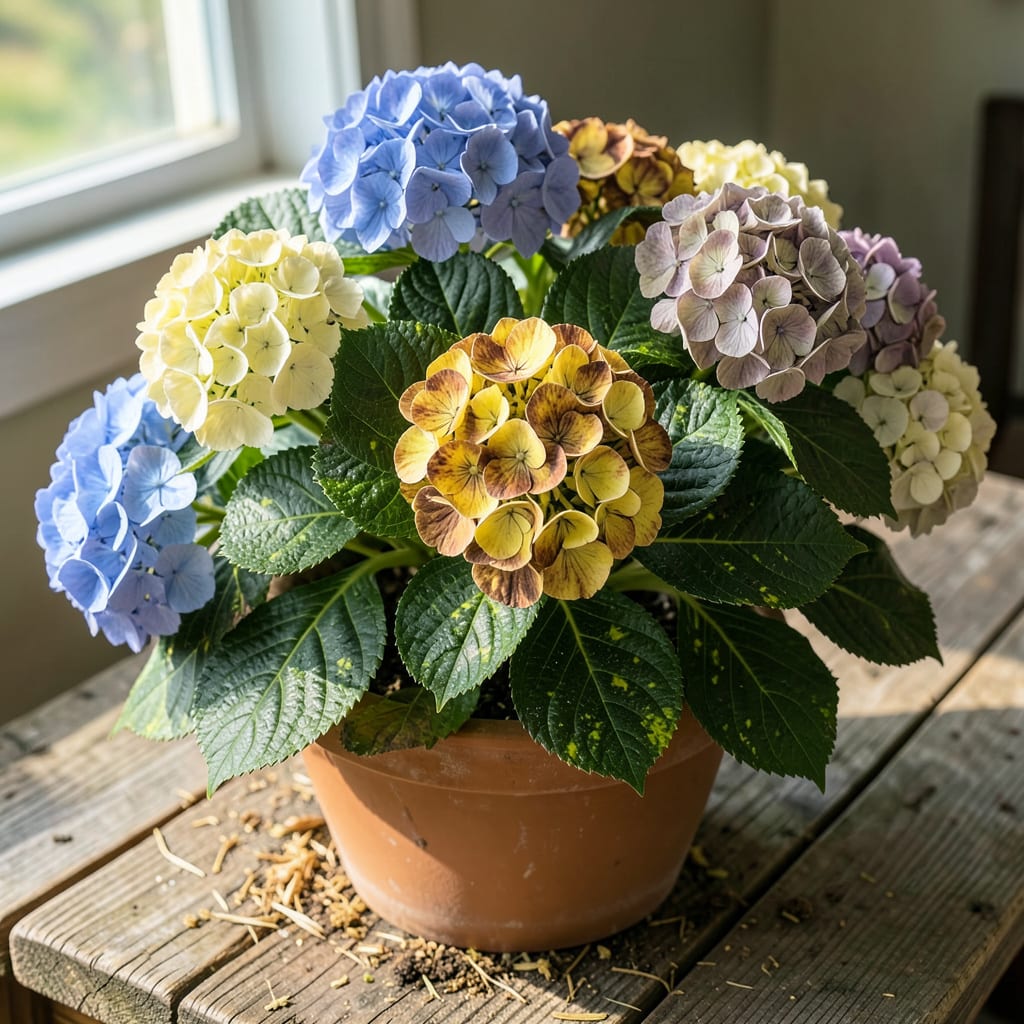
Yellowing hydrangeas in Florida usually mean one thing: heat stress. 🌿 I’ve watched too many gardeners lose their prize blooms to scorching afternoons and dry soil, but the fix is simpler than you think.
The real culprits are often intense sun, poor drainage, or nutrient deficiencies. These plants thrive in morning sun and afternoon shade, especially when temperatures climb above 90°F. Even well-meaning watering can backfire if the soil doesn’t drain properly.
You’ll start seeing recovery within 2-3 weeks of adjusting their environment. Move them to filtered light, improve soil with organic matter, and watch the green return. The blooms will follow.
Works for bigleaf, oakleaf, and panicle varieties alike. Here’s how to diagnose and treat each issue.
Hydrangeas in Florida often turn yellow or develop burn-like symptoms due to a mix of environmental stresses and cultural mismanagement. Below are the primary causes, explained with actionable insights.
Florida’s intense UV radiation and high temperatures (>90°F) can overwhelm hydrangeas, especially afternoon sun exposure. These plants prefer partial shade; direct sun burns leaf edges (necrosis) and triggers chlorosis (yellowing) as chlorophyll breaks down. Varieties like Hydrangea macrophylla are particularly vulnerable without afternoon shade.
Overwatering suffocates roots, reducing oxygen uptake and causing yellowing (often with wilting). Conversely, drought stress in Florida’s sandy soils leads to crisp, brown edges as cells die from moisture loss. Hydrangeas need consistent moisture but hate soggy roots—aim for 1–1.5 inches of water weekly, adjusting for rain.
Florida’s alkaline soils (pH >7) can lock out iron and magnesium, essential for chlorophyll production. Yellowing between leaf veins (interveinal chlorosis) signals iron deficiency, while uniform yellowing suggests nitrogen scarcity. A soil test can confirm pH; amend with sulfur to lower pH or use chelated iron supplements.
High humidity and warmth foster powdery mildew (white fungal coating) and leaf spot (brown/yellow patches). These weaken the plant, leading to yellowing and burn-like lesions. Improve air circulation, avoid overhead watering, and apply fungicides like neem oil preventatively.
Florida’s irrigation water often contains salts that accumulate in soil, drawing moisture out of roots. This causes margin burn (brown leaf tips) and stunted growth. Flush soil with fresh water monthly to leach salts, and use organic mulch to buffer root zones.
If your Florida hydrangeas are turning yellow or showing burn signs, don’t worry—these fixes are tailored to the state’s unique climate. Address each issue directly, and your plants will bounce back in no time. 🌿✨
Move potted hydrangeas to a spot with morning sun and afternoon shade. For in-ground plants, use shade cloth during peak heat (11 AM–3 PM). Water deeply early in the morning to prevent evaporation. Prevention tip: Mulch with 2–3 inches of pine bark to keep roots cool. 💡
Let the top inch of soil dry out between waterings. If the soil stays soggy, improve drainage by amending with compost or sand. For container plants, ensure pots have drainage holes. Prevention tip: Use a moisture meter to avoid guesswork. 🌡️
Hydrangeas in Florida often suffer from alkaline soil (pH > 7). Test your soil with a kit from a garden center. To lower pH, mix in sulfur or aluminum sulfate (follow package instructions). For quick fixes, water with diluted vinegar (1 cup white vinegar per gallon of water) occasionally. Prevention tip: Retest soil every 6 months. ✨
Yellow leaves often signal a lack of nitrogen or iron. Use a balanced, slow-release fertilizer (10-10-10) in spring and summer. For iron deficiency (yellow leaves with green veins), apply chelated iron per label directions. Prevention tip: Avoid over-fertilizing—it can burn roots in hot climates. 🎯
For spider mites or aphids, spray plants with neem oil or insecticidal soap at dusk. Fungal issues (like powdery mildew) thrive in humidity—improve air circulation and apply fungicide if needed. Prevention tip: Space plants 3–4 feet apart to reduce crowding. 🛡️
Crispy edges usually mean drought stress or salt burn from irrigation. Florida’s sandy soil drains fast, so water deeply 2-3 times weekly. For salt buildup, flush soil monthly with fresh water.
Yes! While hydrangeas need afternoon shade in Florida, too little light causes weak growth and pale leaves. Aim for 4-6 hours of morning sun with dappled afternoon light.
This is classic iron deficiency from alkaline soil. Treat with chelated iron or lower soil pH with sulfur. Results appear in 7-14 days.
Always water in early morning. Evening watering promotes fungal growth in Florida’s humidity. Use 1-1.5 inches weekly, adjusting for rain.
